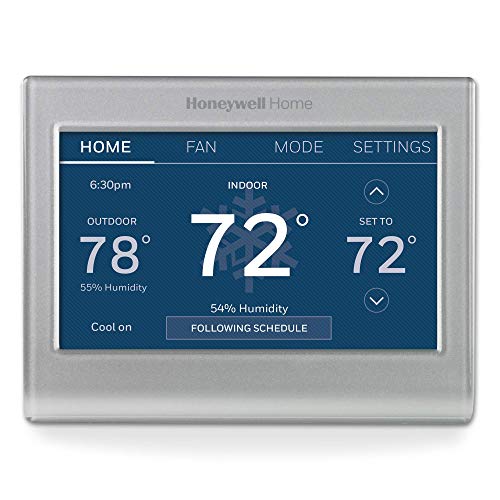
If you’re looking for the best WiFi thermostats for heat pumps in 2025, I recommend checking out options like Honeywell’s Smart Color Thermostat, Nest, and Sensi. These models offer smart features, easy installation, and compatibility with various HVAC systems. They help improve energy efficiency and allow remote control via smartphone or voice commands. If you want to find out which one fits your needs best, continue exploring for detailed insights and top picks.
Key Takeaways
Compatibility with heat pump systems, including multi-stage and dual-stage configurations, is essential for optimal performance.
Features like remote control, voice integration, and smart scheduling enhance convenience and energy savings.
ENERGY STAR certification and energy monitoring tools help maximize efficiency and cost reduction.
Easy DIY installation with clear setup instructions ensures hassle-free system integration.
Support for smart home platforms like Alexa, Google Assistant, and Apple HomeKit allows seamless automation.
Honeywell Wi-Fi Smart Color Thermostat
If you’re looking for a versatile Wi-Fi thermostat that combines customization with energy savings, the Honeywell Wi-Fi Smart Color Thermostat is an excellent choice. Its bright touchscreen is easy to read and makes navigation simple, while customizable color options let you match it to your décor. Compatible with many heating and cooling systems—except electric baseboard heat—it supports energy-efficient features like detailed monthly reports and personalized tips. You can control it remotely via smartphone or voice commands through Alexa or Google Home. Just remember, a C-wire is required for installation, and double-check system compatibility before buying.
Best For: homeowners seeking a customizable, energy-efficient Wi-Fi thermostat compatible with various heating and cooling systems, excluding electric baseboard heat.
Pros:
Bright, easy-to-read touchscreen with customizable color options for matching home décor
Supports remote control via smartphone app and voice commands through Alexa and Google Home
ENERGY STAR certified with detailed energy reports and personalized tips to promote savings
Cons:
Requires a C-wire for installation, which may not be present in all homes
Not compatible with electric baseboard heating without additional wiring or adapters
Limited to certain heating and cooling systems, so system compatibility should be verified before purchase
Honeywell Home Smart Thermostat, WiFi Compatible
The Honeywell Home Smart Thermostat stands out for homeowners seeking seamless integration with their smart home systems, thanks to its compatibility with Amazon Alexa, Google Assistant, and Apple HomeKit. I appreciate its support for both conventional and heat pump systems, offering flexible configuration options. The WiFi connectivity allows me to control it remotely via the First Alert app or through voice commands. Its customizable scheduling, auto-away technology, and humidity monitoring help optimize comfort and energy savings. Plus, with ENERGY STAR certification and a two-year warranty, I feel confident in its efficiency and reliability. Just remember, it requires a C-wire for installation, so check your wiring compatibility first.
Best For: homeowners seeking a versatile, energy-efficient smart thermostat compatible with multiple smart home platforms and conventional or heat pump systems.
Pros:
Seamless integration with Amazon Alexa, Google Assistant, and Apple HomeKit for voice control and automation
Customizable scheduling options and auto-away technology to optimize comfort and energy savings
ENERGY STAR certified with a 2-year warranty, ensuring reliability and energy efficiency
Cons:
Requires a C-wire for installation; compatibility depends on existing wiring setup
Non-programmable mode may reduce some automation flexibility for users preferring strict scheduling
Slightly higher price point compared to basic thermostats with fewer smart features
Honeywell Home RTH6580WF Wi-Fi 7-Day Programmable Thermostat, White
For homeowners seeking reliable, easy-to-use WiFi thermostats, the Honeywell Home RTH6580WF stands out with its 7-day programmable schedule and seamless remote control via smartphone apps. It features a large, backlit display and intuitive controls, making setup and daily adjustments straightforward. Compatible with various systems like gas, electric, hot water, and heat pumps with electric backup, it supports energy-saving features like Smart Response technology. You can control it from anywhere using the Honeywell or Total Connect Comfort apps, and it works with voice assistants such as Alexa and Google Assistant. Overall, it’s a user-friendly, efficient choice for managing your heat pump remotely.
Best For: homeowners seeking a reliable, easy-to-use Wi-Fi programmable thermostat with remote control capabilities and energy-saving features.
Pros:
Easy installation and user-friendly controls with a large, backlit display
Compatible with various heating systems including gas, electric, hot water, and heat pumps with electric backup
Supports smart home integration and remote management via smartphone apps and voice assistants like Alexa and Google Assistant
Cons:
Requires a C-wire for power, which may not be available in all installations
Does not support electric baseboard heating (120-240V)
Batteries are not included, requiring additional purchase
Google Nest Thermostat, Programmable WiFi Thermostat
The Google Nest Thermostat stands out as an excellent choice for homeowners seeking an energy-efficient, smart solution for heat pump systems. It’s ENERGY STAR certified, offering programmable scheduling, remote control via the Google Home app, and voice control with compatible assistants like Google Assistant and Alexa. Its sleek design features an LCD display and wall-mount style, making installation quick and straightforward—usually in 30 minutes. It works without a C wire in most homes but may need one for specific systems. With HVAC monitoring alerts and integrations like Nest Renew, it helps optimize energy use and reduce costs effectively.
Best For: homeowners looking for an easy-to-install, energy-efficient smart thermostat compatible with heat pump systems and voice assistants.
Pros:
ENERGY STAR certified for energy savings and environmental sustainability
Supports programmable scheduling, remote control via app, and voice commands for convenience
Sleek, wall-mount design with LCD display for easy operation
Cons:
May require a C wire or power accessory for certain heating or cooling systems
Limited to Wi-Fi and Bluetooth Low Energy connectivity, which depends on internet stability
Compatibility with some older HVAC systems may need verification through Google’s Nest Compatibility Checker
Sensi Smart Thermostat
If you’re looking for an easy-to-install WiFi thermostat that offers reliable compatibility with most residential HVAC systems, the Sensi Smart Thermostat (model ST55) is a top choice. It features Wi-Fi connectivity, programmable scheduling, and voice control with Alexa, Google Assistant, SmartThings, and Vera. Designed for simple DIY setup, it often doesn’t need a C-wire thanks to its built-in level and step-by-step app instructions. The sleek 5-inch LED display, wall-mount style, and button controls make operation straightforward. Certified Energy Star, it helps save around 23% on energy and includes maintenance alerts. Backed by a 3-year warranty, it’s a dependable, privacy-conscious option for efficient home heating.
Best For: homeowners seeking an easy-to-install, energy-efficient Wi-Fi thermostat compatible with most residential HVAC systems and voice control options.
Pros:
Simple DIY installation with built-in level and step-by-step app instructions
Compatible with Alexa, Google Assistant, SmartThings, and Vera for voice control
Energy Star certified, helping save approximately 23% on HVAC energy costs
Cons:
Relies on Wi-Fi connectivity, which may be problematic in areas with poor signal
Limited to 1 AAA battery power, requiring replacement over time
Some users may prefer more advanced features or larger displays
Honeywell Smart Color Thermostat with Wi-Fi and Alexa Compatibility
The Honeywell Smart Color Thermostat with Wi-Fi and Alexa Compatibility stands out for those seeking customizable control over their heating and cooling systems. I appreciate its high-definition color display, which I can easily personalize by changing colors and viewing indoor/outdoor temperatures, humidity, and weather forecasts. It supports a variety of systems, including heat pumps with electric backup, and can be controlled remotely through the app or voice assistants like Alexa and Google Assistant. Keep in mind, it requires a C-wire for power and isn’t compatible with electric baseboard heat. Overall, it’s a smart choice for energy savings and modern comfort.
Best For: homeowners seeking customizable, energy-efficient smart thermostat control compatible with Alexa and other voice assistants.
Pros:
High-definition color display with customizable colors for a personalized look
Supports a wide range of heating and cooling systems, including heat pumps with electric backup
Enables remote control via app and voice commands for added convenience
Cons:
Requires a C-wire for power, which may not be present in all homes
Not compatible with electric baseboard heat (120-240V)
Installation and compatibility with existing wiring should be verified before purchase
Sensi Lite Smart Thermostat
For homeowners seeking an easy-to-install, energy-efficient thermostat that integrates seamlessly with smart home systems, the Sensi Lite Smart Thermostat stands out. Its Wi-Fi capability and Alexa compatibility make remote control simple and convenient. The programmable schedule helps customize comfort while reducing energy costs—up to 23%. Designed for DIY installation, it features a built-in level and step-by-step instructions, fitting most HVAC systems with a C-wire (for heat pump systems). Certified Energy Star, it promotes efficiency without sacrificing comfort. Plus, your privacy is protected: no selling of personal data or targeted ads. Manage your thermostat easily from your smartphone or tablet anywhere you go.
Best For: homeowners seeking an easy-to-install, energy-efficient smart thermostat that integrates with Alexa and offers remote control from their mobile devices.
Pros:
Easy DIY installation with built-in level and step-by-step instructions
Helps save up to 23% on HVAC energy costs through programmable scheduling and smart features
Compatible with most HVAC systems and works with Alexa for voice control
Cons:
Requires a C-wire for heat pump and certain heat/cool systems, which may necessitate additional wiring
Limited advanced features compared to more premium smart thermostats
Does not support certain proprietary HVAC systems that require specialized compatibility
Honeywell Home Smart Thermostat with WiFi
Designed for homeowners seeking reliable smart control, the Honeywell Home Smart Thermostat with WiFi stands out with its extensive compatibility and seamless integration options. It connects to WiFi (2.4 or 5GHz) for remote access via the First Alert app and works with Amazon Alexa, Google Assistant, Apple HomeKit, and Matter. It supports various systems, including heat pumps with electric backup, conventional heating, and hot water heat. The sleek white design is powered through a C-wire, ensuring dependable operation. It offers customizable display settings, humidity monitoring, scheduled programming, and energy-saving features like auto-away, making it a versatile, efficient choice for modern homes.
Best For: homeowners seeking a reliable, energy-efficient smart thermostat with extensive compatibility and seamless smart home integration.
Pros:
Supports multiple heating and cooling systems, including heat pumps with electric backup and hot water heat
Compatible with popular voice assistants like Alexa, Google Assistant, and Apple HomeKit, plus Matter certification for broad ecosystem integration
Energy Star certified with features like auto-away and scheduled programming to help reduce energy costs
Cons:
Requires a C-wire for proper operation, which may not be available in all homes
Not compatible with electric baseboard heat (120-240V)
Setup and initial configuration might be complex for some users unfamiliar with smart thermostats
meross Smart Thermostat for Home
If you’re looking for a versatile, easy-to-install thermostat compatible with most HVAC systems, the meross Smart Thermostat for Home stands out. It supports 95% of systems, including conventional heating, cooling, and heat pumps, but not electric baseboard heaters. You’ll need a C-wire or the Meross adapter for installation, which is straightforward and can be done in about 30 minutes using the app. It connects via 2.4GHz Wi-Fi and integrates seamlessly with Apple Home, Alexa, Google, and Samsung SmartThings through Matter technology. With smart scheduling, remote control, energy tracking, and alerts, it combines convenience with energy efficiency.
Best For: homeowners seeking a versatile, easy-to-install smart thermostat compatible with most HVAC systems for energy-efficient climate control.
Pros:
Supports 95% of HVAC systems, including conventional heating, cooling, and heat pumps
Easy DIY installation within 30 minutes using the Meross app
Integrates seamlessly with Apple Home, Alexa, Google, and Samsung SmartThings via Matter technology
Cons:
Not compatible with electric baseboard heaters
Requires a C-wire or Meross adapter for proper installation
Limited customer support hours (Monday-Wednesday, Friday-Saturday, 10:30 AM – 7:30 PM EST)
Emerson Sensi Touch Wi-Fi Smart Thermostat
The Emerson Sensi Touch Wi-Fi Smart Thermostat stands out with its sleek, user-friendly touchscreen interface, making it an excellent choice for homeowners seeking a modern, intuitive control system. Its 5.625″ x 3.4″ display comes in black, white, and silver, blending seamlessly with home decor. Designed for DIY installation, it features built-in level, illuminated terminals, and step-by-step app instructions. Compatible with most HVAC systems needing a C-wire, it’s easy to set up. The thermostat’s ENERGY STAR certification helps cut energy use by about 23%, while remote control via the Sensi app offers convenience and peace of mind.
Best For: homeowners seeking a stylish, easy-to-install smart thermostat that offers energy savings and remote control capabilities.
Pros:
Sleek, modern touchscreen display available in multiple colors to match home decor
Easy DIY installation with built-in level and step-by-step app instructions
ENERGY STAR certified, reducing HVAC energy consumption by approximately 23%
Cons:
Compatible primarily with HVAC systems that require a C-wire, which may necessitate additional wiring
May require a smartphone for full remote functionality, limiting use for those without compatible devices
Limited to features available through the Sensi app, which may not include advanced automation options
ecobee Smart Thermostat Essential – Wi-Fi Programmable Thermostat
For homeowners seeking an easy-to-install, energy-efficient thermostat that seamlessly integrates with various HVAC systems, the ecobee Smart Thermostat Essential stands out. It can save up to 23% annually on heating and cooling costs by adapting to your schedule, reducing energy use when away, and preheating or precooling during off-peak hours. The color touchscreen makes control straightforward, either directly or via the ecobee app. Compatible with most systems, including heat pumps and boilers, it’s simple to install—even without a C-wire—using the Power Extender Kit. Its built-in eco+ features and compatibility with smart home ecosystems enhance both convenience and energy savings.
Best For: homeowners seeking an easy-to-install, energy-efficient smart thermostat compatible with various HVAC systems and smart home ecosystems.
Pros:
Saves up to 23% annually on heating and cooling costs through smart scheduling and eco+ features
Easy DIY installation, even without a C-wire, using the Power Extender Kit
Compatible with major smart home platforms like Apple HomeKit, Google Assistant, and Alexa
Cons:
Requires separate purchase of SmartSensor for home monitoring features
Limited to 85% system compatibility; some older or specialized systems may not be supported
The color touchscreen, while intuitive, may be less customizable than more advanced models
Smart Thermostat 3H/2C with WiFi and Voice Control
Looking for an easy-to-install smart thermostat that offers seamless voice control and remote management? The Smart Thermostat 3H/2C with WiFi and Voice Control fits the bill. It’s compatible with heat pumps and multi-stage systems, requiring only a common wire for setup. Its bright LED touchscreen makes navigation simple, letting you adjust settings, view temperatures, and create personalized weekly schedules effortlessly. With Wi-Fi connectivity, you can control it remotely via the Tuya Smart, Smart Life, Google Home, or Alexa apps. Installation is straightforward, even for DIYers, thanks to clear instructions and included components. It’s a reliable, user-friendly choice for smarter heating control.
Best For: homeowners seeking an easy-to-install, feature-rich smart thermostat compatible with various HVAC systems and voice control platforms.
Pros:
User-friendly LED touchscreen with intuitive navigation for quick adjustments.
Compatible with popular voice assistants like Google Home and Alexa for hands-free control.
Easy DIY installation with clear instructions and all necessary components included.
Cons:
Customer rating of 3.9 stars suggests some users may experience issues or dissatisfaction.
Requires a common wire (C-wire), which may not be available in all homes.
Limited to a certain model; may lack advanced customization features found in higher-end thermostats.
Amazon Smart Thermostat
If you’re seeking an easy upgrade that offers smart control and energy savings, the Amazon Smart Thermostat stands out as a great choice. It’s compatible with Alexa and Ring, making installation straightforward if you have a C-wire. This thermostat integrates seamlessly with Echo devices and Amazon’s Smart Air Quality Monitor for automated climate adjustments. Certified ENERGY STAR, it can save you around $50 annually on energy bills. You can control it remotely via the Alexa app, and it automatically adjusts temperatures based on presence detection or your preferences. Built with reliable Honeywell technology, it’s backed by solid support and installation guidance.
Best For: homeowners seeking an easy-to-install, energy-efficient smart thermostat compatible with Alexa and Ring for convenient climate control.
Pros:
Seamless integration with Alexa, Ring, and Echo devices for smart home automation
ENERGY STAR certified, helping save approximately $50 annually on energy bills
Remote control via the Alexa app for convenience and on-the-go adjustments
Cons:
Requires a C-wire for installation, which may not be available in all homes
Limited compatibility with non-Alexa or Ring smart home ecosystems
Dependence on internet connectivity for remote features and automated adjustments
Honeywell WiFi Smart Thermostat (RTH8800WF2022)
The Honeywell WiFi Smart Thermostat (RTH8800WF2022) stands out for its all-inclusive scheduling and smart features, making it an excellent choice for homeowners seeking energy savings and convenience. Its 7-day programmable touchscreen, geofencing, and auto home/away modes help optimize comfort while reducing costs. Compatible with most heat/cool oil furnace systems, it supports remote control via smartphone or tablet and integrates with Alexa, Google Assistant, and Apple HomeKit. ENERGY STAR certification assures energy efficiency, and users typically save 8-16% on bills. With a sleek design and easy setup, it’s a reliable, user-friendly option for enhancing your home’s heating management.
Best For: homeowners seeking an energy-efficient, user-friendly smart thermostat with flexible scheduling and voice assistant compatibility.
Pros:
Offers 7-day programmable touchscreen for customized scheduling
Integrates seamlessly with Alexa, Google Assistant, and Apple HomeKit
ENERGY STAR certified, enabling energy savings and rebate opportunities
Cons:
Requires a C-wire for optimal operation; may need a power adapter otherwise
Not compatible with heating-only oil furnaces unless a C-wire is present
Slightly higher price point compared to basic thermostats
Factors to Consider When Choosing a Wifi Thermostat for Heat Pump
When selecting a WiFi thermostat for your heat pump, I focus on compatibility to guarantee it works seamlessly with your system. I also check if it requires a C-wire, offers flexible scheduling, and integrates with my smart home devices. Finally, I look for energy-saving features to maximize efficiency and reduce costs.
Compatibility With Heat Pumps
Choosing a WiFi thermostat for your heat pump requires careful attention to compatibility to guarantee ideal performance. First, make certain the thermostat explicitly supports heat pump systems, especially dual-stage or multi-stage setups. It should also be compatible with your specific heat pump model and control requirements, such as auxiliary or emergency heating. Check if the thermostat supports sensors or auxiliary relays needed for functions like defrost cycles. Confirm it can handle the system’s voltage and wiring, typically 24V AC. Finally, review the manufacturer’s specifications to see if it offers features like outdoor temperature sensing, demand response, or smart zoning controls. Compatibility is key to optimizing your heat pump’s efficiency and avoiding installation issues, so take the time to verify these factors before making a choice.
C-Wire Requirement
Many WiFi thermostats for heat pumps depend on a C-wire to supply continuous power, which is critical for maintaining reliable operation and seamless connectivity. Without a C-wire, some models rely on power-stealing techniques or external adapters, but these can sometimes impact performance or cause issues. Heat pumps often require thermostats with a dedicated C-wire because they need more consistent power for advanced features like adaptive heating or smart controls. If your home lacks a C-wire, you might need to install an adapter or choose a thermostat designed for no-C-wire setups. Verifying whether your system has a compatible C-wire before purchasing helps avoid installation problems and ensures your thermostat functions smoothly, providing reliable, uninterrupted control.
Programmable Scheduling Options
Selecting a WiFi thermostat with versatile scheduling options is essential for tailoring your heat pump’s operation to your lifestyle. Look for models that offer multiple schedule types, like 7-day, 5-2, or 5-1-1 programs, so you can customize heating and cooling to fit your weekly routines. Guarantee the thermostat supports flexible programming modes, including manual or non-programmable options, for times when automatic scheduling isn’t needed. It’s also helpful if the device can automatically adjust settings based on occupancy or time of day, maximizing energy savings. Easy adjustments via a user-friendly app or touchscreen make updates simple. Additionally, advanced features like geofencing or adaptive learning can optimize comfort and efficiency based on your habits and location.
Smart Home Integration
To guarantee your WiFi thermostat seamlessly integrates into your smart home, it’s essential to verify its compatibility with your existing ecosystem, whether that’s Alexa, Google Assistant, Apple HomeKit, or Matter. This ensures smooth voice control and automation, so you can manage your heat pump hands-free and set schedules effortlessly. Check if the thermostat supports dual-band Wi-Fi (2.4 GHz and 5 GHz) for reliable connectivity throughout your home. It’s also important to confirm compatibility with heat pump-specific features like defrost modes and temperature balancing. Additionally, consider whether it integrates with other smart devices, such as sensors or automation hubs, to create a cohesive smart home environment. Proper integration enhances convenience, control, and the overall efficiency of your heating system.
Energy Efficiency Features
Energy efficiency is a critical factor when choosing a WiFi thermostat for your heat pump, as it directly impacts your energy bills and environmental footprint. Look for models with ENERGY STAR certification, which guarantees high effectiveness and may qualify you for utility rebates. Features like adaptive scheduling and auto-changeover optimize heating cycles, reducing unnecessary energy use. Demand response capabilities allow utilities to adjust your system remotely during peak times, saving energy and costs. Smart humidity and temperature sensors keep indoor conditions ideal with less effort, boosting efficiency. Additionally, energy monitoring tools and detailed usage reports help identify wasteful patterns, enabling you to fine-tune your system’s performance. Prioritizing these features ensures you get a thermostat that maximizes effectiveness and minimizes your environmental impact.
User Interface Ease
Have you ever struggled to navigate a thermostat’s menus or find the right setting quickly? A user-friendly interface makes all the difference, saving you time and frustration. I look for thermostats with clear icons and simple navigation, so I can adjust settings effortlessly. Touchscreens with customizable layouts and easy-to-read fonts boost accessibility and make operation straightforward. Quick access to essential functions like temperature changes, mode switches, and scheduling minimizes effort and keeps everything at my fingertips. Visual indicators for system status and alerts help me understand what’s happening without guesswork, allowing me to respond promptly. Compatibility with voice commands and remote control apps adds convenience, especially for busy days. A well-designed interface truly enhances the overall experience, making smart control both simple and satisfying.
Remote Control Capabilities
When choosing a WiFi thermostat for your heat pump, it’s essential to guarantee it offers reliable remote control capabilities through a dedicated mobile app compatible with your device’s operating system. This allows me to adjust settings, schedule temperatures, and monitor my system from anywhere, providing convenience and energy efficiency. I also verify that the thermostat uses secure Wi-Fi protocols like WPA3 or WPA2 to protect my remote access. Features like geofencing automatically optimize heating based on my location, saving energy without manual input. Additionally, integration with voice assistants such as Alexa, Google Assistant, or Apple HomeKit adds hands-free control, making managing my heat pump effortless. These capabilities ensure I stay in control, no matter where I am.
Incentives and Rebates
Many utility companies and local governments offer rebates or incentives for installing ENERGY STAR-certified WiFi thermostats that work with heat pumps. These programs help lower the upfront cost and encourage energy-efficient upgrades. To qualify, your thermostat typically needs to meet ENERGY STAR standards or specific energy savings criteria. Some rebates are available only through certain utility providers or local government initiatives, so it’s worth checking your area’s programs. Participating in demand response programs via a compatible thermostat can also earn extra incentives by allowing utilities to adjust settings during peak times. Keep in mind, eligibility often depends on the thermostat’s features, proper installation, and registration with the program administrators. Taking advantage of these incentives can considerably improve your cost savings while supporting energy conservation.
Frequently Asked Questions
How Do Wifi Thermostats Optimize Heat Pump Efficiency?
WiFi thermostats optimize heat pump efficiency by allowing me to control and schedule my heating remotely, ensuring the system runs only when needed. They learn my preferences, adjust settings based on occupancy, and optimize temperature swings to reduce energy consumption. I can monitor usage patterns, receive alerts, and make real-time adjustments, which helps me save on energy bills while maintaining a comfortable home environment.
Can These Thermostats Be Integrated With Existing Smart Home Systems?
Absolutely, these thermostats can seamlessly integrate with most smart home systems! I’ve seen them connect effortlessly with platforms like Alexa, Google Home, and Apple HomeKit—making my entire house smarter than ever. You won’t believe how simple it is to control your heat pump along with your lighting, security, and more through a single app. It’s like having a symphony of smart tech working perfectly in harmony!
What Security Features Protect Wifi Thermostats From Cyber Threats?
WiFi thermostats are protected by multiple security features. I guarantee my device uses strong, unique passwords and enable two-factor authentication whenever possible. Regular firmware updates are vital, as they patch vulnerabilities. I also disable remote access when not needed, and I keep my WiFi network secure with WPA3 encryption. These steps help prevent cyber threats and keep my smart home safe and secure.
Are There Energy-Saving Modes Specific to Heat Pump Systems?
Imagine coming home on a chilly evening, and your thermostat automatically switches to an energy-saving mode tailored for heat pumps. Yes, many models offer specific energy-saving modes, like “Eco” or “Heat Pump Mode,” which optimize operation to reduce power consumption while maintaining comfort. These modes adjust settings intelligently, ensuring your heat pump runs efficiently, saving you money on energy bills without sacrificing warmth.
How Do Wifi Thermostats Handle Power Outages and Backup?
When a power outage hits, WiFi thermostats typically rely on backup power sources like batteries to maintain basic functions, ensuring your system doesn’t lose settings or schedule information. Some models automatically reconnect to WiFi once power is restored, while others need manual reset. I always recommend choosing a thermostat with a reliable backup feature to keep your heat pump running smoothly during outages.
Conclusion
Choosing the right Wi-Fi thermostat for your heat pump can truly transform your home’s comfort and save you a fortune on energy bills. With options like Honeywell, Nest, and Sensi, you’re spoiled for choice—each more impressive than the last. Trust me, investing in a top-tier thermostat is like giving your home a brain that runs on pure genius. Don’t settle for less; upgrade now and experience the future of efficient heating firsthand!