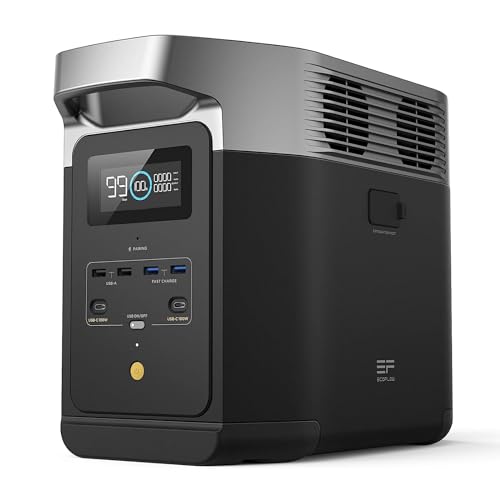
If you’re looking for reliable power for every adventure in 2025, I recommend exploring the top LFP battery power stations like the EF ECOFLOW DELTA 2, GRECELL, BLUETTI, OUPES, and Anker SOLIX C200. These models boast long-lasting LiFePO4 batteries, fast recharging, and versatile ports that suit camping, emergencies, and off-grid living. Each option offers a unique mix of capacity and portability. If you’d like to discover the best fit for your needs, keep going—there’s plenty more to uncover.
Key Takeaways
Look for models with high capacity, fast charging, and expandability to ensure reliable power for diverse outdoor and emergency needs.
Prioritize units with multiple ports, versatile recharging options, and high surge wattage for powering various devices simultaneously.
Choose lightweight, portable designs with rugged features suitable for camping, travel, and off-grid use.
Select batteries with long cycle life and advanced BMS for durability and safety over extended periods.
Consider cost-to-performance ratio, ensuring features like fast recharge and expandability match your specific adventure requirements.
EF ECOFLOW Portable Power Station DELTA 2
If you’re looking for a reliable portable power station that can handle most outdoor and emergency needs, the EF ECOFLOW DELTA 2 stands out with its impressive 1024Wh LiFePO4 battery and 1800W continuous output. It’s expandable from 1kWh to 3kWh with extra batteries, perfect for home backup, camping, or off-grid living. It charges quickly—80% in 50 minutes—and supports solar input up to 500W. With 15 versatile outlets, it powers most appliances safely and quietly. Built with durable LiFePO4 chemistry and a smart BMS, the DELTA 2 promises over 3,000 cycles and long-lasting reliability for any adventure.
Best For: outdoor enthusiasts, emergency preparedness, and off-grid living who need a reliable, expandable, and eco-friendly portable power solution.
Pros:
Large 1024Wh LiFePO4 battery with over 3,000 cycles ensures long-term durability
Fast charging capabilities: 0-80% in 50 minutes and supports up to 500W solar input
15 versatile outlets provide extensive power options for various appliances
Cons:
The initial cost may be higher compared to traditional gas generators
Expandability requires additional batteries, which can increase overall investment
Heavier and bulkier than smaller portable power options, potentially affecting portability
Portable Power Station 600W (1200W Peak), 288Wh (90,000mAh) LFP Battery Solar Generator
This portable power station stands out for outdoor enthusiasts and travelers who need reliable, lightweight energy on the go. Weighing just 8.86 pounds, it offers 600W continuous power with a 1200W surge, ideal for laptops, mini-fridges, and small tools. Its 288Wh LiFePO4 battery provides long-lasting performance and safety, with options to recharge via solar, wall, or car outlets. The compact design features multiple outlets—including AC, USB, and car sockets—and a built-in LED light for emergencies. Perfect for camping, home backup, or travel, it balances power and portability, ensuring you stay connected wherever life takes you.
Best For: outdoor enthusiasts, travelers, and emergency preparedness users seeking a lightweight, reliable portable power source for small to medium devices.
Pros:
Compact and lightweight at only 8.86 lbs, easy to carry and transport
Multiple charging options including solar, wall, and car outlets for versatile recharging
Long-lasting LiFePO4 battery ensures safety, durability, and extended use
Cons:
Limited 288Wh capacity may not power larger appliances for extended periods
Only supports devices up to 600W continuously, restricting high-power equipment
Solar panels and cables are sold separately, adding to initial setup cost
GRECELL Portable Power Station 300W, 230Wh Lithium Battery
The GRECELL Portable Power Station 300W stands out as an ideal choice for outdoor enthusiasts and emergency preppers seeking reliable, portable power. Its 230Wh LiFePO4 battery supports peaks of 600W, allowing it to power up to seven devices simultaneously, including laptops, phones, lights, and small appliances. With multiple recharging options—AC, solar, car, or Type-C—it’s versatile and quick to recharge in just 1.5 hours. Safety features like advanced BMS and dual cooling fans guarantee durability and safety during use. Its compact, lightweight design, coupled with a handy LED flashlight, makes it perfect for camping, travel, or emergency situations.
Best For: outdoor enthusiasts, emergency preppers, and travelers needing reliable portable power for multiple devices.
Pros:
Supports up to 7 devices simultaneously with versatile output options including AC, USB-C, USB-A, and DC ports.
Fast recharge time of just 1.5 hours via multiple methods such as AC, solar, car, or Type-C.
Safe and durable with advanced BMS, overload, overcharge, and short-circuit protections, plus dual cooling fans.
Cons:
230Wh capacity may be limited for powering larger appliances over extended periods.
Slightly heavier and bulkier compared to smaller portable chargers, which may affect portability.
Requires compatible accessories for optimal solar or car charging setups, which are not included.
EF ECOFLOW Portable Power Station RIVER 2, 256Wh LiFePO4 Battery
Designed for portability and rapid recharging, the EF ECOFLOW RIVER 2 with its 256Wh LiFePO4 battery is an excellent choice for outdoor enthusiasts and emergency users who need reliable power on the go. Weighing just 7.7 pounds, it features six outlets—including AC, USB-C, and USB-A—delivering up to 600W continuous power. Its fast 1-hour recharge via X-Stream technology and solar compatibility make it versatile and eco-friendly. The durable LiFePO4 cells guarantee over 3,000 recharge cycles, providing nearly a decade of dependable use. Whether camping, RVing, or facing power outages, the RIVER 2 offers compact, reliable energy whenever you need it.
Best For: outdoor enthusiasts, campers, RV travelers, and emergency preparedness users seeking lightweight, reliable portable power with fast recharging capabilities.
Pros:
Compact and lightweight design at only 7.7 lbs for easy portability
Rapid 1-hour AC recharge with X-Stream technology
Long-lasting LiFePO4 battery with over 3,000 recharge cycles
Cons:
Limited capacity of 256Wh may not power larger appliances for extended periods
Solar panel not included, requiring an additional purchase for solar recharging
Only 600W continuous power output, restricting use to lower-wattage devices
OUPES Exodus 1200 Portable Power Station
If you’re seeking a portable power station capable of handling heavy-duty devices and providing reliable backup during outdoor adventures or emergencies, the OUPES Exodus 1200 stands out with its impressive 992Wh capacity and 1200W rated output. It powers essentials for days—like a fridge for over 25 hours or phones 60+ times—and features 10 versatile ports, including AC outlets, USB-C PD, and car sockets. Designed for high-drain devices, it delivers a surge of up to 3600W and has durable LiFePO4 batteries rated for over 3,000 cycles. Weighing just 23.5 pounds, it’s portable, supports solar recharging, and includes smart app control for added convenience.
Best For: outdoor enthusiasts, homeowners needing reliable backup power, and professionals requiring portable high-capacity energy solutions.
Pros:
High capacity (992Wh) and powerful 1200W rated output suitable for heavy-duty devices
Multiple versatile ports including AC, USB-C PD, and car outlets for simultaneous charging
Lightweight (23.5 pounds) and compact design for easy portability and outdoor use
Cons:
May require additional solar panels for optimal off-grid recharging
Limited surge capacity (3600W) might not support very high startup demands of some industrial equipment
Availability and pricing may vary depending on retailer and location
Jackery Explorer 1000 v2 Portable Power Station
For anyone seeking a reliable portable power station that combines high capacity with quick charging, the Jackery Explorer 1000 v2 stands out. It features a 1070Wh LiFePO4 battery, weighs just 23.8 pounds, and has a foldable handle for easy transport. With 1500W AC output and a 3000W surge capacity, it can power appliances like fridges, AC units, and electric pots. It charges rapidly—full in 1.7 hours using the default mode or 1 hour in emergency mode via the Jackery app. Multiple outlets, USB-C, USB-A, and LED lights make it versatile, ideal for camping, emergencies, and off-grid adventures.
Best For: outdoor enthusiasts, campers, and emergency prepper needing reliable, high-capacity portable power with quick charging.
Pros:
High capacity 1070Wh LiFePO4 battery with over 10 years lifespan and 4,000+ cycles
Fast charging options: full in 1 hour via emergency mode or 1.7 hours default, saving time and preserving battery health
Versatile outputs including 1500W AC, USB-C PD 100W, USB-A, and LED lights for multiple device charging needs
Cons:
Slightly heavier at 23.8 pounds, which may affect portability for some users
Requires activation of emergency mode each time to achieve 1-hour super charging, adding an extra step
Higher price point compared to smaller capacity power stations, potentially limiting affordability
EF ECOFLOW Solar Generator Delta 3 Portable Power Station
The EF ECOFLOW Solar Generator Delta 3 Portable Power Station stands out with its rapid charging capabilities, making it ideal for those who need reliable power on the go. It offers ultra-fast AC charging, reaching 80% in just 45 minutes thanks to X-Stream technology. Solar recharging is also efficient, taking around 9.3 hours with a 110W solar panel and boasting a 23% conversion rate. With a 1800W continuous output (expandable to 2600W), it can power everything from laptops to small appliances. Its built-in safety features, LiFePO4 batteries, and UPS support guarantee dependable, long-term performance for outdoor adventures or emergency use.
Best For: outdoor enthusiasts, emergency preparedness, and anyone needing fast, reliable portable power for home, camping, RV, or outdoor activities.
Pros:
Ultra-fast AC charging: reaches 80% in just 45 minutes with X-Stream technology.
High power output: 1800W continuous (expandable to 2600W) supports a wide range of devices.
Long-lasting and safe: LiFePO4 batteries with a 10+ year lifespan and built-in safety features.
Cons:
Charging via solar takes approximately 9.3 hours with a 110W panel, which may be slow in less sunny conditions.
Heavier and bulkier compared to smaller portable power stations, potentially less convenient for very lightweight travel.
Requires separate purchase of the solar panel if not included in the initial package.
Jackery Explorer 1000 v2 Portable Power Station
The Jackery Explorer 1000 v2 stands out as an ideal choice for outdoor enthusiasts and emergency preppers seeking reliable, long-lasting power. Its 1070Wh LiFePO4 battery provides a steady supply for appliances like fridges, AC units, and electric pots, with a 1500W continuous AC output and 3000W surge capacity. Weighing just 23.8 pounds and featuring a foldable handle, it’s easy to transport for camping, RV trips, or off-grid living. Multiple ports—including USB-C, USB-A, and AC outlets—support simultaneous device charging. Fast charging via the Jackery app and solar compatibility make it versatile, durable, and perfect for extended outdoor or emergency use.
Best For: outdoor enthusiasts, emergency preppers, and off-grid adventurers seeking reliable, long-lasting portable power for appliances and devices.
Pros:
High-capacity 1070Wh LiFePO4 battery with over 4,000 charge cycles for extended lifespan
Multiple charging options including fast USB-C, AC outlets, and solar compatibility
Portable design weighing only 23.8 pounds with a foldable handle for easy transport
Cons:
Solar panels sold separately, adding to overall cost
Limited to Jackery solar panel compatibility for solar charging
Relatively high price point compared to some smaller or less feature-rich power stations
BLUETTI Elite 200 V2 Portable Power Station
If you’re seeking a portable power station that combines high capacity with rapid charging, the BLUETTI Elite 200 V2 stands out as an ideal choice. It offers a massive 2073.6Wh capacity and a 2600W AC output, enabling you to power up to nine devices simultaneously. Its auto-grade LFP batteries deliver over 6000 charge cycles and a 17-year lifespan, ensuring long-term reliability. Thanks to TurboBoost technology and dual charging options, it can reach 80% in just 50 minutes. Its compact, lightweight design, combined with a user-friendly app, makes it perfect for camping, road trips, or backup power at home.
Best For: outdoor enthusiasts, travelers, and homeowners needing reliable, quick-charging portable power solutions for multiple devices.
Pros:
High capacity of 2073.6Wh with 2600W AC output supports multiple devices simultaneously
Fast charging with TurboBoost technology, reaching 80% in just 50 minutes
Long-lasting with over 6000 charge cycles and a 17-year lifespan
Cons:
May be relatively heavy for some users despite its compact design
Higher price point compared to smaller or less feature-rich power stations
Limited to nine device connections, which could be restrictive for larger setups
EF ECOFLOW DELTA 3 Portable Power Station
Designed for those who need reliable, fast-charging power on the go, the EF ECOFLOW DELTA 3 Portable Power Station stands out with its rapid full charge time of just 56 minutes, thanks to a combined 500W solar input and 1500W AC input. It supports flexible expansion up to 5kWh with compatible batteries like DELTA 3, DELTA Pro 3, and DELTA 2 Max. Powered by durable LiFePO4 cells, it offers 4000 cycles and a 10-year lifespan. With the ability to power 13 appliances simultaneously and advanced X-Boost technology, it’s perfect for off-grid adventures, emergencies, or home backup, all wrapped in a rugged, eco-friendly design.
Best For: outdoor enthusiasts, homeowners, and emergency preparedness individuals seeking reliable, fast-charging portable power with extensive expansion options.
Pros:
Rapid full charge in just 56 minutes with combined solar and AC inputs
Supports up to 13 appliances simultaneously with advanced X-Boost technology
Durable LiFePO4 cells offering 4000 cycles and a 10-year lifespan
Cons:
May be relatively heavy and bulky for portable use without additional support
Higher initial cost compared to basic portable power stations
Requires compatible batteries for maximum expansion potential
Jackery HomePower 3000 Portable Power Station with Solar Panels
With its compact design and powerful 3600W (7200W surge) output, the Jackery HomePower 3000 Portable Power Station is an excellent choice for anyone requiring reliable backup power or portable energy on the go. Weighing just 59.5 pounds and measuring 16.4 x 12.8 x 12 inches, it’s the smallest 3kWh model with CTB technology, making it highly portable. It supports fast recharging—just 1.7 hours via hybrid AC/DC—and can be topped up in 2.2 hours with AC or up to 80% in 9 hours via solar panels. Its versatile ports and LiFePO4 battery guarantee safe, long-lasting power for home essentials and outdoor adventures.
Best For: outdoor enthusiasts, homeowners seeking reliable backup power, and emergency preparedness individuals needing portable and long-lasting energy solutions.
Pros:
Compact and lightweight design at 59.5 pounds, making it highly portable for outdoor and on-the-go use
Rapid recharging options, including full recharge in 1.7 hours via hybrid AC/DC and up to 80% in 9 hours with solar panels
Versatile power outlets including AC, USB-C, USB-A, and DC ports, supporting multiple devices simultaneously
Cons:
The product is relatively heavy compared to smaller portable power stations, which may affect portability for some users
Solar panels are sold separately, potentially increasing overall cost for complete setup
Higher price point due to advanced batteries and technology, which may be a consideration for budget-conscious buyers
EF ECOFLOW Solar Generator DELTA2 with 220W Solar Panel
The EF ECOFLOW Solar Generator DELTA2 with 220W Solar Panel stands out for outdoor enthusiasts and emergency preparedness, thanks to its high-capacity battery and versatile charging options. Its 1800W continuous power can run most appliances, making it perfect for camping, RV trips, or home backup. The 220W bifacial solar panel captures up to 25% more energy, enabling efficient off-grid charging. With a lifespan of over 3000 cycles thanks to LiFePO4 batteries and a smart BMS, it offers long-term durability. Expandable from 1kWh to 3kWh, it’s adaptable to your power needs. Its 15 outlets support a wide range of devices quietly and eco-friendlily.
Best For: outdoor enthusiasts, emergency preparedness, and homeowners seeking a reliable portable power solution with expandability and eco-friendly charging options.
Pros:
High-capacity 1800W continuous power output suitable for most appliances
Efficient 220W bifacial solar panel captures up to 25% more energy for off-grid charging
Long-lasting LiFePO4 batteries with over 3000 cycles and modular capacity expansion from 1kWh to 3kWh
Cons:
The initial setup and understanding of multiple outlets may be complex for some users
Higher upfront cost compared to smaller or less feature-rich portable power stations
Charging capacity via solar (up to 500W) may limit faster recharging in certain situations
BLUETTI EB3A Portable Power Station with 268Wh Battery
If you’re looking for a compact power station that balances portability with reliable energy, the BLUETTI EB3A is an excellent choice. Its 268Wh LiFePO4 battery guarantees steady power, while the 600W inverter (1200W surge) can handle essential devices. With nine outlets, it’s versatile enough for camping or emergencies. Charging is quick—you can go from 0 to 80% in just 30 minutes with PV+AC, and it supports up to 350W via a single cable. Compatible with solar panels up to 200W, it’s great for renewable energy. Plus, it acts as a UPS, protecting your sensitive electronics during outages.
Best For: outdoor enthusiasts, emergency preparedness, and anyone needing a reliable, portable power source for essential devices.
Pros:
Compact and lightweight design makes it easy to carry and store.
Fast charging from 0 to 80% in just 30 minutes with PV+AC.
Supports multiple outlets and devices, including sensitive electronics with UPS protection.
Cons:
268Wh capacity may be insufficient for long-term power needs.
Solar panel compatibility limited to 200W input, requiring additional panels for faster recharge.
Solar panels are not included, so additional purchase may be necessary.
BLUETTI Elite 100 V2 Portable Power Station
For outdoor enthusiasts and emergency preparedness fans seeking a lightweight yet powerful backup, the BLUETTI Elite 100 V2 stands out. It packs a 1024Wh LiFePO4 battery and offers 1800W continuous power, perfect for camping or outages. Weighing just 25 lbs and measuring 12.6 x 8.5 x 9.8 inches, it’s easy to transport thanks to its hidden handle. It can support up to 11 devices simultaneously through four AC outlets and multiple ports. Fast charging in 70 minutes, whether via solar or AC, makes it reliable and ready when needed. Its silent operation and durable build make it a top choice for portable power.
Best For: outdoor enthusiasts, campers, and emergency preparedness fans seeking a lightweight, reliable backup power source that can support multiple devices simultaneously.
Pros:
Compact and lightweight design weighing only 25 lbs for easy portability
Fast charging capability — fully recharges in 70 minutes via solar or AC power
Supports up to 11 devices at once with multiple ports and four AC outlets
Cons:
Limited to 1024Wh battery capacity, which may not be sufficient for high-energy appliances over extended periods
Higher price point compared to smaller or less feature-rich portable power stations
Requires proper handling of solar or AC input cables for optimal charging efficiency
Anker SOLIX C200 Portable Power Station (192Wh, No Wall Charger)
Designed for outdoor enthusiasts and travelers, the Anker SOLIX C200 Portable Power Station stands out with its lightweight, compact design that’s 39% smaller than similar models. It packs a 192Wh LiFePO4 battery, delivering 200W of power, perfect for charging multiple devices simultaneously. The station features a versatile 140W USB-C fast-charging port, along with additional USB-C and USB-A ports. Recharging is flexible—via USB-C wall chargers, solar panels, or car outlets—with fast recharge times of up to 80% in just 1.3 hours. Built to last with 3,000-cycle batteries and backed by a 3-year warranty, it’s reliable power for any adventure.
Best For: outdoor enthusiasts, travelers, and emergency preparedness individuals seeking a compact, reliable portable power source for multiple devices.
Pros:
Lightweight and 39% smaller than comparable models, enhancing portability
Fast recharge capabilities up to 80% in 1.3 hours via USB-C PD 3.1 port
Long-lasting with 3,000-cycle LiFePO4 batteries and a 3-year warranty
Cons:
No included wall charger, requiring an additional purchase for initial charging
Solar panel compatibility is limited to specific panels and sold separately
Only the USB-C3 port supports recharging the power station itself, limiting recharging options from some devices
Factors to Consider When Choosing an LFP Battery Power Station
When selecting an LFP battery power station, I focus on key factors like battery lifespan, power output, and expandability to meet my needs. Recharging speed and port options also matter, ensuring I can use and recharge the station efficiently. Understanding these points helps me choose a reliable, versatile device for any situation.
Battery Lifespan Durability
Choosing an LFP battery power station means considering how long it will last and how durable it is over time. LFP batteries typically support over 3,000 to 6,000 charge cycles before their capacity drops below 80%, which can translate to 10-20 years of reliable use with proper maintenance. Their durability is enhanced by resistance to thermal runaway, making them safer and more dependable in various conditions. The stability of LFP chemistry allows for frequent deep discharges without significant degradation, extending their lifespan. Additionally, advanced Battery Management Systems (BMS) regulate temperature, voltage, and current, further protecting the battery and prolonging its operational life. Overall, LFP batteries are built to provide long-lasting, durable power ideal for extended adventures.
Power Output Capacity
A power station’s output capacity directly impacts its ability to meet your energy needs. I always check that the continuous power output matches or exceeds the total wattage of my devices I plan to run simultaneously. Surge capacity is equally important—this handles the brief startup currents of high-demand appliances like refrigerators or power tools. I also look at the number and types of outlets to guarantee I can connect multiple devices without hassle. For sensitive electronics, verifying the inverter’s wattage rating is vital for safe, efficient operation. Finally, I choose a power station with enough capacity to sustain my essential devices during outages or outdoor adventures. This way, I guarantee reliable, consistent power without surprises or limitations.
Expandability Options
Expanding your LFP battery power station’s capacity can substantially enhance its versatility and longevity, but it’s essential to contemplate how easily you can add more batteries. Modular designs that support expandable batteries allow you to customize capacity based on your needs, whether for portable use or home backup. Compatibility is vital—ensure the system supports seamless daisy-chaining of multiple units without complex setups. Check if the power station’s built-in management features and connector standards facilitate safe, straightforward expansion without sacrificing portability or safety. Also, consider how adding batteries impacts recharge times, weight, and overall size. A well-designed system balances expandability with practicality, giving you flexibility for future energy demands while maintaining ease of use.
Recharging Speed
Recharging speed plays a vital role in maximizing the effectiveness of an LFP battery power station, especially when quick turnaround times are needed during outages or outdoor adventures. Fast recharging allows me to restore power quickly, minimizing downtime and keeping my devices running smoothly. Advanced fast-charging technologies can boost recharge times from 0% to 80% in as little as 30 minutes, which is a game-changer. High wattage input options, like 500W or more, markedly cut recharging duration when using solar or AC sources. Ideally, I want a station that can be fully recharged in under two hours, ensuring readiness for emergencies or frequent use. Features like X-Stream or TurboBoost optimize charging efficiency and safety, making recharging both quick and reliable.
Port Selection Flexibility
When choosing an LFP battery power station, port selection flexibility is essential because it determines how many devices I can connect simultaneously and how easily I can do so. Multiple outlet types like AC, USB-C, USB-A, and DC ports give me versatile options to power various gadgets at once. The number and variety of ports directly impact my ability to support different appliances and electronics without needing extra adapters. Some models even have expandable or modular ports, allowing me to customize my setup as needed. Accessibility and placement of these ports are also important, especially in tight or outdoor settings where convenience matters. Overall, a well-rounded port selection guarantees I can energize all my devices efficiently, whether low or high wattage, without hassle.
Portability and Size
Choosing the right LFP battery power station hinges on its portability and size, especially if I plan to take it on outdoor adventures or keep it handy during emergencies. LFP models are typically more compact and lighter than traditional lithium-ion units, making them easier to carry and store. Smaller units, around 200-300Wh, are perfect for quick trips or backup power, while larger capacities—up to several kilowatt-hours—offer more power but are bulkier. Features like integrated handles, lightweight casings, and foldable designs further enhance portability. When choosing, I consider the overall dimensions and weight, ensuring it fits my carrying needs. The goal is to balance capacity with ease of transport, so I can rely on my power station wherever I go.
Safety and BMS Features
A crucial factor in selecting an LFP battery power station is its safety features, primarily governed by a sophisticated Battery Management System (BMS). The BMS continuously monitors voltage, current, and temperature to prevent overcharging, over-discharging, and overheating, which are critical for safe operation. It automatically disconnects the battery during fault conditions, reducing the risk of thermal runaway or fires. A well-designed BMS provides protections like short-circuit and overload safeguards, along with temperature regulation. These features ensure the power station operates safely over its lifespan, often lasting more than 3,000 charge cycles without compromise. Certifications from safety organizations like UL or CE further validate that the system meets stringent safety and performance standards, giving me confidence in its reliability.
Price and Warranty
While safety features like a reliable BMS are vital, evaluating the price and warranty options is equally important to guarantee long-term value. A longer warranty, such as five years or more, shows manufacturer confidence and suggests the product’s durability. Competitive pricing helps you get the best deal, but watch out for very low prices, which may signal compromised quality or limited warranty coverage. Some power stations offer extended warranties or service plans that cover battery replacements and repairs beyond the standard period, providing peace of mind. It’s wise to balance the initial cost with potential savings from fewer repairs over time. Reading customer reviews can also reveal real-world reliability and how responsive the brand is when addressing warranty claims.
Frequently Asked Questions
How Long Do LFP Batteries Typically Last Before Replacement?
LFP batteries typically last between 2,000 to 5,000 charge cycles before needing replacement. I’ve found that with proper care, they can last around 10 to 15 years, depending on usage and maintenance. I always make sure they’re not overcharged or deeply discharged, which helps prolong their lifespan. Overall, I consider LFP batteries to be a reliable, long-term power source that can serve me well for many years.
Are LFP Power Stations Safe for Indoor Use?
Yes, LFP power stations are generally safe for indoor use. I always guarantee proper ventilation and follow manufacturer instructions to prevent overheating or gas buildup. LFP batteries are stable and less prone to thermal runaway compared to other lithium-ion types, making them a safer choice for indoor environments. Just remember to keep them in a cool, dry spot and avoid exposing them to extreme temperatures for maximum safety.
Can LFP Batteries Be Recycled Effectively?
Think of LFP batteries as resilient trees in a recycling forest. Yes, they can be recycled effectively, with processes that reclaim valuable materials like lithium, iron, and phosphate. These components are then reborn into new batteries, reducing waste and environmental impact. I’ve seen how recycling keeps the cycle alive, turning old batteries into the foundation for future power solutions. It’s a sustainable dance of renewal that benefits us all.
What Maintenance Is Required for LFP Battery Power Stations?
I keep my LFP battery power station in good shape by regularly inspecting it for any signs of wear or damage. I make certain it’s charged correctly, avoiding overcharging or deep discharges, and keep it clean and dry. Periodically, I check the connections and vents to prevent dust buildup. Following these simple steps helps extend its lifespan and guarantees reliable power whenever I need it on my adventures.
How Do Temperature Fluctuations Affect LFP Battery Performance?
Temperature fluctuations can substantially impact LFP battery performance, affecting capacity, lifespan, and safety. When it’s too hot, the battery may degrade faster, losing efficiency over time. Cold temperatures can reduce power output and make charging more difficult. I always recommend keeping your LFP battery within its ideal temperature range, using insulation or heating/cooling solutions when necessary. This way, you guarantee reliable power and extend your battery’s lifespan.
Conclusion
After exploring these top LFP battery power stations, I believe they truly prove that reliable, safe, and eco-friendly power is within our reach. The durability of LiFePO4 batteries challenges the myth that portable power can’t keep up with our adventures. With advancements in technology, I’m convinced these stations will become essential for anyone seeking dependable power on the go. It’s a game-changer—trust me, your next outdoor trip will never be the same.