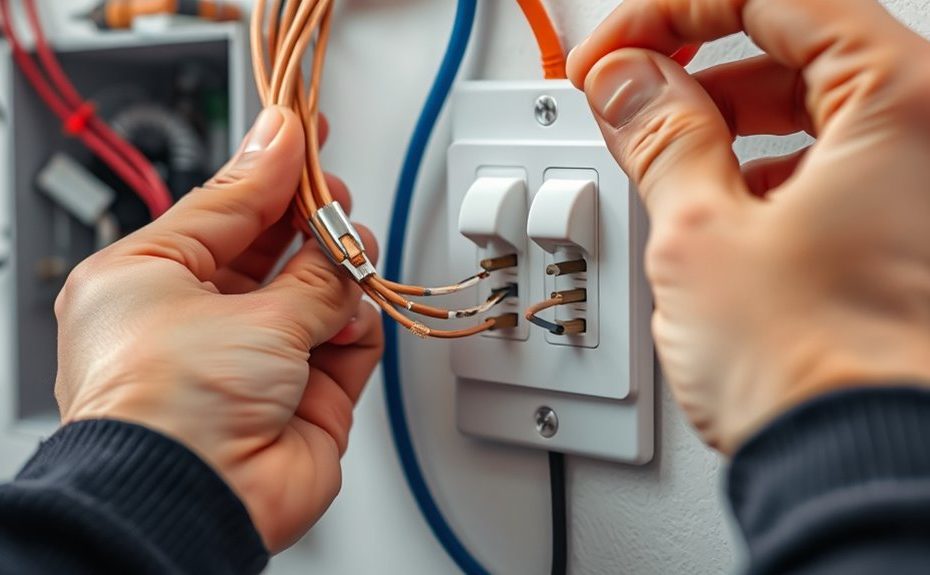
To wire a smart light switch safely, turn off power at the breaker and use a voltage tester to confirm it’s off. Identify the hot, neutral, ground, and traveler wires, and connect them following the switch manufacturer’s instructions. Secure all connections with wire nuts and guarantee grounding is proper. Carefully tuck wires into the box, mount the switch, and restore power. If you keep exploring, you’ll find more tips to ensure your installation is both safe and reliable.
Key Takeaways
Turn off power at the breaker and verify with a voltage tester before beginning any wiring.
Identify and connect the hot (black/red), neutral (white), and ground (green/bare) wires per the switch’s instructions.
Follow manufacturer’s wiring diagrams carefully, especially for multi-location (three-way) setups involving traveler wires.
Ensure all wire connections are secure, use wire nuts properly, and keep wires neatly tucked into the electrical box.
After wiring, restore power, then test the switch to confirm proper operation and ensure safety before finalizing installation.
Wiring a smart light switch can enhance your home’s convenience and energy efficiency, but it’s important to do it safely. Before you start, turn off the power at the breaker to prevent any risk of electric shock. Confirm the power is off using a voltage tester. Once you’re sure, remove the faceplate and carefully loosen the switch from the electrical box. This step allows you to see the existing wiring and plan your connections.
When working with switch wiring techniques, pay close attention to the wiring setup in your box. Typically, there will be a hot wire (usually black or red), a neutral wire (white), a ground wire (green or bare copper), and possibly a traveler wire if you have a three-way switch setup. The ground wiring is vital for safety; it provides a path for electrical faults to trip the breaker. Connect the ground wire from your switch to the ground wire in the box using a wire nut. If your smart switch has a grounding screw, attach the ground wire securely to it. Proper grounding minimizes the risk of electrical shocks and guarantees your system operates safely.
Next, focus on the hot wire. Connect the hot wire from your power source to the switch’s line terminal, following the manufacturer’s instructions. If your switch requires a neutral wire, connect the neutral from the wall to the switch’s neutral terminal. Not all smart switches need a neutral, but if yours does, make sure this connection is solid, as it powers the switch’s internal electronics. Use wire nuts to secure these connections firmly, ensuring there are no exposed strands that could cause shorts or arcing.
If your setup involves traveler wires for a three-way switch, connect them according to the switch wiring techniques recommended by the manufacturer. In some cases, you might need to replace a traditional switch with a smart switch that supports multi-location control. Always double-check your wiring against the switch’s instructions to avoid miswiring, which can lead to malfunction or safety hazards.
Finally, once all connections are secure, carefully tuck the wires into the electrical box and mount the switch. Turn the power back on at the breaker, and test your smart switch to verify it operates correctly. Taking your time with grounding and switch wiring techniques guarantees a safe, reliable installation that will serve you well in controlling your lighting efficiently. Additionally, understanding Yogas benefits can promote a balanced approach to home improvement projects, ensuring both safety and well-being.
Frequently Asked Questions
Can I Install a Smart Switch Without Turning off the Power?
You shouldn’t install a smart switch without turning off the power, as doing so poses a risk of electric shock and wiring damage. Even if the wiring seems simple, a power outage can occur unexpectedly. To guarantee safety, turn off the circuit breaker and double-check that the power is off before starting. This minimizes wiring complexity and protects you from potential hazards during installation.
Is a Neutral Wire Always Required for Smart Switch Installation?
A neutral wire isn’t always required for smart switch installation, but it depends on the smart switch model and your home’s wiring. Check the smart switch requirements before buying, as some need a neutral wire to function properly, especially in older homes. If your switch doesn’t need one, you can install it without a neutral wire. Always verify your wiring and follow the manufacturer’s instructions for a safe, successful setup.
How Do I Troubleshoot if the Smart Switch Doesn’T Connect?
If your smart switch doesn’t connect, first check your Wi Fi connectivity. Make sure your device is within range and the signal isn’t weakened by interference from other electronics or walls. Restart your router and switch, then try reconnecting. Confirm your app is updated and follow the manufacturer’s troubleshooting steps. Clearing signal interference and improving Wi Fi strength often resolves connectivity issues.
Are There Specific Safety Precautions for Outdoor Smart Switches?
Imagine your outdoor smart switch standing guard against the elements. To keep it safe, follow weatherproofing precautions like sealing all connections and using outdoor-rated wiring. Guarantee the switch is properly grounded and installed in a dry location. Avoid exposing it to direct rain or snow. These outdoor wiring safety tips protect your device and prevent electrical hazards, giving you peace of mind while controlling your outdoor lighting effortlessly.
Can I Replace a Traditional Switch With a Smart Switch Myself?
Yes, you can replace a traditional switch with a smart switch yourself, but you need to prioritize DIY wiring and electrical safety. Turn off the power at the circuit breaker before starting, and follow the smart switch’s wiring instructions carefully. If you’re unsure about any step, it’s best to consult a professional. Always use insulated tools and double-check your connections to avoid electrical hazards.
Conclusion
Now that you’ve navigated the wiring maze, think of your home as a symphony waiting to be conducted. By wiring your smart light switch safely, you’re like a skilled conductor guiding each note into harmony. When done right, your lighting system becomes a shining orchestra, brightening your space effortlessly. Remember, safety is your baton—handle it with care, and enjoy the beautiful, seamless glow of your connected home.