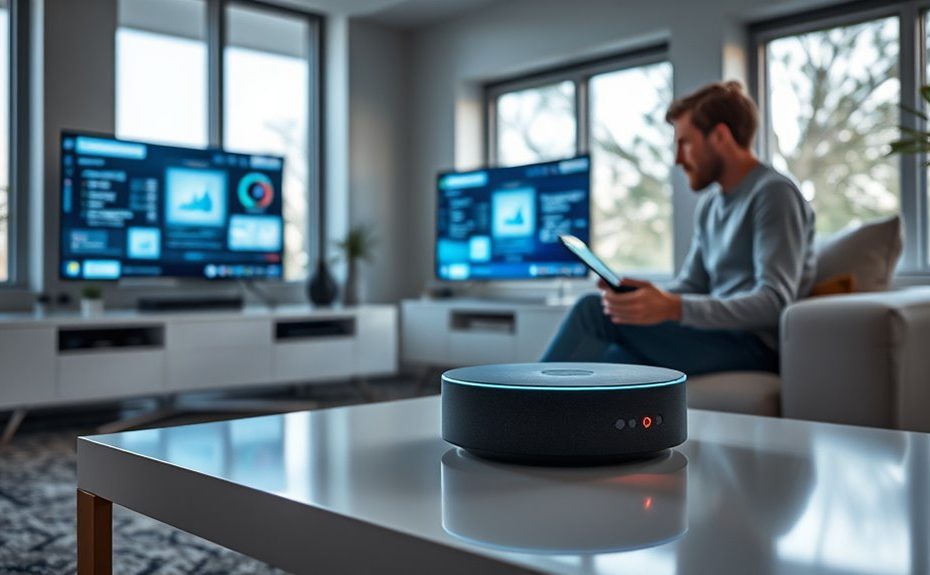
Edge computing processes data at or near your devices, allowing them to respond instantly and work more efficiently without relying heavily on cloud connections. It helps smart home gadgets like thermostats and security cameras react quickly, improves privacy, reduces bandwidth use, and keeps devices functioning even without internet. This technology makes your devices smarter and more responsive. If you want to understand how this all works and benefits you, keep exploring the basics below.
Key Takeaways
Edge computing processes data locally at devices or nearby nodes, reducing reliance on cloud servers.
It enables smart devices like thermostats and wearables to respond instantly to user needs.
Benefits include faster responses, lower bandwidth use, and enhanced privacy by limiting data transmission.
Local data analysis improves security, safety, and device reliability even during internet outages.
Future smart homes will become more intuitive and efficient with increased edge computing integration.
Have you ever wondered how devices process data so quickly right at the source? That’s the magic of edge computing. Instead of sending every bit of information to a distant data center, edge computing enables your smart home devices and wearable technology to handle data locally. When you walk into your smart home, for example, your smart thermostat detects your presence and instantly adjusts the temperature without waiting for instructions from a cloud server. This immediate response is made possible because processing happens nearby, right at the device or within a close network node. Similarly, your wearable fitness tracker monitors your heart rate and activity levels in real time, providing instant feedback without delay. This local processing not only speeds up responses but also reduces the load on internet bandwidth, making your devices more efficient and responsive.
Edge computing allows devices to process data locally for faster responses and greater privacy.
Edge computing is crucial for the growing ecosystem of smart home devices and wearable technology. These devices generate enormous amounts of data daily—think of security cameras capturing video footage, voice assistants processing commands, or health monitors tracking vital signs. Sending all that data to the cloud would be slow, inefficient, and could raise privacy concerns. Instead, edge computing allows these devices to analyze and act on data locally, sending only relevant summaries or alerts to the cloud. For instance, a security camera with edge computing capabilities can detect motion or identify faces locally, alerting you immediately if something’s amiss. This immediate detection enhances safety and convenience while safeguarding your privacy by limiting unnecessary data transmission. High processing speeds are key to ensuring these devices operate effectively in real time.
You benefit from edge computing because it creates a more seamless, responsive experience. Your smart home devices become smarter—they can anticipate your needs, respond swiftly to commands, and operate reliably even if your internet connection falters. Wearable technology benefits similarly; health data can be processed instantly, allowing for real-time alerts if your vitals indicate a problem. This decentralization of data processing also means less reliance on cloud servers, which can sometimes be slow or vulnerable to outages. As a consumer, you gain faster, more secure, and more private interactions with your devices.
In essence, edge computing bridges the gap between your devices and the cloud, bringing processing power closer to where the action happens. It’s what makes your smart home smarter and your wearable tech more responsive. You get faster feedback, enhanced privacy, and a more reliable experience—all because data doesn’t have to travel far to be understood and acted upon. As technology advances, expect edge computing to become even more integrated into your daily life, making smart devices more intuitive and efficient than ever before.
Frequently Asked Questions
How Does Edge Computing Differ From Traditional Cloud Computing?
Edge computing differs from traditional cloud computing because it processes data closer to you, reducing latency and improving response times. Instead of sending all data to a remote cloud server, it handles data locally or nearby devices. This means faster data processing, less bandwidth usage, and better performance for real-time applications like streaming, gaming, or smart home devices. You get quicker, more efficient service without relying solely on distant cloud centers.
What Devices Are Most Impacted by Edge Computing Advancements?
Imagine your smart home and wearable devices as explorers venturing into new territories. With edge computing advancements, these devices become more powerful and responsive, processing data locally rather than relying on distant servers. Your smart home’s security cameras and voice assistants gain quicker reactions, while wearable gadgets track health metrics more accurately. As a result, these devices transform into smarter, more intuitive companions, enhancing your daily life with faster, more reliable performance.
Is Edge Computing Secure for Everyday Consumer Use?
Edge computing can be secure for everyday use if you stay cautious. Privacy concerns arise because data is processed closer to you, but robust data encryption helps protect your information. Always guarantee your devices use strong encryption and keep software updated. Avoid connecting to unsecured networks, and use strong passwords. By taking these steps, you can enjoy the benefits of edge computing while maintaining your privacy and security.
How Can I Tell if My Home Devices Use Edge Computing?
You can tell if your home devices use edge computing by checking device indicators like status lights or app notifications, which often signal local processing. Also, review the connectivity methods—devices that connect directly to a local hub or process data on-device typically use edge computing. If your device mentions local AI, real-time responses, or edge servers, it’s likely leveraging edge computing to enhance performance and privacy.
What Are the Future Trends in Consumer Edge Computing Technology?
Imagine Marty McFly stepping into a future where smart home innovations become even smarter, and wearable tech advances predict your needs before you do. Future trends in consumer edge computing include faster data processing right at your devices, enhanced privacy, and seamless integration across gadgets. Expect personalized experiences, smarter assistants, and more efficient energy use, making your everyday life more convenient and connected without the lag of cloud delays.
Conclusion
Now that you understand the basics of edge computing, you’re on the verge of revealing a tech revolution! Imagine your devices working faster than ever, making your life smoother than silk, and transforming your world in ways you never thought possible. Edge computing isn’t just a trend; it’s the secret weapon for an ultra-connected future. Get ready to harness this incredible technology and become a pioneer in the most exciting digital era ever!