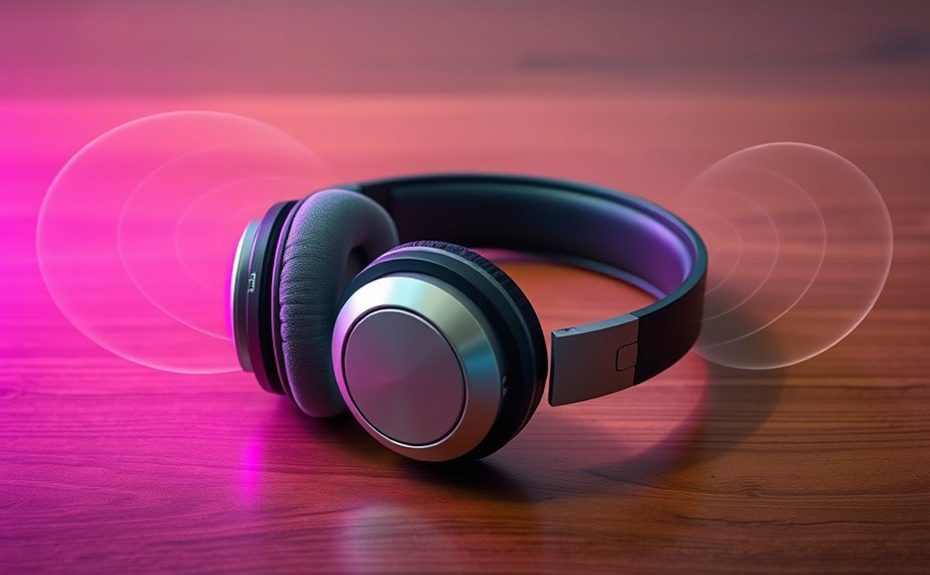
Spatial audio on headphones creates a realistic 3D sound environment by mimicking how your ears perceive sound from different directions and distances. It uses binaural recordings or digital processing algorithms to simulate spatial cues like timing, volume, and frequency differences. This makes sounds seem to come from specific points in space, enhancing immersion for movies, music, and gaming. If you continue exploring, you’ll discover how these techniques work and how they improve your listening experience.
Key Takeaways
Spatial audio creates a 3D sound environment using binaural recording and digital processing techniques.
It mimics human ear perception by capturing subtle cues like timing and intensity differences.
Advanced algorithms analyze binaural data to simulate sound sources from any direction and distance.
This technology enhances realism in movies, music, gaming, and virtual reality without extra hardware.
It provides immersive, lifelike audio experiences by adding depth, directionality, and spatial awareness through headphones.
Spatial audio on headphones transforms the way you experience sound by creating a three-dimensional listening environment. This technology immerses you in audio that feels as if it’s coming from all around you, making movies, music, and games more realistic and engaging. One of the key techniques behind this immersive experience is binaural recording, a method that captures sound exactly as your ears perceive it. Binaural recordings use two microphones placed inside a dummy head or worn by a person, mimicking the shape and size of human ears. This setup records not only the sound signals but also the subtle differences in timing and intensity that occur naturally when sound waves reach each ear. When you listen to binaural recordings through headphones, your brain processes these cues, creating a convincing 3D sound image that appears to be located in space around you.
This process is fundamental to achieving effective 3D sound localization, which is the ability to identify the origin of a sound in three-dimensional space. When sound is accurately localized, you can tell whether it’s coming from above, below, behind, or in front of you. Spatial audio on headphones leverages this principle by recreating these positional cues artificially. Advanced algorithms analyze the binaural data and generate audio signals that simulate how sound would behave in a real environment. As a result, you perceive sounds as if they’re happening in specific locations around you, enhancing the realism of your listening experience.
The beauty of this technology is that it doesn’t require complicated setups or external speakers. Instead, it relies on sophisticated digital processing to deliver a convincing 3D soundscape directly through your headphones. Whether you’re listening to a virtual concert, playing an immersive video game, or watching a film, spatial audio makes everything more vivid. You’ll notice subtle spatial cues that help you pinpoint where sounds originate, adding depth and context that standard stereo audio can’t provide. This heightened sense of space not only improves entertainment but can also benefit fields like virtual reality, training simulations, and remote communication, where spatial awareness is vital.
In essence, by understanding and utilizing binaural recording and 3D sound localization, spatial audio on headphones transforms your ordinary listening into a dynamic and lifelike experience. It’s about more than just hearing sound; it’s about feeling it as part of a three-dimensional environment, right in your ears. Additionally, the development of audio processing algorithms continues to improve the realism and immersion of spatial audio, making it increasingly accessible for everyday use.
Frequently Asked Questions
Does Spatial Audio Work With All Headphones?
Spatial audio doesn’t function with all headphones. It mainly functions with specific headphone types that support it, like certain wired or wireless models designed for immersive sound. You also need compatible audio formats, such as Dolby Atmos or DTS:X, to experience spatial audio fully. Check your headphones and the audio source to make sure they support these formats and features, so you can enjoy the immersive, 3D sound experience.
How Does Spatial Audio Affect Battery Life?
Imagine your headphones as tiny power plants, working overtime when spatial audio kicks in. This feature increases battery consumption because it requires extra processing, so your device’s power optimization becomes essential. As a result, spatial audio can drain your battery faster, making you more aware of the need to manage your device’s power settings. Staying mindful of this helps you enjoy immersive sound without unexpectedly losing your music or calls.
Can Spatial Audio Be Used During Phone Calls?
Yes, you can use spatial audio during phone calls, but device compatibility matters. Not all headphones support this feature for calls, and privacy concerns may arise if your surroundings can hear enhanced audio effects. Check if your device and headphones are compatible with spatial audio during calls. Keep in mind that using spatial audio might slightly impact call quality or battery life, so consider these factors before activating it during conversations.
Is Spatial Audio Compatible With All Streaming Services?
Imagine you’re at a concert, feeling surrounded by sound—spatial audio creates that immersive experience. Not all streaming services support it, but many do, especially those that utilize advanced surround sound audio formats like Dolby Atmos. Check your favorite platform’s compatibility before streaming. You might need specific headphones or app updates, but once everything aligns, you’ll enjoy a rich, multidimensional listening experience.
What Are the Limitations of Spatial Audio in Gaming?
In gaming, spatial audio enhances environmental realism by creating immersive soundscapes, but it has limitations. Not all games support advanced spatial audio features, which can hinder user accessibility for those with hearing impairments. Additionally, some headsets may struggle with accurate positioning, reducing realism. You might also experience latency or compatibility issues, so check if your device and the game properly support spatial audio to enjoy its full benefits.
Conclusion
Now that you understand how spatial audio creates immersive soundscapes on headphones, imagine what’s still possible. As technology advances, the line between virtual and real blurs even further, promising experiences you haven’t yet dreamed of. Will you embrace these new realities, or wonder what’s missing? The future of sound is unfolding before your ears—are you ready to listen? The next chapter may hold surprises that change everything you thought you knew about audio.