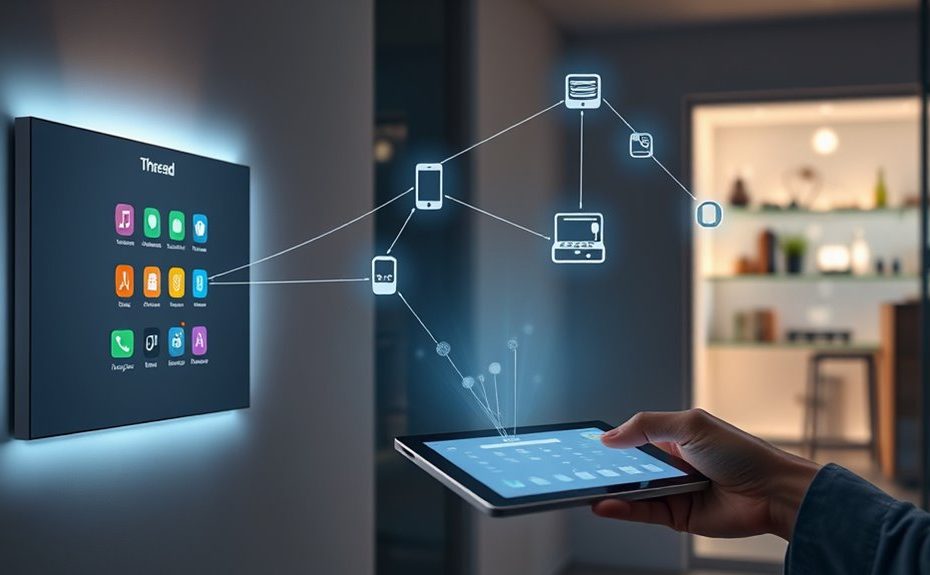
Thread 1.4 enhances smart-home interoperability by standardizing device recognition and streamlining onboarding from multiple brands, making your setup easier and more reliable. It improves cloud connectivity via IPv6 and Ethernet, ensuring stable remote control and automation. Network management tools help you troubleshoot quickly, while power and security features extend device lifespans and keep your network safe. To discover the full scope of these updates and how they can benefit your smart home, keep exploring these changes further.
Key Takeaways
Thread 1.4 enhances device recognition and onboarding, improving smart-home interoperability across different brands.
It introduces standardized trust and credential sharing protocols for seamless device integration.
Improved mesh networking features support self-healing and reliable connectivity for smart-home devices.
Thread 1.4 offers better support for cloud connectivity and IPv6, expanding remote control capabilities.
Overall, it simplifies device setup and management, fostering a more cohesive and secure smart-home ecosystem.
Unified Device Recognition and Network Integration
Thread 1.4 makes it easier to recognize and integrate devices from different manufacturers into a single, cohesive mesh network. You no longer have to worry about creating separate networks for each brand or ecosystem. Instead, all compatible devices can join seamlessly, thanks to standardized recognition and trust protocols. This simplification means you spend less time on setup and troubleshooting. As new devices connect, they automatically become part of the existing network, boosting coverage and reliability. The self-healing and self-organizing features ensure the network stays robust even if devices go offline or move around. You gain a more stable, unified home system that leverages all your devices to provide consistent performance and simplified management. Security protocols ensure that only trusted devices are connected, enhancing overall network safety. Additionally, device interoperability is improved through standardized communication methods, further streamlining integration. The integration process also benefits from standardized recognition, making device onboarding faster and more reliable. Furthermore, adopting these standards can help mitigate compatibility issues that often arise with diverse smart-home ecosystems.
Enhanced Cloud Connectivity and Internet Support
With Thread 1.4, devices now have a standardized way to connect to the internet through Border Routers that support both IPv6 and IPv4, ensuring more reliable and flexible network access. This update allows Border Routers to use Wi-Fi or Ethernet, expanding connectivity options. Devices can maintain stable cloud links for remote control, real-time updates, and automation. DHCPv6 Prefix Delegation enables Thread devices to receive globally routable IPv6 addresses, simplifying direct internet access. To illustrate, here’s a quick overview:
Connectivity Type
Key Benefit
IPv6 & IPv4
Broader compatibility
Wi-Fi & Ethernet
Increased flexibility
Cloud Access
Seamless remote management
This standard boosts network reliability and opens new automation possibilities. Enhanced cloud connectivity supports more robust integration with smart-home ecosystems. Additionally, this update promotes interoperability among diverse smart devices, facilitating smoother user experiences.
Improved Multi-Brand Compatibility and Onboarding
Thanks to the enhancements in Thread 1.4, integrating devices from multiple brands has become much simpler and more seamless. The protocol now standardizes credential sharing, allowing you to onboard new devices regardless of their manufacturer. The standardized onboarding process ensures compatibility and reduces setup time, making it easier to expand your smart home. Additionally, credential management is more secure and flexible, supporting future device standards. This interoperability fosters a more cohesive ecosystem where devices from different brands work together effortlessly, streamlining your smart home experience. The improved multi-brand compatibility also encourages innovation and variety in device selection. As a result, you enjoy a more unified, reliable network where devices from different brands work together effortlessly, streamlining your smart home experience. Creating a cohesive ecosystem is now more achievable than ever with these advancements.
Advanced Network Management and Troubleshooting Capabilities
Enhanced network management and troubleshooting capabilities in Thread 1.4 empower you to identify and resolve issues quickly, minimizing downtime. Credential sharing allows authorized technicians to securely access your network remotely, streamlining support without compromising security. Diagnostic tools provide detailed insights into network performance, helping you pinpoint problems efficiently. You can assume temporary control over devices or the network to troubleshoot directly, reducing the need for extensive physical intervention. Standardized protocols ensure support tools can communicate seamlessly across different vendors and device types. This interoperability simplifies complex troubleshooting scenarios, shortens resolution times, and keeps your smart home running smoothly. Additionally, understanding network security best practices helps protect your system from unauthorized access and potential threats. Proper device configuration further enhances network reliability and security, preventing common misconfigurations that could lead to vulnerabilities. Implementing these features also supports future scalability, allowing your smart home to grow and adapt with evolving technologies. As a result, you enjoy more reliable connectivity and less frustration, knowing your network can be managed effectively both on-site and remotely.
Optimizations for Low-Power Devices and Security Upgrades
Thread 1.4 introduces key optimizations that considerably extend the battery life of low-power devices, such as sensors and switches. The Long Idle Time (LIT) protocol allows devices to remain dormant longer, waking only for essential communication. The Check-In Protocol guarantees reliable updates with minimal traffic, reducing power consumption during routine operations. Quieter reporting of predictable attribute changes further conserves energy by decreasing unnecessary transmissions. These enhancements mean your sensors and switches last much longer between charges or battery replacements. Additionally, security receives a boost with 128-bit AES encryption, maintaining robust protection without sacrificing efficiency. Multi-path routing improves network resilience, ensuring devices stay connected even in challenging environments. Furthermore, reliable communication protocols help maintain consistent device performance and data integrity. Implementing power-efficient networking strategies enhances overall system longevity and performance. Incorporating energy-saving features can further optimize power use and extend device lifespan, making your smart home more reliable, efficient, and secure. A comprehensive understanding of battery optimization techniques can help you maximize device uptime and security.
Frequently Asked Questions
How Does Thread 1.4 Ensure Backward Compatibility With Older Devices?
Thread 1.4 guarantees backward compatibility by supporting both new and legacy devices through flexible credential sharing and standardized onboarding processes. You can integrate older devices into the updated network without sacrificing security or performance. The protocol maintains compatibility with existing device standards, allowing seamless communication and management. This approach lets you upgrade your smart home gradually while keeping your current devices functional and connected, facilitating a smooth transition.
Can Thread 1.4 Support Future Smart Home Standards Beyond Current Ecosystems?
Yes, Thread 1.4 is designed to support future smart home standards. It uses open, flexible protocols and standardized credential sharing, making it adaptable to new devices and technologies. By future-proofing network management and guaranteeing compatibility across multiple vendors, you can confidently integrate upcoming smart home innovations. This proactive approach ensures your smart home remains compatible, reliable, and secure as new standards and devices emerge, safeguarding your investment over time.
What Security Measures Protect Data During Credential Sharing and Remote Troubleshooting?
Think of it as a vault safeguarding your treasures—your data stays protected during credential sharing and remote troubleshooting. Thread 1.4 employs 128-bit AES encryption, ensuring your information remains locked tight. Secure credential sharing uses encrypted channels, preventing unauthorized access. Plus, access is granted only to authorized technicians through controlled, temporary permissions. This layered security keeps your network safe while allowing troubleshooting, like a fortress with guards ensuring only trusted visitors enter.
How Does Thread 1.4 Improve Network Scalability for Large Smart Home Setups?
You’ll notice that Thread 1.4 markedly boosts network scalability by creating a unified mesh that includes all devices, regardless of brand or ecosystem. This setup allows more devices to join seamlessly, reducing network segmentation. It also leverages self-healing and multi-path routing, ensuring reliable performance even as your smart home expands. By supporting IPv6 and better management tools, it handles increased traffic efficiently, making large setups more manageable and robust.
Are There Specific Hardware Requirements for Devices to Implement Thread 1.4 Features?
Implementing Thread 1.4 is like upgrading your toolkit; it requires compatible hardware. Devices need a built-in Thread 1.4 radio or chip to support new features like mesh networking, cloud connectivity, and security. Many existing Thread 1.4 devices already have these components, but older models might need hardware updates or new modules. Check device specifications to verify they meet the hardware requirements before upgrading your smart home network.
Conclusion
With these updates, your smart home ecosystem becomes a finely tuned orchestra, where every device plays in harmony. You’ll enjoy seamless integration, robust connectivity, and smarter management—all working together like a well-oiled machine. As Thread 1.4 evolves, it transforms your home into a living, breathing network, turning complexity into simplicity. Embrace these changes, and watch your smart home flourish like a garden in full bloom—beautiful, resilient, and effortlessly interconnected.