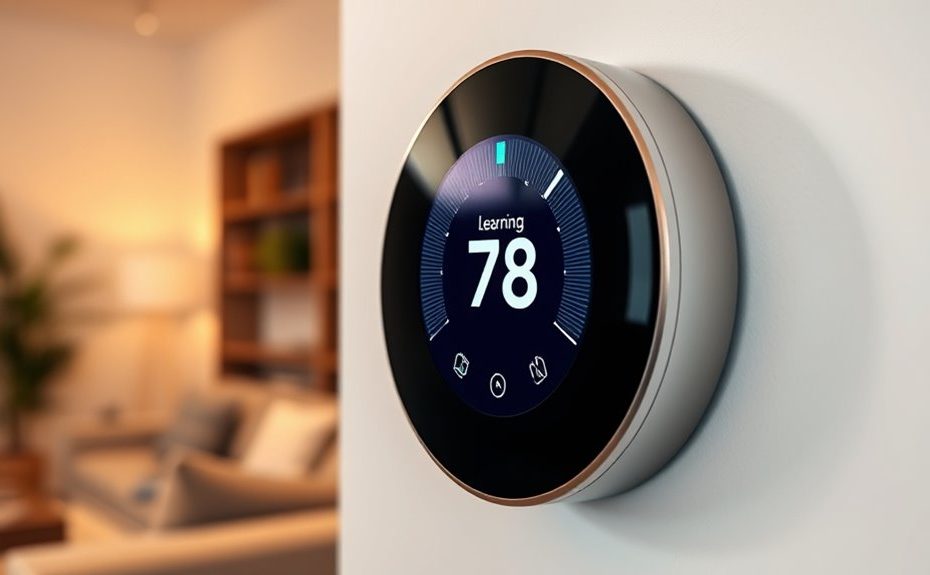
Smart thermostat learning algorithms analyze your daily routines, preferences, and external factors like weather and utility rates to automatically adjust home temperatures. They detect patterns such as wake-up times and weekends, and adapt to schedule changes or absences to optimize comfort and energy savings. By continuously learning, they improve accuracy over time, ensuring your home stays comfy while lowering utility bills. If you’re curious about how these smart systems fine-tune your environment, there’s more to explore ahead.
Key Takeaways
Utilize machine learning to analyze user habits, routines, and manual adjustments for personalized temperature scheduling.
Incorporate external data like weather forecasts and utility rates to optimize energy efficiency and comfort.
Continuously adapt to schedule changes and absence patterns for accurate future temperature predictions.
Use high-frequency data collection to refine models and improve responsiveness over time.
Integrate behavior detection to seamlessly align home climate control with evolving user preferences.
Smart thermostat learning algorithms are revolutionizing how you manage home comfort and energy efficiency. These advanced systems analyze your daily routines and preferences, allowing you to optimize energy use without sacrificing comfort. Instead of manually adjusting your thermostat, the algorithms learn your habits over time, creating a personalized schedule that adapts to your lifestyle. This continuous learning process guarantees that your home stays comfortable when you’re there and conserves energy when you’re away or asleep.
By observing your behavior, smart thermostats can predict when you’ll arrive home and pre-adjust the temperature accordingly. This level of energy optimization not only enhances comfort but also reduces unnecessary heating or cooling, leading to lower utility bills. When you leave the house, the system recognizes your absence and automatically lowers or raises the temperature, further conserving energy. Over time, these adjustments become more accurate, reflecting changes in your schedule and preferences, which means you’ll see consistent savings without having to manually intervene.
Your user behavior plays an essential role in how these algorithms function. Every adjustment you make, every time you turn the thermostat up or down, feeds into the learning process. The system identifies patterns, such as your morning wake-up time or weekend routines, and incorporates them into its scheduling. If you tend to stay up late on weekends, the thermostat will adapt to keep the temperature comfortable during those hours. Conversely, if you leave for work early in the morning, it learns to adjust itself accordingly. This responsiveness creates a seamless experience where your home environment aligns perfectly with your habits, maximizing efficiency without sacrificing comfort.
The beauty of smart thermostat learning algorithms lies in their ability to improve over time. The more you use them, the better they become at predicting your needs, leading to a smoother, more energy-efficient operation. Some systems even incorporate weather forecasts and utility rate data, further refining their adjustments based on external factors. This integration guarantees you’re not only saving energy but also responding to changing conditions outside your home. Additionally, many of these systems utilize high refresh rates to ensure quick adaptation to your routines, making the learning process even more effective.
Frequently Asked Questions
How Do Learning Algorithms Improve Energy Efficiency Over Time?
Learning algorithms improve your energy efficiency by analyzing your habits and adjusting the thermostat accordingly. They reduce unnecessary energy consumption by predicting ideal settings based on past behavior, making your system more precise over time. As the algorithm learns, it becomes better at balancing comfort and efficiency, saving you money and energy. The more accurate the algorithm, the more it optimizes your energy use without sacrificing comfort.
Can Smart Thermostats Adapt to Unexpected Weather Changes?
You might worry that smart thermostats can’t handle unexpected weather changes, but they actually do a great job. Using weather prediction data and adaptive control, they quickly adjust your home’s temperature. This means that even if the weather suddenly shifts, your thermostat responds in real-time to keep you comfortable without wasting energy. So, yes, these devices are designed to adapt seamlessly, ensuring your home stays cozy regardless of sudden weather surprises.
What Data Sources Do Learning Algorithms Use for Personalization?
Your smart thermostat uses sensor data and occupant behavior to personalize its settings. It collects information like temperature, humidity, and motion, adapting to your routines. By analyzing this data, the learning algorithms identify patterns, such as when you’re home or away, and adjust the temperature accordingly. This continuous process helps optimize comfort and energy efficiency, making your heating and cooling system smarter and more responsive to your lifestyle.
Are There Privacy Concerns With Data Collection in Smart Thermostats?
Think of your data as a precious treasure—protecting it is crucial. Yes, there are privacy concerns with data collection in smart thermostats; hackers or unauthorized users could access your information. That’s why data security measures are essential. By prioritizing user privacy, manufacturers can ensure your personal preferences and habits remain confidential. Stay vigilant, choose trusted brands, and understand how your data is being used to keep your smart home safe.
How Do Algorithms Handle Multiple Users With Different Schedules?
You might wonder how algorithms handle multiple users with different schedules. They address multi-user challenges by learning each person’s preferred temperatures and routines, then blending these to create a comfortable environment. When schedule conflicts occur, the system prioritizes inputs based on time of day or user settings. Some thermostats even allow manual overrides, ensuring everyone’s preferences are respected without constant adjustments, making your home’s climate both personalized and adaptable.
Conclusion
By now, you see how smart thermostat algorithms adapt to your habits, saving energy and money. Did you know that these intelligent systems can reduce home energy use by up to 12%? That’s like taking a significant chunk out of your utility bills without sacrificing comfort. As you embrace these algorithms, you’ll enjoy a smarter, more efficient home that learns and adjusts to your lifestyle seamlessly—making everyday living more convenient and eco-friendly.