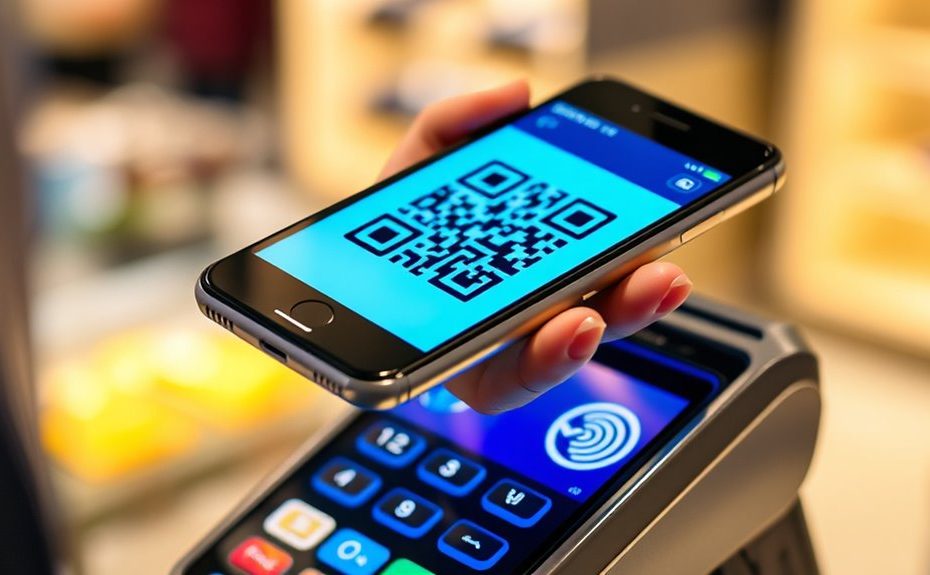
QR payments and tap-to-pay are contactless methods that let you make fast, secure transactions using your smartphone or compatible device without cash or physical cards. QR payments involve scanning a code displayed by the merchant, while tap-to-pay uses NFC technology to communicate wirelessly when you bring your device close to a terminal. These options offer convenience, speed, and enhanced security through encryption and tokenization. Keep exploring — you’ll discover how these innovations are transforming everyday transactions.
Key Takeaways
QR payments use scanning a QR code to initiate a secure, contactless transaction via smartphones.
Tap-to-pay relies on NFC technology for quick, contactless payments by tapping compatible devices or cards.
Both methods incorporate security features like encryption, tokenization, and biometric authentication to protect user data.
Widespread device compatibility and infrastructure upgrades have increased adoption and convenience.
These contactless payment options offer faster, safer, and more seamless checkout experiences compared to traditional methods.
In today’s digital world, QR payments and tap-to-pay technologies are transforming how you make transactions, offering quick, secure, and contactless options. These methods are gaining popularity because they eliminate the need for cash or physical cards, making checkout faster and more convenient. However, as you adopt these newer payment solutions, you might wonder about security concerns. It’s natural to worry about data breaches or unauthorized transactions, especially when sensitive financial information is involved. Fortunately, both QR payments and tap-to-pay systems incorporate robust security measures. Encryption protects your data during transmission, and tokenization replaces your actual card details with a temporary code, reducing the risk of theft. Additionally, many systems require authentication, like biometric scans or PINs, before completing a payment. This layered security approach helps guarantee that your transactions remain safe and private, easing concerns about potential fraud. Furthermore, understanding the security measures can help you feel more confident when using these technologies.
Despite these security features, user adoption plays a vital role in the widespread acceptance of QR payments and tap-to-pay options. If you’re hesitant to switch from traditional methods, it’s often because of unfamiliarity or doubts about security. To encourage adoption, many providers invest in educating users about how these technologies work and their safety protocols. As more people use QR codes and tap-to-pay devices, the network effect kicks in—making the systems more reliable and trusted. Retailers and service providers also support this shift by offering incentives like discounts or loyalty points for using contactless payments, which motivates you to try them out. Over time, as you see the benefits of speed, convenience, and security, you’re more likely to incorporate these methods into your everyday transactions.
The transition to QR payments and tap-to-pay is also influenced by the increasing availability of compatible devices and infrastructure. Many smartphones now come with built-in NFC chips or camera features that facilitate quick scanning and payments, making it easier for users like you to adopt without needing extra hardware. Retailers are updating their point-of-sale systems to accept these contactless methods, creating a seamless experience. As more establishments support these technologies, your confidence grows, and you’re encouraged to use them more frequently. Ultimately, the successful adoption of QR payments and tap-to-pay depends on both technological advancements and your trust in their security. When you understand the protections in place and see how convenient they are, it’s natural to embrace these innovative payment options, transforming everyday transactions into swift, contactless experiences.
Frequently Asked Questions
Are QR Payments Secure Against Fraud?
QR payments are generally secure against fraud because they include multiple layers of security measures. You benefit from fraud prevention techniques like encryption and tokenization that protect your payment data. Always stay cautious by using trusted apps and avoiding public Wi-Fi during transactions. While no system is completely foolproof, these security measures help reduce the risk of fraud, making QR payments a safe choice for your transactions.
Can I Use Tap-To-Pay Internationally?
Yes, you can use tap-to-pay internationally. Many devices support cross-border compatibility, allowing you to make payments in different countries. Just make certain your card or mobile wallet is accepted at international merchants. Keep in mind that currency conversion may apply, and your bank might charge extra fees. Before traveling, check with your provider to confirm compatibility and any additional costs, so you can enjoy seamless, secure payments abroad.
What Devices Support Tap-To-Pay Technology?
Many devices support tap-to-pay technology, provided they have NFC compatibility and meet device requirements. Smartphones with NFC, such as newer Android phones and iPhones with Apple Pay, enable tap-to-pay. Some smartwatches and tablets also support this feature if they include NFC hardware. Make sure your device’s NFC is enabled and compatible with your payment app. Check your device specifications to confirm NFC compatibility and tap-to-pay support before using this convenient payment method.
Are There Fees for Using QR or Tap Payments?
You might wonder if there are fees for using QR or tap payments. Usually, you won’t pay transaction fees directly, but merchants often face transaction fees or merchant costs that can be passed on indirectly. Some providers may charge small convenience fees or service charges, so it’s good to check with your payment provider. Overall, these digital payment methods aim to be cost-effective for you and the merchant alike.
How Do I Troubleshoot Payment Issues?
When facing payment issues, first check if the merchant accepts QR or Tap‑to‑Pay methods—sometimes they might not. Make sure your device has a strong connection for quick transactions. If the payment stalls, try restarting your app or device. Keep an eye on transaction speed; delays can signal a problem. If issues persist, contact your bank or payment provider for support, and you’ll soon be back on track.
Conclusion
As you embrace QR payments and tap-to-pay methods, remember they make transactions faster and more secure. Over 60% of smartphone users worldwide now prefer these contactless options, highlighting their growing popularity. Just imagine, with every scan or tap, you’re part of a global shift toward seamless, cashless payments. So next time you pay effortlessly with your phone, you’re not just making a purchase—you’re stepping into the future of financial technology.