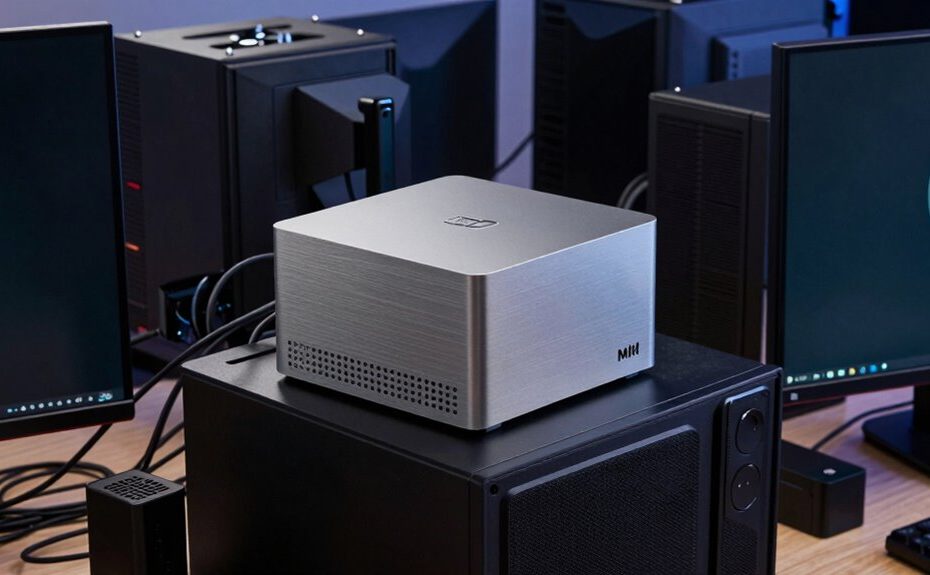
A Mini PC beats a big desktop when you need a compact, energy-efficient device that still offers upgrade options for everyday tasks. Modern Mini PCs feature modular designs, making it easier to upgrade RAM, storage, and even graphics, unlike traditional models. They’re perfect for limited space or portability without sacrificing performance. As manufacturers innovate, Mini PCs are becoming more flexible and upgradeable. Keep exploring to discover how these small devices can outperform larger setups in various scenarios.
Key Takeaways
Mini PCs excel in portability, making them ideal for on-the-go use and space-constrained environments.
Innovative modular designs enable certain upgrades, extending mini PC lifespan and performance.
For specific tasks like media streaming or basic office work, mini PCs can outperform larger, less optimized desktops.
Mini PCs often consume less power, reducing operational costs and environmental impact compared to full-sized desktops.
In environments prioritizing aesthetics and space-saving, mini PCs offer a sleek, less obtrusive alternative to bulky desktops.
When it comes to upgradeability options, mini PCs traditionally lag behind big desktops. However, some models are designed with modular components, allowing you to upgrade RAM, storage, or even swap out graphics cards with relative ease. This flexibility means your mini PC can evolve over time, extending its lifespan without needing a complete replacement. While you might not get the same extensive upgrade options as a full-sized desktop—where you can swap out motherboards, power supplies, and GPUs more freely—modern mini PCs are increasingly offering more user-friendly upgrade paths. If your priority is a compact device that still offers room for future upgrades, certain mini PCs hit that sweet spot. Additionally, understanding the emerging trends in mini PC development reveals that manufacturers are innovating to improve upgradeability and performance, making these small machines more adaptable than ever. As technology advances, features like modular design are becoming more common, further enhancing upgrade options for users.
Frequently Asked Questions
How Do Mini PCS Handle High-End Gaming Performance?
Mini PCs can handle high-end gaming performance surprisingly well, especially with advanced components like powerful GPUs and fast processors. However, thermal management is essential; they often run hot during intense gaming sessions. Good airflow and efficient cooling solutions help maintain performance and prevent overheating. While they might not match a desktop’s raw power, mini PCs deliver impressive gaming experiences in a compact design, making them ideal for space-conscious gamers.
Can Mini PCS Be Upgraded Like Traditional Desktops?
You might be surprised, but mini PCs aren’t as upgrade-friendly as traditional desktops. While some models offer limited Mini PC customization options, their hardware limitations—like smaller motherboards and compact cases—restrict upgrading components like GPUs or RAM. If you crave frequent upgrades, a big desktop still wins. However, for simplicity and space-saving design, mini PCs handle basic upgrades well, making them perfect for casual use rather than intense gaming or heavy editing.
What Are the Power Consumption Differences?
Mini PCs generally consume less power than big desktops, making them more energy-efficient. Thanks to advanced power management features, they optimize energy use during idle and active states, reducing overall electricity bills. You’ll notice a significant difference, especially if you’re conscious of energy efficiency or want a greener setup. Their lower power consumption also helps extend component lifespan, making mini PCs a smart choice for efficient, eco-friendly computing.
Are Mini PCS Suitable for Professional Video Editing?
Mini PCs can be suitable for professional video editing if they feature powerful processors, ample RAM, and dedicated graphics cards. Their compact design offers space-saving benefits, while their portability advantage allows for flexible editing locations. However, you must verify the mini PC’s specifications meet your editing demands, as smaller size can limit upgrade options. With the right hardware, mini PCs can handle demanding editing tasks efficiently, offering a balance of performance and convenience.
How Do Mini PCS Compare in Long-Term Durability?
Mini PCs often have comparable long-term durability to larger desktops, especially if they feature a solid, compact design and effective thermal management. Their smaller size means less exposure to physical wear and tear. However, you should guarantee proper airflow and cooling, as thermal management is essential. When maintained well, mini PCs can last several years, making them a reliable choice for long-term use despite their compact size.
Conclusion
Remember, size isn’t everything—sometimes, the little guy can pack a powerful punch. With a mini PC, you enjoy portability, efficiency, and a sleek design without sacrificing performance. It’s like the saying, “Good things come in small packages.” So, if you’re looking to save space and still get the job done, don’t overlook the mini PC. Sometimes, the best choice is the one that fits your life, not the biggest one on the block.