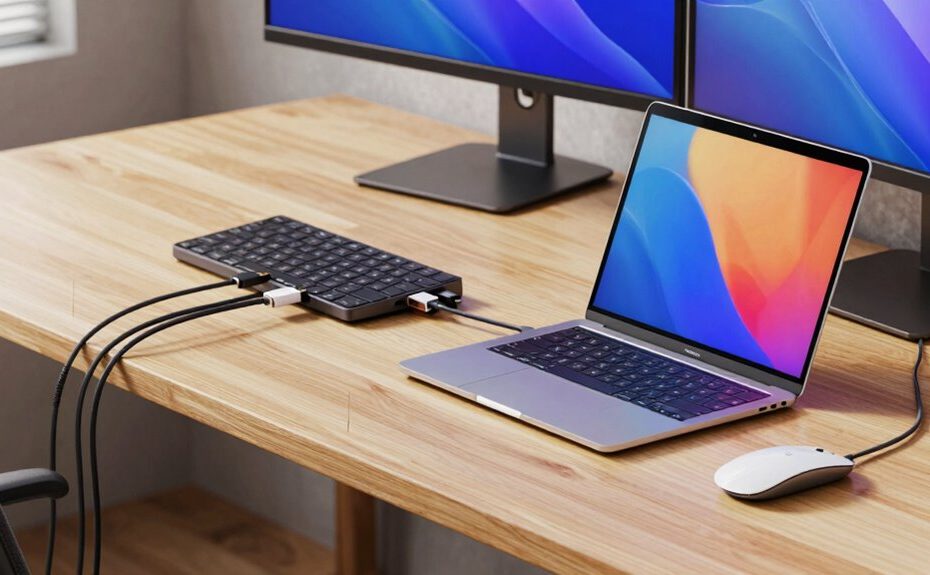
To create the best desk setup, start with reliable connections that keep everything running smoothly and clutter-free. Use fast Wi-Fi, high-quality Ethernet cables, and wireless charging pads to improve workflow and reduce cords. Add ergonomic accessories to stay comfortable, and connect devices with docking stations for extra expandability. Smart tech and thoughtful workspace design also boost productivity. Keep these tips in mind, and you’ll discover even more ways to optimize your workspace.
Key Takeaways
Ensure seamless device connectivity with reliable Wi-Fi, Ethernet, and smart hubs to support smooth workflows.
Use wireless charging pads to reduce cable clutter and keep devices powered effortlessly.
Optimize router placement and network protocols for consistent internet speed and stability.
Incorporate docking stations and cable management to enhance peripheral integration and workspace organization.
Design an ergonomic, distraction-free environment that promotes focus and productivity.
A great desk setup begins with dependable, fast, and seamless connections. When your devices connect effortlessly, your workflow becomes smoother, and your focus stays sharp. Wireless charging is a game-changer here. Instead of cluttering your workspace with cords and outlets, investing in a good wireless charger keeps your phone, earbuds, or compatible gadgets powered up without interrupting your tasks. Just place your device on the pad, and it automatically starts charging—no fuss, no cable mess. This simple upgrade reduces clutter and makes your workspace appear cleaner and more organized. Additionally, understanding the importance of secure network protocols helps protect your data and maintain privacy while working online. Beyond charging, your overall efficiency hinges on having the right ergonomic accessories. These tools aren’t just about comfort—they also enhance your productivity by reducing strain and fatigue. Think adjustable monitor stands that position screens at eye level, ergonomic keyboards, and supportive mouse pads. When your equipment aligns with your body’s natural posture, you’re less prone to discomfort or injury, allowing you to work longer without discomfort. Ergonomic accessories also encourage a healthier work routine, preventing common issues like neck pain, wrist strain, and backaches. To maximize your desk’s connection quality, consider investing in a dependable Wi-Fi setup. A strong, consistent internet connection is essential for seamless streaming, video calls, and file transfers. Pair this with high-quality, fast Ethernet cables or a robust Wi-Fi router placed optimally in your workspace. This combination ensures that your online activities are smooth, with minimal lag or interruptions, so you can focus on your work instead of troubleshooting connectivity issues. Incorporating high-quality projectors into your setup can also enhance your productivity, especially for collaborative tasks or presentations. In addition to wireless charging and ergonomic accessories, think about integrating other smart tech solutions. Docking stations or hubs can expand your connectivity options, providing additional USB ports, HDMI outputs, and SD card slots. These peripherals streamline your workflow by reducing the need for constant cable swapping. Considering proper cable management techniques can help keep your workspace tidy and prevent accidental disconnections. Investing in reliable wireless protocols can further improve your connectivity stability and security, ensuring your data remains protected during online activities. A well-planned landscape design can also contribute to a more inspiring and calming workspace environment, boosting overall productivity. With everything connected properly, your workspace becomes not just functional but efficient, allowing you to switch between tasks seamlessly. Ultimately, the foundation of any excellent desk setup is strong, dependable connections paired with accessories that promote comfort and efficiency. When your devices connect effortlessly and your workspace is ergonomically optimized, you’re creating an environment conducive to focus and productivity. It’s these small yet impactful upgrades that transform your desk into a professional, comfortable, and clutter-free zone—making your workday smoother and more enjoyable.
Frequently Asked Questions
How Do I Troubleshoot Slow Internet on My Desk Setup?
To troubleshoot slow internet on your desk setup, start by checking your cables and ensuring proper cable management to avoid loose connections. Restart your modem and router to refresh the network. If issues persist, consider using signal boosters to strengthen Wi-Fi signals, especially if you’re far from the router. Also, test your speed with online tools to identify if your internet service provider needs to address any outages or issues.
What Cables Are Best for High-Speed Connections?
For high-speed connections, use Ethernet cables like Cat6 or Cat6a, which support faster data transfer rates and reduce interference. Avoid older cables like Cat5, as they can limit your speed. To improve signal strength, consider adding signal boosters or network extenders, especially if your setup is far from your router. These cables and boosters guarantee a more stable, faster internet connection for your desk setup.
How Can I Reduce Wi-Fi Interference in My Workspace?
To reduce Wi-Fi interference in your workspace, start by placing your router away from devices that cause wireless interference, like microwaves or cordless phones. Use signal boosters or Wi-Fi extenders to strengthen weak signals. Additionally, switch to a less crowded Wi-Fi channel and guarantee your router’s firmware is up-to-date. Keeping your workspace organized and minimizing obstacles helps maintain a strong, stable connection free from wireless interference.
Is Ethernet Faster Than Wi-Fi for Desk Setups?
Ethernet is generally faster than Wi-Fi for desk setups, providing more reliable performance and better wireless stability. With Ethernet, you avoid issues caused by interference or weak signals, especially if your router isn’t ideally placed. To maximize speed, connect your device directly with an Ethernet cable and confirm your router is centrally located and unobstructed. This setup minimizes lag and keeps your connection steady during demanding tasks.
What Are the Security Concerns With Wired Versus Wireless Connections?
Wired connections are generally more secure because they’re less susceptible to hacking; only someone physically connected can access your network. Wireless networks, however, rely on network encryption and device authentication, which can be compromised if weak passwords or outdated security protocols are used. Did you know 78% of cyberattacks target wireless networks? Ensuring strong encryption and proper device authentication considerably reduces your security risks, whether wired or wireless.
Conclusion
So, next time you’re marveling at your sleek new desk setup, remember—what truly makes it shine are those tiny, unseen cables. All that style and space? Just a pretty façade hiding the real hero: your reliable connection. Ironically, it’s the boring, tangled wires that keep everything running smoothly. So, don’t forget to give those unsung heroes a little love. After all, without them, your fancy setup’s just a fancy paperweight.