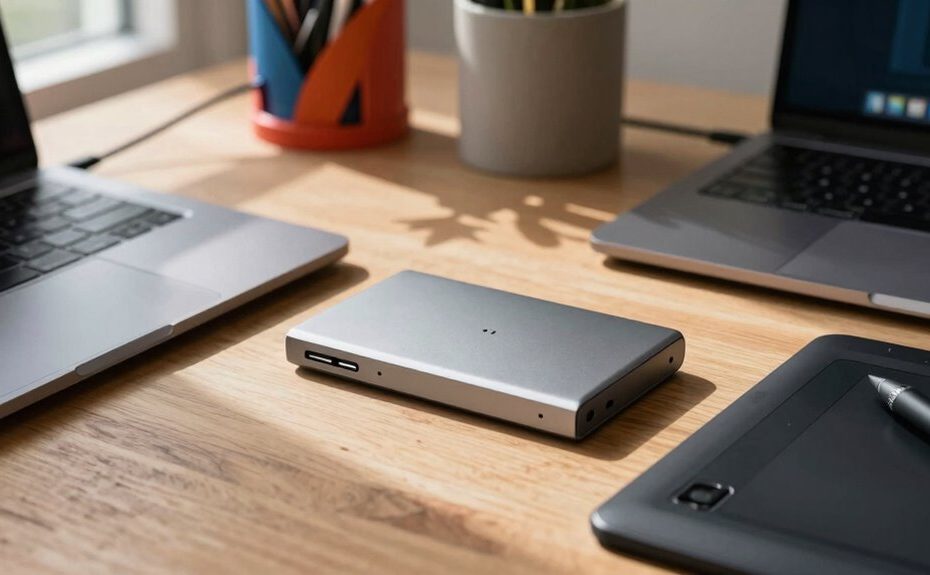
External SSDs have become essential for modern workflows because they offer high-speed data transfers, making large file handling much faster and more efficient. Their portability lets you easily switch between work locations while securely storing sensitive data. Many models include built-in encryption to protect your privacy. Plus, they seamlessly complement cloud storage by providing quick offline access. If you want to discover how they can fully transform your digital tasks, keep exploring their benefits.
Key Takeaways
High-speed data transfer reduces waiting time for large files, streamlining editing and processing tasks.
Portable and durable design allows professionals to work seamlessly across multiple locations.
Built-in security features protect sensitive data from unauthorized access.
Integrates efficiently with cloud storage, enabling quick offline access and enhanced workflow flexibility.
Increasing storage capacities and transfer speeds support the handling of larger files and complex projects.
Have you ever experienced the frustration of slow data transfers or running out of storage at a critical moment? That’s where external SSDs come in, transforming how you manage your digital workspace. In today’s fast-paced environment, relying solely on cloud storage isn’t enough, especially when you need quick access to large files or high-speed performance. External SSDs fill this gap, offering a portable, high-speed solution that seamlessly integrates into your workflow. They provide rapid data transfer rates, which means you spend less time waiting and more time creating or working on your projects. Whether you’re editing high-resolution videos, working with sizeable design files, or handling extensive datasets, an external SSD keeps your work flowing smoothly.
One of the key reasons external SSDs have become essential is their compatibility with cloud storage options. While cloud storage platforms are convenient for backup and remote access, they can be limited by internet speeds and latency. An external SSD acts as a local extension of your cloud storage, giving you fast, reliable access to critical files without constant internet dependency. Plus, with the increasing importance of data security, many external SSDs come equipped with built-in features like data encryption. This means you can protect sensitive information directly on your device, ensuring that even if it’s lost or stolen, your data remains safe from unauthorized access. Data encryption on external SSDs offers peace of mind, especially when handling confidential client files, personal data, or proprietary work. Additionally, storage capacity has significantly increased, allowing users to store larger files and archives without sacrificing portability.
Furthermore, external SSDs are highly portable, making them ideal for professionals who work between different locations. You can carry a compact device that holds your entire project library, allowing you to switch from your office to a client site or a coffee shop without missing a beat. The durability and reliability of modern external SSDs also mean they can withstand the rigors of daily travel. Having a horsepower of electric dirt bikes in your workflow may seem unrelated, but just as powerful bikes require robust engines, your data storage needs a reliable and high-performing solution. Additionally, the speed of data transfer continues to improve, making external SSDs even more indispensable for high-demand workflows. As the demand for high-speed data transfer grows, external SSDs are increasingly optimized to meet these needs, further enhancing their role in professional environments.
In an era where speed, security, and flexibility dictate success, external SSDs have become a vital component of modern workflows. They complement cloud storage by offering quick, local access to files while providing robust data encryption to keep your information secure. Whether you’re a creative professional, a business owner, or a data analyst, investing in an external SSD can significantly enhance your efficiency and safeguard your work. It’s no longer just an accessory; it’s an essential tool for navigating today’s demanding digital landscape.
Frequently Asked Questions
How Do External SSDS Compare to Internal SSDS in Speed?
External SSDs generally offer comparable or slightly slower data transfer rates than internal SSDs, mainly due to interface differences. Internal SSDs typically connect via faster interfaces like NVMe over PCIe, providing higher speeds, while external SSDs often rely on USB or Thunderbolt connections, which can limit performance. However, modern external SSDs with Thunderbolt 3 or 4 interfaces can deliver speeds close to internal drives, making them highly efficient for demanding tasks.
Are External SSDS Compatible With Gaming Consoles?
Think of external SSDs as turbochargers for your gaming console. Many models are compatible, boosting game load times and overall performance. For example, a friend used an external SSD with their Xbox Series X, noticing faster load screens and smoother gameplay. When choosing for gaming compatibility, make sure the drive supports your console’s ports and file system. This upgrade can transform your gaming experience, making it quicker and more seamless.
What Are the Best Security Features for External SSDS?
You should look for external SSDs with robust security features like strong encryption protocols, such as AES-256, to protect your data from unauthorized access. Physical security is equally important; choose drives with built-in features like hardware encryption and tamper-proof designs. Additionally, consider models that offer password protection and automatic data wipe options. These features guarantee your sensitive information remains safe, whether stored locally or in transit.
How Do External SSDS Perform in Extreme Temperatures?
Think of your external SSD as a brave explorer maneuvering harsh terrains. In extreme temperatures, its performance depends on temperature resilience and environmental durability. Some models withstand scorching heat or freezing cold, maintaining data integrity, while others falter. To guarantee your data’s safety, choose SSDs designed for environmental durability, capable of performing reliably in diverse, challenging conditions, much like a seasoned adventurer thriving in any climate.
Can External SSDS Be Used for Backup and Data Recovery?
Yes, external SSDs are great for backup and data recovery. You can easily copy important files to them and keep them offline for added security. Many models support data encryption, safeguarding your sensitive information. Plus, combining external SSD backups with cloud backup guarantees redundancy, so if one fails, you still have your data. This dual approach makes recovery straightforward and protects your data from unexpected loss.
Conclusion
As you embrace external SSDs, you’ll find your workflow becoming smoother and more efficient. Their speed and portability seem almost serendipitous, fitting seamlessly into your daily tasks. It’s no coincidence that they’ve become essential; their reliable performance aligns perfectly with your needs. With an external SSD, you’re not just upgrading your storage—you’re revealing new potential, making your workday flow effortlessly, and turning coincidence into a catalyst for productivity.