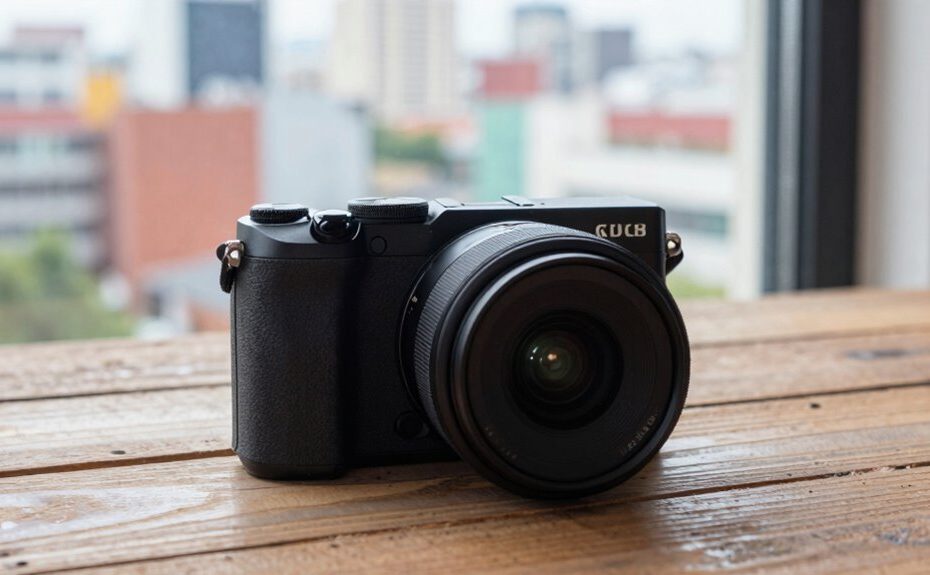
Mirrorless cameras are now much easier to live with thanks to improved technology, longer-lasting batteries, and a wider variety of lenses. They feature intuitive controls, touchscreens, and quick autofocus to make shooting simpler, even for beginners. Plus, enhanced connectivity options like wireless transfer and remote control help streamline your workflow. With these advancements, you can focus more on capturing great photos without fuss. Keep exploring to discover how these features can make your photography experience better.
Key Takeaways
Modern mirrorless cameras feature intuitive menus and touchscreens for simplified operation and quick adjustments.
Improved battery life and power management enable all-day shooting without frequent interruptions.
Advanced autofocus and image stabilization make capturing sharp photos easier in various conditions.
Enhanced connectivity options allow seamless sharing and remote control, streamlining workflow.
A wide selection of lenses and accessories offers flexibility for different shooting styles and skill levels.
In recent years, mirrorless cameras have become considerably more user-friendly, making them a practical choice for both beginners and seasoned photographers. One of the biggest improvements is in lens compatibility. Today’s mirrorless systems offer a wide range of lenses, from wide-angle to telephoto, allowing you to find the perfect lens for any situation. Many camera brands have expanded their lens lineup, making it easier for you to switch between different focal lengths without needing multiple camera bodies. Additionally, third-party manufacturers are producing affordable, high-quality lenses compatible with popular mirrorless mounts. This flexibility means you don’t have to worry about being locked into a limited selection, and you can build your kit gradually as your skills grow.
Mirrorless cameras now offer extensive lens options, making it easy to grow your photography kit over time.
Battery life used to be a common concern with mirrorless cameras, but that’s changing. Modern models now feature improved batteries that last longer, giving you more shooting time between charges. While they may still not match the stamina of traditional DSLRs, advances in power management and more efficient sensors help bridge that gap. You’ll find that many newer mirrorless cameras can comfortably handle a full day of shooting, whether you’re capturing landscapes, portraits, or action shots. Some brands also offer accessories like extra battery packs, so you can carry a spare and avoid missing out on crucial moments. This means you’re less likely to be interrupted by a dead battery during important shoots, making the overall experience more seamless. Additionally, the integration of advanced technology in mirrorless cameras enhances their usability and performance, making them even more reliable tools for capturing life’s moments. As sensor technology continues to improve, image quality and low-light performance are also seeing significant gains, further elevating the user experience. The development of smart controls has also contributed to making cameras more adaptable to different shooting styles, further simplifying operation for users of all skill levels. Moreover, the ease of use has been enhanced through the development of smarter menus and controls, reducing the learning curve for new users. Improved connectivity features, such as wireless transfer and remote control, also make sharing and managing photos more efficient.
Ease of use has also significantly improved, with intuitive menus and quick-access controls that help you navigate settings effortlessly. Modern mirrorless cameras often feature electronic viewfinders and touchscreens, making framing shots and adjusting settings more straightforward. Plus, many models come with intelligent autofocus systems that lock onto subjects quickly, saving you time and frustration. Their compact size and lightweight design mean you can carry them around all day without fatigue, and they’re less obtrusive in crowded places or when traveling.
All these upgrades—better lens compatibility, longer battery life, and user-friendly controls—mean that living with a mirrorless camera is now more convenient than ever. Whether you’re just starting out or you’ve been shooting for years, these improvements make it easier to focus on your creativity without constantly worrying about technical limitations. As technology continues to advance, you’ll find that your mirrorless camera becomes an even more reliable and enjoyable tool for capturing life’s moments.
Frequently Asked Questions
How Do Mirrorless Cameras Compare to Smartphones for Casual Photography?
You’ll find mirrorless cameras offer greater versatility than smartphones for casual photography. While smartphone convenience makes snapping quick shots easy, mirrorless cameras give you better image quality, interchangeable lenses, and manual controls. This means you can experiment more and capture higher-quality images. If you’re willing to learn and carry a slightly larger device, mirrorless cameras can considerably enhance your casual photography experience without sacrificing convenience entirely.
Are Mirrorless Cameras Suitable for Professional Wildlife Photography?
Yes, mirrorless cameras are suitable for professional wildlife photography. They excel with wildlife autofocus, allowing you to track fast-moving animals accurately, and offer telephoto versatility, so you can capture distant subjects with clarity. Their compact design makes them easier to carry into remote locations, and advanced features give you the control needed for high-quality images. With the right lens, a mirrorless camera becomes a powerful tool for wildlife professionals.
What Are the Best Mirrorless Cameras for Beginner Photographers?
Think of choosing your first mirrorless camera as planting a seed for your photography journey. The Fujifilm X-T200 offers excellent camera ergonomics, making it comfortable to hold during long shoots. Its intuitive interface is beginner-friendly, and it has versatile lens options that grow with your skills. The Sony Alpha a6100 is another great choice, known for fast autofocus and a compact design, perfect for capturing spontaneous moments.
How Do Mirrorless Cameras Perform in Low-Light Conditions?
In low-light conditions, your mirrorless camera performs well thanks to its sensor sensitivity, which allows it to capture more light. Many models feature advanced noise reduction technology, reducing grainy images even at higher ISO settings. This means you can shoot in dim environments without sacrificing image quality. Overall, your mirrorless camera handles low-light situations effectively, making it a reliable choice for nighttime photography or indoor shoots.
Are Mirrorless Cameras Compatible With Older Camera Lenses?
Yes, you can use older camera lenses with mirrorless cameras through lens adaptation. However, autofocus compatibility varies depending on the lens and camera model. Some adapters enable autofocus, but performance may not be as smooth as with native lenses. You might experience slower focus speeds or limited functionality. It’s crucial to check if your lens and camera support autofocus with an adapter to guarantee the best shooting experience.
Conclusion
Now that mirrorless cameras are easier to live with, you can truly enjoy capturing moments without the hassle of bulky gear. They’re like a trusted companion, lightweight and ready whenever inspiration strikes. As technology continues to evolve, these cameras become more intuitive, making photography feel like second nature. Embrace the change, and let your creativity soar—because with a mirrorless camera in hand, you’re steering the ship of your own visual story, smooth and steady.