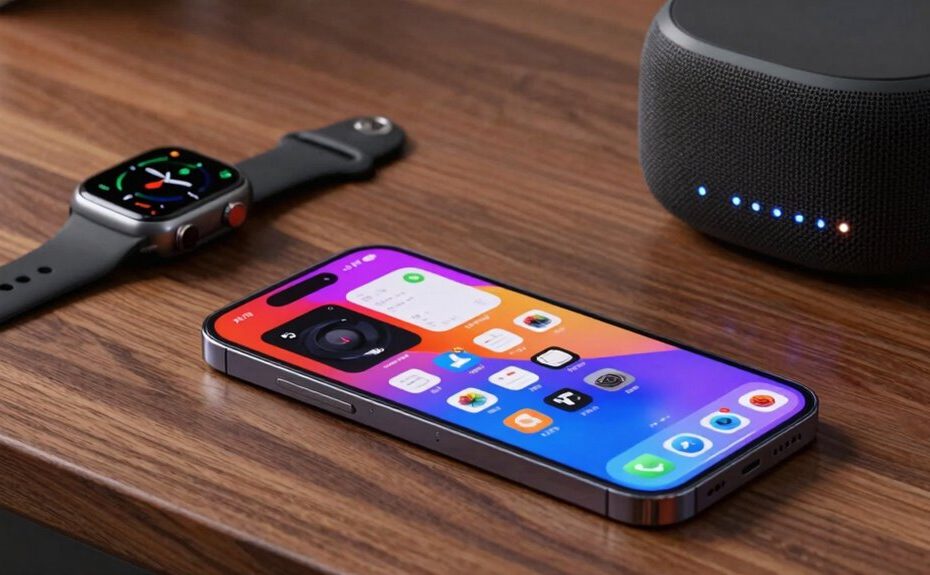
More devices are adding on-device AI features because it allows you to get faster responses and a more personalized experience without relying heavily on cloud processing. It helps keep your data private and secure by handling it directly on your device. Additionally, on-device AI boosts performance and makes interactions feel more instant. While energy use and security are ongoing concerns, advancements continue to improve these aspects. Keep exploring to discover how these developments impact your everyday tech use.
Key Takeaways
On-device AI reduces reliance on cloud processing, enabling faster and more responsive device interactions.
It enhances user privacy by minimizing personal data transmission to external servers.
Devices with on-device AI offer personalized experiences through real-time learning and adaptation.
Improved security measures are easier to implement with local data processing.
Manufacturers aim to balance AI capabilities with energy efficiency for better device performance.
In recent years, devices have increasingly integrated on-device AI features, transforming how you interact with technology daily. Instead of relying solely on cloud-based processing, more gadgets now handle data locally, making interactions faster and more seamless. This shift comes with clear advantages—your commands are executed instantly, and you enjoy a more personalized experience because your device learns and adapts in real-time. However, this trend also raises important considerations, especially around privacy concerns and energy consumption.
On-device AI significantly enhances your privacy because it minimizes the amount of personal data sent over the internet. When data stays on your device, there’s less risk of it being intercepted or misused by third parties. This is especially critical for sensitive information, like health data or personal conversations. Manufacturers highlight this benefit, emphasizing that local processing keeps your data secure and under your control. Still, some privacy concerns persist because even with local processing, potential vulnerabilities exist—malware or unauthorized access could compromise your device’s AI features. Therefore, ongoing security updates and strong encryption are essential to safeguard your privacy as these AI capabilities grow more sophisticated. Additionally, the rise of on-device AI underscores the importance of understanding data security in the context of local processing. As AI models become more complex, efficient algorithms are necessary to maintain both performance and energy efficiency.
On-device AI enhances privacy by keeping personal data local, but vulnerabilities still require ongoing security and encryption measures.
At the same time, integrating AI directly into devices impacts energy consumption. Running complex algorithms locally requires more processing power, which can drain your device’s battery faster. If you own a smartphone or wearable, you might notice that using on-device AI features reduces battery life, especially when performing intensive tasks like voice recognition or real-time translation. Manufacturers try to balance this by optimizing AI models for efficiency, but the trade-off between performance and power consumption remains a challenge. As devices become smarter, they need smarter power management, which can lead to increased energy use and, consequently, a larger environmental footprint.
Despite these challenges, the appeal of on-device AI continues to grow because of its speed, privacy benefits, and improved user experience. You benefit from faster responses, better personalization, and a sense of control over your data. Yet, you should also be aware of the energy implications and privacy risks that come with smarter devices. Manufacturers are working to address these issues with more efficient algorithms and enhanced security measures, but it’s essential for you to stay informed. As technology evolves, finding the right balance between privacy, energy efficiency, and AI capabilities will be key to making the most of these advanced devices in your daily life.
Frequently Asked Questions
How Does On-Device AI Impact Device Battery Life?
On-device AI can impact your device’s battery life by increasing power consumption, but it also offers benefits like faster processing and improved privacy. To balance this, manufacturers focus on battery optimization techniques that help manage power usage efficiently. You might notice quicker responses and smarter features, but keeping an eye on your device’s settings can help you minimize unnecessary power drain, extending your battery life while enjoying on-device AI capabilities.
What Privacy Benefits Does On-Device AI Offer?
On-device AI enhances your data privacy by processing information directly on your device, reducing the need to send data to cloud servers. This setup minimizes exposure to potential breaches and keeps your sensitive information more secure. Additionally, it gives you greater user control, allowing you to manage what data is used and stored. As a result, you enjoy a safer, more private experience where your personal information stays within your device’s boundaries.
Are On-Device AI Features More Expensive to Develop?
On-device AI features are definitely more expensive to develop, and you’ll feel it in your wallet! The cost analysis reveals higher expenses due to complex development challenges, like optimizing algorithms for limited hardware and ensuring seamless performance. While it might seem like a steep investment, the benefits of faster responses and improved privacy often justify the costs. So yes, on-device AI demands more resources upfront, but it pays off in the long run.
How Do On-Device AI Updates Differ From Cloud Updates?
On-device AI updates differ from cloud updates because they rely on edge processing, which allows your device to handle data locally instead of sending it to the cloud. This enhances data sovereignty, giving you more control over your personal information. Updates are often quicker and more secure because they don’t depend on internet connectivity or cloud servers, ensuring your device stays current and protects your privacy at the same time.
Can On-Device AI Improve Accessibility for Users?
On-device AI definitely enhances accessibility by serving as assistive technology tailored for you. It can recognize speech, convert text to speech, or adjust interfaces for different needs, all in real-time. This improves your user experience by making devices more intuitive and responsive, especially in areas where internet connectivity is limited or privacy matters. You’ll find these features empower users with disabilities, creating a more inclusive digital environment.
Conclusion
As more devices incorporate on-device AI, you’re experiencing smarter, faster, and more private technology right at your fingertips. These features simplify your daily tasks and enhance your digital privacy, making your device feel more intuitive than ever. Isn’t it exciting to think about how AI is seamlessly fitting into your routine? With ongoing advancements, it’s clear that on-device AI will keep transforming the way you interact with your tech—so, are you ready to embrace the future?