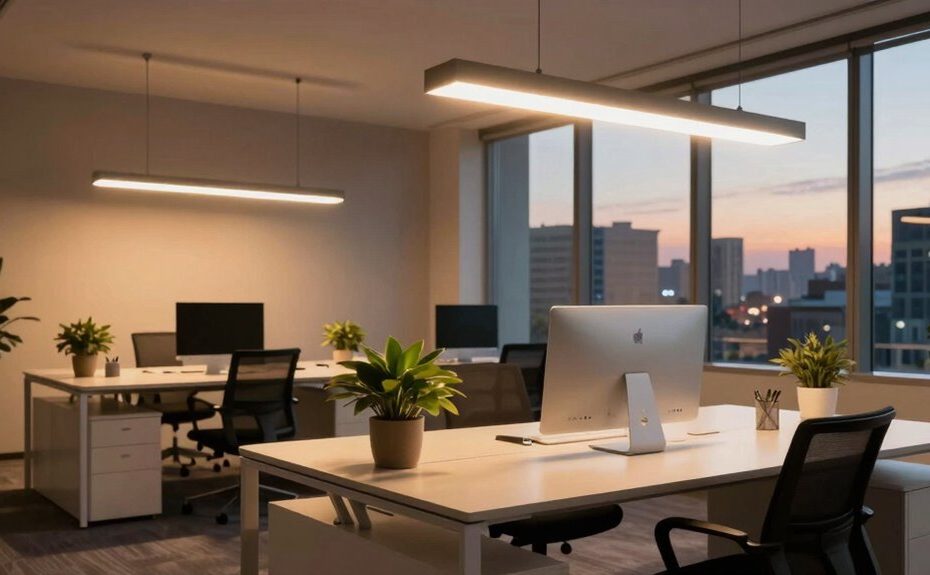
Smart lighting transforms your workspace by letting you adjust color temperature, brightness, and placement to match your mood and tasks. It automatically adapts to natural light and occupancy, saving energy and creating a comfortable environment. You can control it easily via voice or smart devices, promoting focus and reducing eye strain. These features make your workspace more personalized and efficient. Keep exploring to discover how smart lighting can truly change your work environment.
Key Takeaways
Adjustable color temperature enhances mood and focus by matching lighting to activity and time of day.
Flexible placement and design options allow personalized, aesthetically pleasing workspace lighting setups.
Automated controls and sensors optimize energy use, creating a comfortable environment while reducing costs.
Consistent, flicker-free illumination improves visual comfort and minimizes distractions.
Integration with smart devices enables effortless control, enhancing workspace efficiency and ambiance.
Smart lighting is transforming workspaces by creating environments that adapt to your needs and boost productivity. One of the key ways it achieves this is through adjustable color temperature. You can change the hue of your lights to match your activity or time of day, which influences your mood and focus. For example, during mornings, cooler tones with higher color temperatures mimic natural daylight, helping you wake up and feel alert. As the day progresses, you might switch to warmer tones that promote relaxation and reduce eye strain, especially in the late afternoon or evening. This dynamic control allows you to customize your workspace’s atmosphere, making it more comfortable and conducive to concentration. Additionally, smart lighting systems can incorporate Free Floating features that enable flexible placement and design options without extensive wiring, further enhancing workspace customization.
Beyond mood and comfort, smart lighting also emphasizes energy efficiency, which benefits both your workspace and the environment. Traditional lighting often wastes energy by remaining on when you don’t need it or using bulbs that consume more power than necessary. Smart systems, on the other hand, use sensors and automation to adjust lighting based on occupancy and daylight levels. If you leave a room, the lights turn off automatically. When natural light floods in through windows, smart lighting dims or switches off, reducing unnecessary energy consumption. These features not only lower your electricity bills but also contribute to a greener environment, aligning with sustainable practices. Energy-efficient lighting solutions can further optimize power usage and reduce carbon footprints.
In addition, the ability to fine-tune color temperature and brightness levels with smart lighting means you can maintain ideal visual comfort throughout the day. You won’t have to deal with flickering or harsh lighting that causes headaches or eye fatigue. Instead, you get consistent, glare-free illumination that adapts seamlessly as your needs change. This flexibility helps you stay productive and focused, reducing distractions caused by uncomfortable lighting conditions. Plus, many smart lighting systems integrate with other smart devices or voice assistants, allowing you to control your environment effortlessly through simple commands or schedules. Sustainable lighting practices are increasingly important as we seek to minimize environmental impact while enhancing workspace comfort. Implementing lighting automation not only streamlines your lighting management but also supports sustainable energy consumption habits.
Frequently Asked Questions
How Does Smart Lighting Impact Employee Productivity?
Smart lighting boosts your productivity by allowing ambient customization, so you can set the perfect lighting for different tasks. When you adjust the brightness and color temperature, it enhances your mood and reduces fatigue. This mood enhancement helps you stay focused and energized throughout the day. With smart lighting, you create an environment tailored to your needs, making work more comfortable and efficient, ultimately helping you accomplish more.
Can Smart Lighting Be Customized for Individual Preferences?
Yes, smart lighting can be customized for your individual preferences. With personalization options like adjustable brightness, color temperature, and even color choices, you can create a lighting setup that suits your mood and task needs. This customization not only enhances your comfort but also boosts mood and productivity. By tailoring the lighting, you can foster a more inviting and motivating workspace that aligns perfectly with your personal preferences.
What Are the Cost Implications of Installing Smart Lighting Systems?
Installing smart lighting systems is like planting seeds for future savings; upfront costs can be significant, but they often lead to cost savings over time. You might face installation challenges, especially with integrating new tech into existing setups, which can add to expenses. However, the energy efficiency and customizable features typically offset initial investments, making smart lighting a wise choice for reducing long-term operational costs.
How Does Smart Lighting Improve Energy Efficiency?
Smart lighting improves energy efficiency by allowing you to control color temperature and set scheduling automation. You can adjust lighting to match natural daylight, reducing unnecessary energy use, and automate lights to turn off when not needed. This personalized control minimizes waste, saving you money on electricity bills while creating a comfortable workspace. With smart lighting, you optimize energy use effortlessly, making your environment more sustainable and efficient.
Are There Any Health Risks Associated With Smart Lighting?
Smart lighting can pose health risks like circadian disruption and eye strain if not properly managed. You might experience disrupted sleep cycles if lighting mimics natural sunlight at odd hours, affecting your circadian rhythm. Additionally, harsh or poorly adjusted lighting can cause eye strain, especially during long work hours. To minimize risks, you should adjust lighting settings and use features like dimming or warm tones to support your eye health and sleep patterns.
Conclusion
As you embrace smart lighting, you’re rewriting the story of your workspace, much like Icarus soaring toward new heights. With each adjustable glow, you create an environment that energizes and inspires, turning the mundane into something extraordinary. Just as the dawn banishes darkness, smart lighting transforms your daily routine, making work feel less like a chore and more like a journey. Step into this luminous future—your workspace’s new chapter awaits.