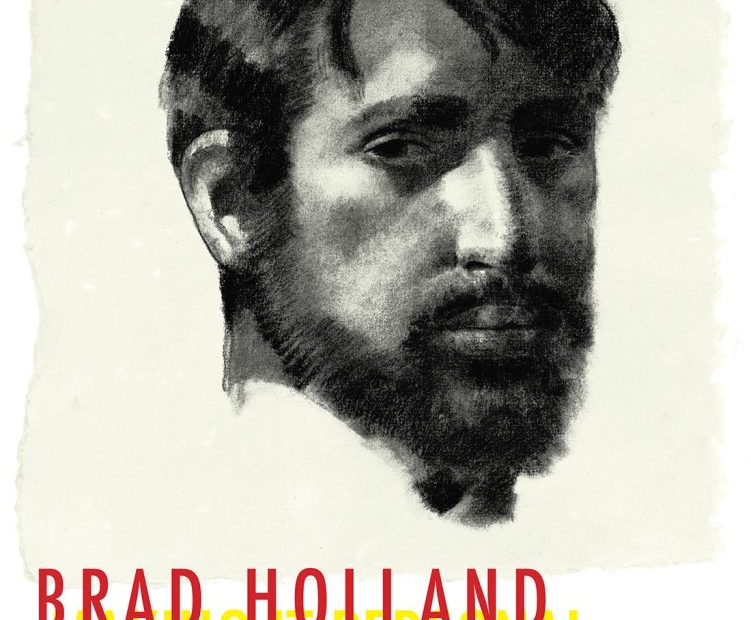
American illustration is not without legendary artists who influenced and defined their times and thereafter. When Brad Holland unexpectedly passed away in spring 2025, age 81, he was among the legends. He left a wealth of paintings, drawings, sketches and comic texts requiring months to rescue, preserve and organize (and the process continues). His family, friends, fans and connoisseurs discussed the necessity of a major memorial exhibition—but how could this be accomplished in a short amount of time? His former assistant and friend, illustrator Jonathan Twingley, organized an advisory committee, assumed the role of co-curator along with Stephanie Plunket and Tyson Skross. They are committed to mounting what promises to be the first of the legacy shows around the nation. To the many admirers of Holland’s work, you simply must attend this historic event. To those yet to be introduced and blown away, you will not want to miss it.
Jonathan Twingley
When Holland (Oct. 16, 1943–March 27, 2025) stepped off the Greyhound bus that brought the young artist from the Midwest to New York City in 1967, he was destined to become among the most copied and heralded editorial illustrators for the following few decades.
New York was in the throes of a creative revolution, and illustration was poised to be in the vanguard. The days of Rockwellian realism and idealism were being replaced by a form of conceptual expressionism, which, rather than mimic the literal aspects of a text, provided clues and prompts to help decipher coded messages. Instead of a representational vocabulary, an emotional and psychological interpretation of what was being illustrated engaged the audience.
Holland created his New York style based on an acute knowledge of art history. He made drawings and paintings that left key interpretative aspects to the imagination, thus enabling the viewer to become part or all of a total experience. By making imagery sing or shout off the surface, Holland could get the viewer to engage. Holland made sure that there were entry points into a picture so that the image was not completely mysterious. Sometimes, a cigar is just a cigar.
Holland conceived a personal pictorial language to reinforce his message. Over time his language evolved to meet the demands of the assignments. From his black-and-white, crosshatched drawings to his vibrant, chromatic images, Holland was always in conversation with his audience. This small portion of a much larger oeuvre of work revels in the different audiences with whom he maintained this dialogue between the real and imagined.
The post The Daily Heller: The Legacy of Brad Holland, American Illustrator appeared first on PRINT Magazine.