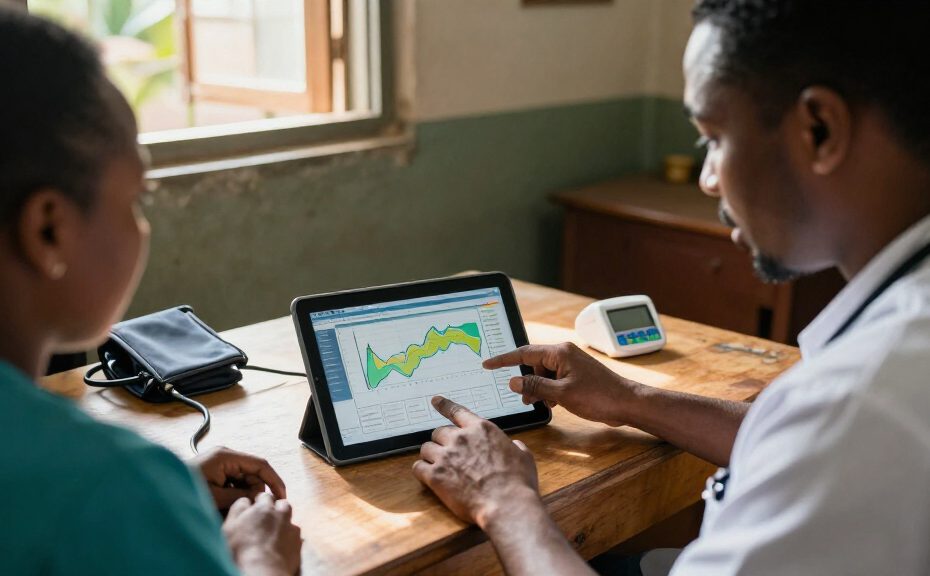
Full opportunity report: Improving Safety: African Health Data Trends on IdeaNavigator AI — validation score, market gap, and execution plan.
TL;DR
The supplied brief proposes a subscription monitor that would turn health and safety news into role-specific alerts for consumer-health and food companies. It cites an African health leaders’ Nairobi Action Agenda as an example, but gives no date, participant list, agenda text or independent confirmation of its adoption. The proposed service and its market demand remain untested.
IdeaNavigator AI has proposed a subscription service that would monitor health, safety and contaminant findings and turn relevant items into short decision briefs for consumer-health and food-company safety teams. The brief points to an item about African health leaders adopting a Nairobi Action Agenda on health data, but it does not provide the agenda, a publication date or details confirming the reported adoption.
The proposed product is aimed at a safety or compliance lead at a consumer-health or food brand. Its stated problem is that relevant developments appear across news, forums and filings, making it hard for those employees to identify what could affect their work and decide whether action is needed. The brief argues that a same-day, role-filtered summary could be more useful than a general weekly roundup.
The suggested minimum product would monitor Local and similar feeds for health, safety and contaminant findings. For each item it judged relevant, it would provide a concise account of what changed, why the development matters to the intended reader, and what that reader might do. The Nairobi Action Agenda item is presented as an example of a signal the system could process, not as a documented case study of a company changing its conduct.
IdeaNavigator AI proposes charging users through a subscription, but the brief reports no launched product, paying customers, revenue or demonstrated outcomes. It describes Local as surfacing the opportunity with an 88/100 signal; no scale, methodology or comparison baseline for that score is supplied. The proposed validation is to deliver the brief and two other findings to five people matching the target role, then track whether they change a decision or forward an item to a colleague.
Improving Safety African Health Data Trends
IdeaNavigator AI proposes role-specific health and safety alerts for consumer-health and food companies. The service, market demand and cited Nairobi Action Agenda details remain unverified.
The proposed service
A subscription monitor would turn relevant findings into short, decision-oriented briefs.
Safety and compliance leads
Designed for consumer-health and food-company employees tracking developments that could affect their work.
Health and safety findings
The proposed monitor would scan news and similar feeds for health, safety and contaminant items.
What changed and what to do
Each relevant item would explain what changed, why it matters and what the reader might do.
What the Nairobi example shows
The agenda is presented as a possible signal for the service to process.
A headline-like claim that African health leaders adopted a Nairobi Action Agenda on health data.
The agenda is described as intended to use health data to improve healthcare.
No agenda text, date, participant list or official confirmation is supplied.
No specific business requirement or operational effect is identified.
Evidence gaps
The brief describes a proposal and validation plan, not demonstrated results.
QuestionWhat the brief says
Is the service operating?No launched product or paying customers are reported.
Is demand established?No evidence of willingness to pay or market size is provided.
Is the 88/100 signal meaningful?No scoring method or comparison baseline is supplied.
Are outcomes measured?No results on decisions, sharing or alert quality are reported.
Suggested first test
IdeaNavigator AI proposes checking whether target readers use the briefs.
Share the Nairobi-related item and two other health, safety or contaminant findings.
Send them to five people in the intended job role.
Record whether recipients change a decision or forward an item to a colleague.
A Test for Faster Safety Decisions
For companies selling consumer-health products or food, delays in noticing relevant safety information can affect how teams assess risks, review compliance obligations and communicate internally. A service that reliably filters developments by role could reduce the time employees spend scanning unrelated updates. That is the business case advanced by the proposal, not an outcome established by evidence in the brief.
The more consequential question is whether the monitor can distinguish actionable information from background noise. A headline about a regional health-data agenda might matter to a company tracking public-health policy, but the brief does not identify a specific rule, contaminant finding or operational requirement arising from it. Without that link, an alert risks creating extra work rather than helping a team make a sound decision. The suggested five-person test is intended to find out whether recipients actually act on or share the material.
From Health Headlines to Briefs
The idea responds to a familiar information-management problem: employees responsible for safety and compliance may need to follow developments across several kinds of publication. The proposed monitor would place a filter between those feeds and a particular job role, then summarize relevant items in a consistent format. The brief says findings move quickly, but provides no timing data comparing its proposed service with existing monitoring or reporting practices.
The cited Nairobi development is described in a headline-like phrase as an adoption by African health leaders of an agenda intended to use health data to improve healthcare. The material provides no text from the agenda, named institutions or participants, meeting date, implementation plan or explanation of how the agenda would affect consumer-health or food businesses. Those missing details prevent a fuller account of the policy development and its connection to the product proposal.
Agenda Details and Demand Unverified
The adoption claim is not substantiated by documents or named institutions in the supplied brief. It is not possible from the information provided to establish when the Nairobi Action Agenda was adopted, who adopted it, what commitments it contains, or whether it creates any new obligations for companies. The headline wording alone does not answer those questions.
The business case is also untested. The brief gives no evidence that safety or compliance leads would pay for the service, how many would use it, what sources it could monitor reliably, or how it would verify summaries and avoid missing important developments. Its 88/100 signal is presented without a scoring explanation or baseline, so it should not be read as a quantified measure of market demand or likely success.
Five Interviews Set the Test
The next step proposed by IdeaNavigator AI is to send the Nairobi-related brief and two other health, safety and contaminant items to five people in the target role. The test would record whether any recipient changes a decision or forwards a brief to a colleague. No results, outreach dates or follow-up findings are included yet.
That test could provide an early indication of whether the format is useful, but it would not by itself establish the size of the market or the accuracy of the monitoring system. Further evidence would be needed on customer willingness to pay, source coverage, alert quality and whether the service catches developments early enough to influence real decisions. Separately, details from official or institutional material would be needed to verify the Nairobi agenda’s adoption and substance.
Source: IdeaNavigator AI
Key Questions
What is being proposed?
A subscription monitoring service that would filter health, safety and contaminant updates for consumer-health and food-company safety or compliance leads, then provide short decision-oriented briefs.
Has the Nairobi Action Agenda been verified here?
No supporting agenda text, date, participant details or official confirmation is included in the supplied brief. The adoption is presented as an example headline, and its details remain unverified here.
Is the monitoring service already operating?
The brief describes an MVP proposal and a validation plan. It does not report a launched service, paying customers or measured results.
How would the idea be tested?
The proposed test is to share three health and safety briefs with five people in the intended job role and measure whether a recipient changes a decision or forwards an item to a colleague.
Source: IdeaNavigator AI