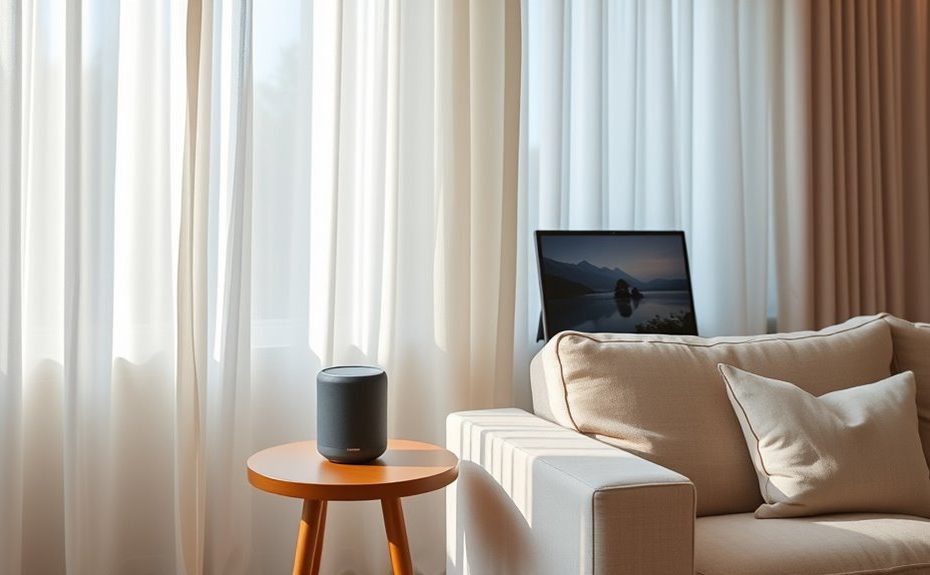
To create calm tech at home, focus on digital minimalism by reducing unnecessary devices and notifications. Use smart lighting that adapts to your natural schedule and automate quiet hours to limit interruptions. Choose purposeful, user-friendly gadgets and set boundaries like no screens during meals or bedtime. This approach helps clear digital clutter and promotes mindfulness. If you want to learn more about designing a peaceful, tech-friendly space, you’ll find helpful tips as you continue exploring.
Key Takeaways
Design your home with digital minimalism, prioritizing essential devices that support well-being and reduce clutter.
Use smart lighting and automation to create a calming environment aligned with natural rhythms.
Limit notifications and screen time, especially in shared spaces, to foster mindfulness and reduce overstimulation.
Establish boundaries, such as no screens during meals or before bedtime, to promote presence and mental clarity.
Choose simple, user-friendly technology that enhances relaxation and helps transform your home into a peaceful retreat.
Have you ever felt overwhelmed by the constant notifications and digital clutter at home? It’s a common experience in today’s tech-driven world. Our homes are filled with devices that promise convenience but often lead to distraction and stress. That’s where the idea of a calm tech environment comes in—creating a space where technology supports relaxation rather than chaos. One effective way to do this is by embracing a smart home that’s designed around digital minimalism. Instead of piling on gadgets and endless apps, you focus on essentials that truly enhance your well-being and simplicity. A smart home isn’t about having every device possible; it’s about selecting those that serve a clear purpose and minimize disruptions. For example, you might install smart lighting that adjusts to natural circadian rhythms, helping you wind down at night and wake up refreshed. You could also set up automation to silence notifications during certain hours, reducing the constant pinging of alerts. This approach helps you regain control over your digital environment, making your home a sanctuary rather than a source of distraction.
Digital minimalism in a smart home isn’t just about reducing devices; it’s about intentionality. You curate your technology so it enhances your life without overwhelming it. This might mean having a single, easy-to-use device for controlling multiple systems rather than dozens of remote controls and apps. It also involves disabling unnecessary notifications and limiting screen time in communal spaces. By doing so, you create a physical and digital environment that encourages presence and mindfulness. When your smart home aligns with your goals of calmness and clarity, you’ll find it easier to disconnect and focus on what truly matters. This doesn’t mean abandoning technology altogether—it means using it thoughtfully and sparingly. You set boundaries for your digital life, such as no screens during meals or an unplugged hour before bed, fostering a sense of calm and presence. The goal is to let technology serve your lifestyle rather than dominate it.
In this way, a smart home built around digital minimalism becomes a foundation for calm tech. It’s about designing your environment to support your mental health and peace of mind. You remove the excess clutter—both physical and digital—and create a space that invites relaxation and mindful living. By choosing devices carefully and setting intentional boundaries, you transform your home into a retreat from the overstimulation of modern life. The result is a home where technology enriches your life without overwhelming it—a truly calming space that nurtures your well-being and helps you reconnect with what matters most.
A key aspect of this approach involves understanding the importance of digital clutter in stress and distraction, allowing you to better manage your environment for tranquility.
Frequently Asked Questions
How Can I Start Implementing Calm Tech Principles Gradually?
You can start implementing Calm Tech principles gradually by practicing mindful planning for your home environment. Begin by identifying tech devices that cause distractions or stress, then replace or modify them with calmer alternatives. Focus on gradual integration, adding one change at a time, such as dimming screens or creating tech-free zones. This approach helps you adapt comfortably, making your space more peaceful without feeling overwhelmed.
What Are Common Mistakes to Avoid When Designing Calm Tech Environments?
You might think more tech equals better calm, but avoid overstimulation hazards by not overloading your space with gadgets. Prioritize simplicity and mindful design, or you’ll risk creating chaos instead of calm. Don’t overlook privacy concerns—hidden cameras or constant notifications can backfire. Keep interfaces minimal and secure. Remember, the goal isn’t tech overload but fostering tranquility, so steer clear of cluttered, intrusive setups that defeat your peaceful intent.
Are There Specific Tools or Gadgets Recommended for Calm Tech at Home?
You should consider smart home devices that promote simplicity, like automated lighting and thermostats, to enhance calmness. Wearable devices can also help you monitor stress levels without being intrusive. Look for gadgets that prioritize minimal alerts and easy interfaces to avoid overwhelm. By choosing these tools thoughtfully, you create a peaceful environment that supports relaxation and reduces digital clutter, making your home a true sanctuary.
How Does Calm Tech Impact Mental Health and Stress Levels?
Calm tech acts like a gentle breeze, easing your mind and reducing stress. It encourages mindfulness meditation and minimizes digital distractions, helping you stay present. As a result, your mental health improves, and anxiety levels drop. By creating a peaceful environment, calm tech promotes a sense of balance and clarity, allowing you to recharge and stay centered amid daily chaos. You’ll feel more relaxed and in control of your well-being.
Can Calm Tech Be Tailored to Children’s or Elderly Family Members?
Yes, you can tailor calm tech to children and elderly family members by using personalized tech and age-specific solutions. For kids, choose devices with simple interfaces and gentle notifications to promote focus and safety. For seniors, opt for easy-to-use, intuitive tools that support independence without overwhelming them. By customizing these solutions, you help create a calming environment that respects each family member’s needs and comfort levels.
Conclusion
As you embrace calm tech at home, think of it as tending a peaceful garden amid the chaos—each mindful choice a gentle pruning, letting only what nurtures your well-being flourish. Like a lighthouse guiding ships safely through stormy seas, your intentional tech use becomes a beacon of tranquility. When you create this serene space, you’re not just decluttering your home, but anchoring your mind in calm, clarity, and purpose—making everyday life feel a little more like a quiet harbor.