A New York- and Helsinki-based health technology company is advancing noninvasive respiratory monitoring through a research-driven acoustic sensing method that measures breathing via chest vibrations rather than optical or airflow-based techniques.
— Health technology company alveos has developed a new mechano-acoustic sensing method designed to monitor human breathing by detecting subtle chest vibrations and pressure changes. The approach is intended to support continuous, noninvasive respiratory monitoring in everyday situations, addressing limitations associated with optical, camera-based and motion-derived techniques commonly used in consumer wearables.
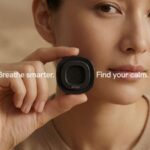
Alveos operates across the United States and Finland, with business operations in New York and research and development activities in Helsinki. The company said its work reflects a broader shift in digital health toward unobtrusive sensing technologies capable of functioning outside controlled laboratory or clinical environments. The method relies on high-sensitivity acoustic sensors placed in contact with the body to capture vibration patterns generated by airflow and chest wall motion during respiration. These signals are processed on-device to characterize breathing rate, rhythm, and depth without the use of cameras, airflow masks, or optical measurements. According to alveos, the sensing system clips to clothing, while the sensor surface which rests against the skin, is designed to function using a magnetic clip that maintains stable contact without requiring adhesives or skin preparation. The sensor system features a magnetic clip that attaches to clothing, while the sensor surface maintains stable contact against the skin. This design eliminates the need for adhesives or skin preparation.
Respiratory rate and breathing patterns are increasingly recognized as indicators of physical exertion, stress, recovery and autonomic nervous system activity. However, continuous measurement in real-world conditions has remained technically challenging. Alveos said its acoustic approach is informed by peer-reviewed research on contact-based acoustic respiratory monitoring. Prior studies report clinically relevant accuracy under a range of conditions, including motion and environmental noise, when compared with established reference systems.
“Our work builds on decades of research in respiratory physiology and acoustics,” said Patrick Obolgogiani, chief executive officer of alveos. “The challenge has been translating that science into a sensing modality that can operate continuously outside the clinic. By focusing on chest vibrations rather than optics or airflow, we are exploring a pathway that is both noninvasive and compatible with everyday use.”
Unlike wrist-worn devices that infer breathing indirectly from heart rate or motion, the alveos approach targets mechano-acoustic signatures produced directly by respiration. The company said this enables more granular detection of breathing patterns associated with physical activity, stress, or recovery, while reducing reliance on indirect physiological proxies.
Alveos noted that signal processing and pattern recognition within the system are supported by machine learning models trained on respiratory data collected under varied conditions. These models are used to interpret breathing dynamics over time and form the basis for what the company describes as an AI breathing coach which interprets breathing dynamics over time to guide the user toward their specific goals. Raw acoustic data is processed locally on the device, with higher-level features used to generate feedback, reflecting a design emphasis on data minimization and privacy.
“Breathing is one of the few physiological functions that is both automatic and voluntarily adjustable,” Obolgogiani said. “Our goal is to provide people with access to validated respiratory measurements that help them understand their breathing patterns, rather than relying on estimates or intermittent snapshots.”
The company emphasized that the announcement focuses on the sensing method rather than a commercial product launch. However, alveos said it is planning a market launch in the fourth quarter of 2026, with pre-orders currently available through a Kickstarter campaign.
The company is backed by early-stage venture investor Antler and has completed pre-seed funding at a reported valuation of approximately €5 million. Ongoing validation efforts are focused on ensuring measurement robustness across different body types, activity levels, and environmental conditions.
Founded in Finland, alveos operates at the intersection of health technology, data science, and industrial design. The company said its work reflects a broader trend in digital health toward passive, continuous sensing methods that reduce user burden while increasing the relevance and fidelity of physiological data collected in everyday life.
About alveos
Alveos is a health technology company developing noninvasive methods for continuous respiratory monitoring. The company combines acoustic sensing, applied physiology, and data science to study how breathing patterns reflect physical and mental states in real-world contexts.
Operating across the United States and Finland, alveos conducts research and development at the intersection of wearable technology and respiratory science. Its team brings together expertise in engineering, machine learning and health-focused design to advance lightweight monitoring approaches that can operate outside traditional clinical settings.
Contact Info:
Name: Patrick Obolgogiani
Email: Send Email
Organization: Alveos
Website: https://alveoslabs.com
Release ID: 89183217
If you detect any issues, problems, or errors in this press release content, kindly contact error@releasecontact.com to notify us (it is important to note that this email is the authorized channel for such matters, sending multiple emails to multiple addresses does not necessarily help expedite your request). We will respond and rectify the situation in the next 8 hours.