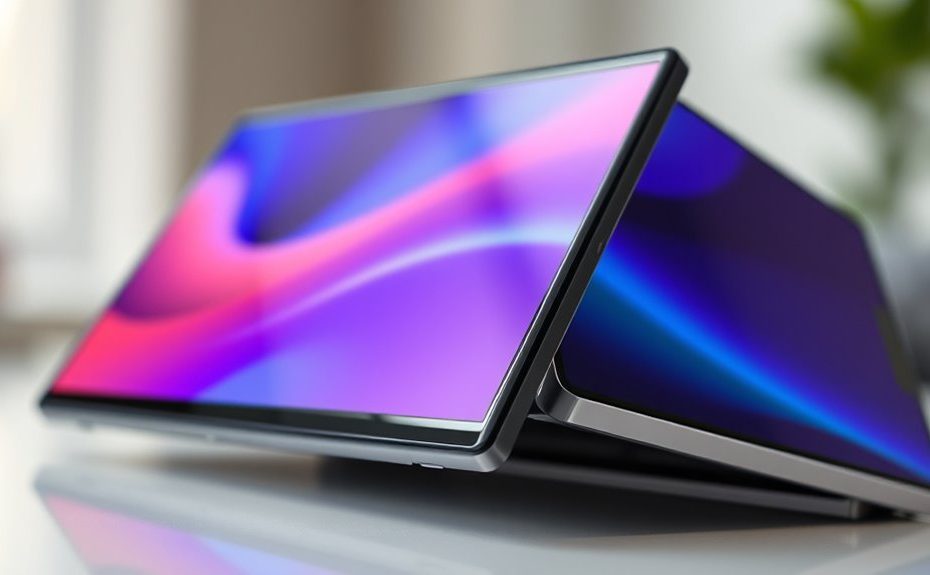
Foldable screens work by combining flexible materials, such as bendable OLED technology, with sophisticated hinge mechanisms that allow the device to fold and unfold smoothly. The screens use layered flexible substrates and reinforced polymers to withstand repeated bends without damage. The hinges are engineered with multiple pivot points and locking features to provide stability and ease of use. If you keep exploring, you’ll discover how these innovations make foldable devices more durable and versatile.
Key Takeaways
Foldable screens use flexible materials like OLED technology that can bend repeatedly without damage.
Advanced hinge mechanisms enable smooth folding and unfolding, maintaining device stability and durability.
Layers of reinforced polymers and ultra-thin glass enhance flexibility and withstand multiple folds.
Devices transform from compact to expanded screens, combining portability with larger display functionality.
Ongoing innovations improve reliability, resistance to wear, and seamless user experience over time.
Have you ever wondered how foldable screens are transforming the way we use devices? At the core of these innovative gadgets are flexible materials and sophisticated hinge mechanisms. These elements work together to allow screens to bend, fold, and unfold seamlessly, opening up new possibilities for how you interact with technology. Unlike traditional rigid screens, foldable displays are crafted from materials that can endure repeated bending without cracking or losing performance. These flexible materials are often based on OLED (organic light-emitting diode) technology, which is inherently more adaptable because of its thin, pliable layers. This flexibility ensures that the screen can fold without damaging the display itself, giving you a device that can switch from a compact phone to a larger tablet in seconds.
The hinge mechanism is equally crucial to the foldable display’s functionality. It’s what allows the screen to fold smoothly and stay in position when you want it to. Modern hinge designs are engineered with precision, incorporating multiple pivot points, counterbalances, and even small rubber or silicone seals to prevent dust and debris from entering. These mechanisms are not just simple joints; they’re complex systems that provide stability, durability, and fluid movement. When you open or close a foldable device, the hinge mechanism ensures the transition is seamless, minimizing creases or stress points on the flexible material. Advanced hinge designs also enable the device to stay in various angles or positions, giving you versatile usage modes.
Manufacturers are continually refining both flexible materials and hinge mechanisms to improve durability and ease of use. The materials have to withstand thousands of folds without cracking, while the hinges must operate smoothly over many years. Innovations like layered flexible substrates, ultra-thin glass, and reinforced polymers are pushing the boundaries of what’s possible. Meanwhile, hinge mechanisms are becoming more sophisticated, incorporating magnetic or mechanical locking features that secure the device in different configurations. These advancements mean you get a more reliable, longer-lasting foldable device that feels natural to use, whether you’re flipping it open for a video call or folding it shut to slip into your pocket.
In essence, the combination of flexible materials and carefully engineered hinges is what makes foldable screens such a game-changer. They enable devices to be both compact and expansive, adapting to your needs with a simple fold. This technology is not just about aesthetics; it’s about redefining convenience and functionality in your daily tech experience. As these innovations continue, you’ll likely see even more durable, versatile, and user-friendly foldable devices in the near future.
Frequently Asked Questions
How Durable Are Foldable Screens Over Time?
Foldable screens are generally quite durable, but their durability depends on how well you handle screen bending and the quality of the device. Manufacturers perform extensive durability testing to ensure longevity, often testing for tens of thousands of fold cycles. You should still be cautious, avoid excessive bending, and keep the screen clean to maintain its performance over time. Proper care helps extend the lifespan of your foldable device.
What Materials Are Used in Foldable Screen Manufacturing?
You’ll find that foldable screens use advanced material innovations like flexible OLED panels and durable flexible glass to withstand repeated folding. Manufacturers face manufacturing challenges in ensuring these materials remain thin, lightweight, and resilient. They often combine polymers, specialized plastics, and ultra-thin glass to create screens that bend without breaking, offering a seamless experience. These innovations aim to balance flexibility, durability, and display quality for a reliable, foldable device.
Can Foldable Screens Be Repaired if Damaged?
Yes, foldable screens can be repaired if damaged, but it depends on the extent of the damage and the manufacturer’s repair policies. You should get a professional screen repair specialist to do a damage assessment first. Minor issues like scratches or small cracks might be fixable, but more severe damage could require replacement of the entire screen assembly. Always consult authorized service centers for safe and effective repairs.
How Do Foldable Screens Impact Device Weight and Thickness?
Sure, your device gets a bit of a workout with foldable screens, which add some weight and thickness to boost screen flexibility. You might feel like carrying a mini brick, but hey, it’s all about balancing device portability with that sleek, foldable magic. So, while they make your gadget bulkier, they also bring the wow factor, transforming your device into a flexible, eye-catching marvel—just don’t expect it to travel light.
What Is the Cost Difference Between Foldable and Traditional Screens?
You’ll find that foldable screens generally cost more than traditional ones due to advanced technology and materials. The pricing comparison shows foldable devices often come at a premium, making market affordability a concern for many. While prices are gradually decreasing as manufacturing improves, you’ll still pay extra for the flexibility and innovative design foldables offer. If budget is key, traditional screens remain the more economical choice.
Conclusion
Now you see how foldable screens blend innovation with practicality. As the saying goes, “A picture is worth a thousand words,” and these screens certainly tell a story of technological progress. As you explore this exciting technology, remember that flexibility and adaptability are key. With foldable screens, you’re not just keeping up; you’re staying ahead. So, embrace the future and get ready to see the world through a new, flexible lens.