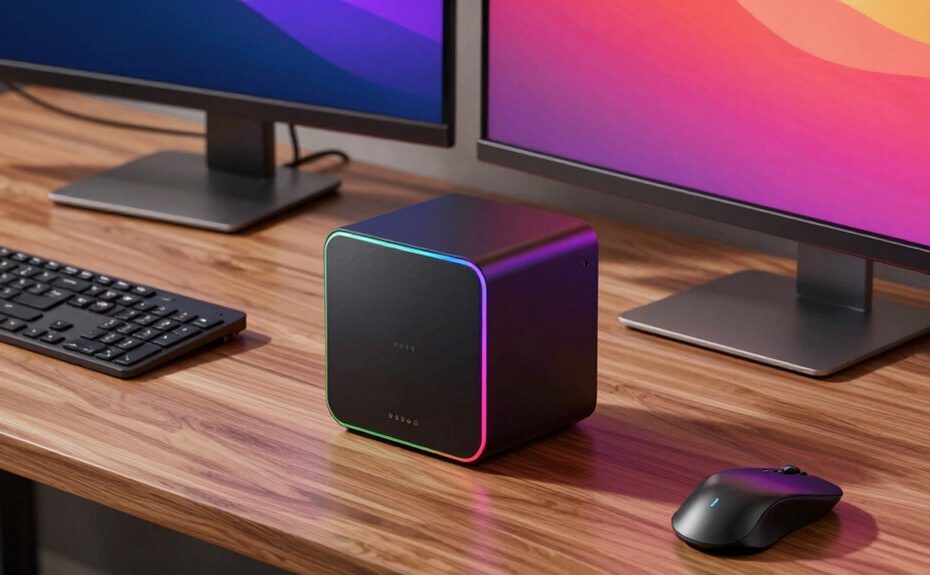
Mini PCs are more capable than most people realize. They feature powerful processors and options for dedicated graphics, making them great for gaming and demanding apps. Plus, they’re upgradeable, so you can improve RAM, storage, or graphics easily, extending their lifespan. Their compact size saves space and fits well in homes or offices without sacrificing performance. If you want to discover how these small machines pack big potential, there’s plenty more to explore.
Key Takeaways
Mini PCs deliver high performance with powerful processors and dedicated graphics, capable of gaming and demanding applications.
They are highly upgradeable, allowing users to extend lifespan and adapt to evolving software needs easily.
Compact size makes them ideal for space-constrained environments like home offices and media centers.
Their versatility supports gaming, media, and general computing, offering flexibility in various use cases.
Increasing trends in upgradeability and AI integration make mini PCs a smart, cost-effective investment beyond basic computing.
Many people overlook the true potential of mini PCs, assuming they’re only suitable for basic tasks. While they’re indeed compact and energy-efficient, recent advancements have transformed them into powerful machines capable of handling more demanding applications. If you think mini PCs can’t support gaming performance or be upgraded easily, you might want to reconsider. Today’s mini PCs often come equipped with high-performance processors, dedicated graphics options, and ample RAM, making them surprisingly capable gaming machines. They can run modern titles smoothly, especially when paired with a good monitor and peripherals. This means you don’t need a bulky desktop to enjoy gaming sessions; a mini PC can deliver impressive performance in a surprisingly small package.
Mini PCs are powerful, upgradeable, and perfect for gaming and space-saving setups.
Beyond gaming, mini PCs also offer notable upgradeability options that many overlook. Unlike older models or overly compact devices with limited upgrade paths, newer mini PCs often feature accessible components. You can upgrade the RAM, storage, and even the graphics card in some models, extending the lifespan of your device and tailoring it to your needs. This flexibility is particularly beneficial if you want to keep up with evolving software demands without replacing the entire system. You can start with a modest setup and gradually enhance it over time, saving money and reducing electronic waste. The ease of upgrading varies between models, but many manufacturers now design mini PCs with user-friendly access panels, so you don’t need specialized tools or technical expertise to perform upgrades. Additionally, their upgradeability options are often a key factor in their growing popularity. Incorporating upgradable components and modular designs aligns with the increasing trend of customizable and adaptable technology solutions. For example, some models even feature tool-less access, making upgrades even more straightforward. As the advancements in AI technology in mini PCs continue, they are becoming even smarter and more efficient for a variety of uses.
You might also find that mini PCs excel in space-constrained environments. Whether you’re setting up a home office, media center, or gaming station, their small footprint frees up desk space while still providing you with powerful capabilities. Plus, their energy efficiency means lower electricity bills compared to traditional desktops, making them a smart investment for everyday use. The compact size doesn’t mean sacrificing ports either—most mini PCs come with multiple USB ports, HDMI, DisplayPort, and even Thunderbolt options, giving you plenty of connectivity choices.
In short, mini PCs are more than just desktop alternatives—they’re versatile, upgradeable, and capable of delivering impressive gaming performance. If you’re looking for a machine that combines power, flexibility, and space-saving convenience, don’t dismiss mini PCs. With the right model, you’ll find that they can meet or even exceed your expectations, all while fitting comfortably into your environment.
Frequently Asked Questions
Can Mini PCS Handle High-End Gaming?
Mini PCs can handle high-end gaming if you choose models with powerful processors, ample RAM, and dedicated graphics cards. While they might struggle with the most demanding titles locally, you can still enjoy high-quality gaming through cloud gaming services or VR compatibility. These options let you experience high-end games without needing top-tier hardware, making mini PCs a versatile choice for gamers seeking performance and portability.
How Do Mini PCS Compare in Upgradeability?
You might think mini PCs are limited, but their modular design actually makes upgrading a breeze. You can easily swap out components or upgrade parts, including expandable storage, without tearing the whole system apart. Sure, they might be small, but they’re surprisingly versatile, allowing you to customize and enhance performance. So, don’t underestimate their upgradeability—these tiny machines pack a punch and grow with your needs.
Are Mini PCS Suitable for Professional Video Editing?
Yes, mini PCs are suitable for professional video editing, especially with their compact design that saves space. They handle remote collaboration smoothly, allowing you to work efficiently from different locations. Modern mini PCs come with powerful processors and sufficient RAM, making editing tasks manageable. Their portability and connectivity options enable you to set up a professional editing station virtually anywhere, making them an excellent choice for on-the-go editing needs.
What Are the Power Consumption Differences?
Think of mini PCs as energy-efficient superheroes; they slay power consumption while delivering solid performance. You’ll notice their lower energy use compared to traditional desktops, thanks to advanced power management features. This means they sip rather than gulp electricity, saving you money and reducing environmental impact. Overall, mini PCs excel in energy efficiency, making them a smart choice for those who want power without draining resources.
Do Mini PCS Have Better Security Features?
Yes, mini PCs often have better security features. They support cloud integration, allowing you to back up data securely and manage access remotely. Many mini PCs also include biometric security options like fingerprint scanners or facial recognition, adding an extra layer of protection. These features help safeguard your data and enhance overall security, making mini PCs a smart choice for both personal and professional use.
Conclusion
So, next time you spot a tiny PC, think of it as a hidden gem tucked away in a bustling cityscape—compact yet mighty, ready to release its power like a silent storm. These miniature marvels pack more punch than they seem, quietly transforming your space into a sleek command center. Don’t overlook their potential; like a small seed growing into a mighty oak, mini PCs prove that big things often come in small, unassuming packages.