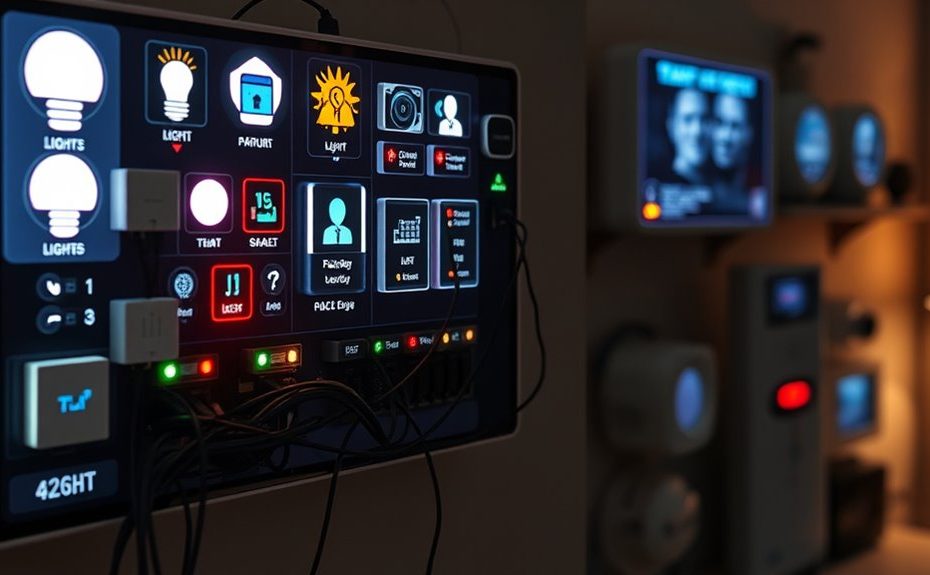
Smart-home scenes can misfire due to vulnerabilities in device group architectures, like poor isolation that allows failures to cascade across devices. Cyber threats, such as hacking or malware, may disrupt automations or trigger unintended actions. Environmental factors like faulty sensors or hardware issues can cause delays or false triggers. Interconnectivity and system complexity increase these risks. To prevent this, proper segmentation, security measures, and troubleshooting are essential—continue exploring to learn how to protect and optimize your smart-home system.
Key Takeaways
Improper device segmentation can cause automation failures and unintended scene triggers across interconnected device groups.
Hardware malfunctions or sensor inaccuracies may lead to delays or false triggers in smart home automations.
Security breaches or malware can manipulate automations, causing scenes to misfire or activate unexpectedly.
Communication issues like interference or firmware glitches can disrupt device commands, resulting in automation delays.
Lack of regular updates and monitoring increases vulnerability to errors, delays, and security risks in smart home scenes.
Vulnerabilities in Device Group Architectures and Cascading Failures
Device group architectures in smart homes often lack proper isolation, making them vulnerable to cascading failures. When one device or system malfunctions, it can quickly spread across the entire network, causing widespread disruptions. For example, a software glitch in your hub might disable all connected devices, regardless of their individual security measures. Similarly, if a security camera experiences motion detection errors, it could trigger unintended automation, affecting other devices like lights or alarms. Without effective isolation protocols, these failures aren’t contained—they ripple through the system, leading to complete automation breakdowns. This interconnectedness means a single point of failure can impair your entire smart home ecosystem, leaving you vulnerable and forcing you to troubleshoot multiple devices simultaneously. Proper design and segmentation are essential to prevent such cascading issues. Additionally, implementing simple tools like BTU and CADR quick‑calculators can help you better understand device capacities and prevent overloads that contribute to system failures. Recognizing the importance of device isolation can further reduce the risk of widespread issues by ensuring failures are confined to individual components rather than propagating throughout the network. Incorporating robust network security measures and regularly updating firmware can also help mitigate vulnerabilities that lead to cascading failures. Furthermore, establishing personality-based communication protocols can improve system resilience by allowing devices to communicate more effectively and avoid misinterpretations that lead to automation errors. Being aware of security vulnerabilities and applying best practices can significantly enhance your smart home’s stability and safety.
Cyber Threats and Automation Disruptions in Smart Homes
Cyber threats pose a significant risk to smart home automation by enabling hackers to gain unauthorized access and manipulate scenes remotely. You might find malicious actors triggering unwanted automations, turning off security systems, or activating appliances at inconvenient times. These attacks can compromise your privacy, disrupt routines, and even cause safety hazards. Implementing secure configuration practices can significantly reduce these vulnerabilities. Additionally, understanding cyber threat mitigation strategies is essential for maintaining a resilient smart home environment. Hackers can execute remote commands, activating appliances or disabling security features undetected. Malware infections on apps or browsers grant hackers access to control credentials and automation rules. Recognizing the importance of robust security measures helps you implement comprehensive protections, including strong passwords, regular firmware updates, and network encryption, to safeguard your smart home ecosystem from cyber threats. For example, choosing devices with established trustworthiness can further reduce the risk of security breaches, ensuring your automation remains safe from malicious interference. Regularly monitoring device activity logs can also help identify suspicious activities early, adding an extra layer of threat detection.
Environmental and Hardware Factors Causing Automation Delays
Environmental conditions and hardware issues can markedly delay smart home automation, often causing scenes to trigger later than scheduled or not at all. Faulty motion sensors may misinterpret pet movement or environmental changes, leading to false triggers or missed activation. Inconsistent readings from temperature or contact sensors can disrupt scene timing, causing delays or misfires. Hardware failures in smart plugs or thermostats interrupt ongoing automations unexpectedly. Communication glitches, caused by wireless interference or protocol failures, slow down or block command transmission between devices and hubs. Power outages or improper recovery processes can desynchronize devices, delaying scene execution. Firmware update failures leave devices in unstable states, preventing proper participation in automation sequences. These environmental and hardware factors directly impact automation reliability and timing accuracy. Additionally, AI security vulnerabilities in device firmware can be exploited, further compromising automation stability. Moreover, sensor calibration issues can lead to inaccurate readings, affecting the overall responsiveness of automation scenes.
Frequently Asked Questions
How Can I Identify if My Device Group Architecture Is Vulnerable?
You can identify if your device group architecture is vulnerable by checking for weak isolation protocols, which allow hacking or cascading failures. Look for devices that lack proper segmentation, making the whole system susceptible. Test your network for security gaps, like open ports or outdated firmware. Also, monitor for false triggers or delays, which may indicate environmental or communication issues. Regularly review security settings and update your devices to minimize risks.
What Are Best Practices to Prevent Cascading Failures in Smart Homes?
To prevent cascading failures, you should segment your device groups with proper isolation, ensuring a malfunction in one doesn’t affect others. Regularly update firmware and security patches to close vulnerabilities. Use strong, unique passwords and enable multi-factor authentication. Avoid overloading your network, and implement redundancy for critical devices. Monitor device performance and set up alerts for anomalies, so you catch issues early and prevent faults from spreading across your smart home ecosystem.
How Do Firmware Updates Impact Automation Reliability?
Firmware updates are like essential lifelines that keep your smart home secure and efficient. When you update, you patch vulnerabilities, fix bugs, and enhance compatibility, boosting automation reliability. However, neglecting updates or rushing through them can introduce new issues—akin to cracks in a foundation—that cause scene delays or failures. Regular, well-managed updates ensure your interconnected devices function harmoniously, safeguarding your automation ecosystem from instability.
Can Specific Environmental Sensors Be Calibrated to Reduce Delays?
Yes, you can calibrate specific environmental sensors to reduce delays. You should regularly check sensor readings and adjust their calibration settings using the device’s app or control panel. Proper calibration ensures accurate detection, minimizing false positives or negatives that cause delays. Additionally, keeping firmware updated and performing periodic recalibration helps maintain sensor accuracy, leading to more timely and reliable automation responses in your smart home setup.
What Security Measures Protect Against Remote Automation Hijacking?
Imagine locking your front door but forgetting to secure the windows—that’s how weak security measures leave your smart home vulnerable. To protect against remote hijacking, you should enable strong, unique passwords, use two-factor authentication, and keep firmware updated. Adding network segmentation isolates smart devices from your main network, reducing risks. Regularly monitor device activity logs, and disable remote access when not needed, ensuring a fortress around your automation system.
Conclusion
You might think smart-home scenes are foolproof, but vulnerabilities in device groups and automations can cause unexpected mishaps. Some experts believe these failures stem from a hidden flaw: a single device glitch can cascade, disrupting your entire setup. While delays often seem environmental, research suggests that underlying architecture issues are the real culprit. Staying aware of these vulnerabilities helps you troubleshoot smarter and keep your smart home running smoothly.