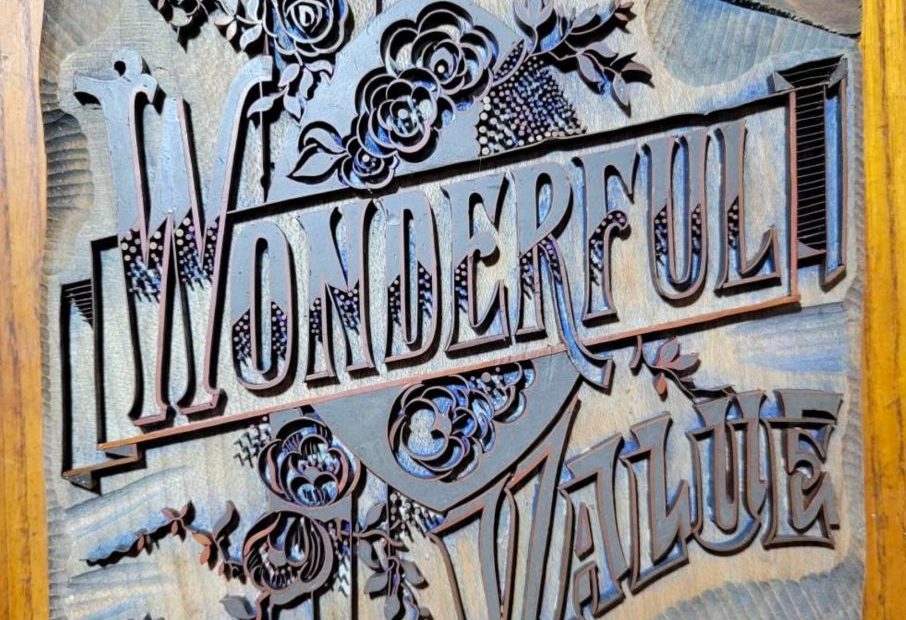
Yesterday, we were fortunate to peek at a small selection of the textile “stamps” in Adrian Wilson’s extensive collection from olde Manchester, the “world’s first industrial city,” once the center of textile manufacture and merchandising. With Christmas soon upon us, Wilson has gifted more images of the stamps, printed “tickets” (labels) and other business ephemera to share with Daily Heller readers.
Wilson, the authority on textile trademarks, has traced their use back to the 1500s. When younger, he worked in the textile warehouses of Manchester, where he recorded different workers involved in the trade. He has written articles and given talks, plus supplied information and examples to museums and historians. His goal is to make all these artifacts open source.
His collection includes around 4,000 stamp designs printed in six original sample books and a large folio, plus prints taken off all his physical stamps. Around 150 original printed “faceplaits” on paper and fabric stamped and sometimes ticketed show how cotton pieces, like shirts, were trademarked. A box of 200 paper strike-offs and stamp designs from Star Vale Bleachworks, with notes from merchants explaining how they were to be used, are also in his collection. And there’s more …
From Wilson’s initial foray into Manchester’s label collection, currently owned by the Singapore National Library, are 55 books of merchant tickets, with designs ranging from the 1870s to the 1950s. In a random selection of 10 books, there are 902 total pages of tickets with around three tickets per page—approximately 3,000 tickets total. One book of mainly Indian stock tickets in multiple sizes—700 tickets. Six-hundred-and-eighty-six loose pages of general tickets—approximately 3,000 tickets total. One-hundred-and-seventy loose pages of tickets from Singapore, Rangoon, etc.—approximately 1,000 tickets. One-hundred-and-sixty original paintings used as artwork for the tickets. Around 2,000 loose tickets of various designs from around the world. Two books of trademark application documentation for over 100 tickets showing who commissioned them and who objected to any conflicting designs. Plus other designs and drawings for tickets, which show the whole process. Ten advertising display cards for B Taylor (a leading manufacturer), dating from the early 1900s. Plus over 50,000 tickets bound in their original packets—in lots of 500 or 1,000 of each design. High-quality photographs of 5,000–6,000 other Indian tickets, etc., etc.
The entire collection cannot even fit under the Rockefeller Center tree, but the following digital samples will give at least another taste of the richness of this heretofore virtually lost design form.
All images courtesy of Adrian Wilson.
The post The Daily Heller: When Stamping Was Brand Strategy, Part 2 appeared first on PRINT Magazine.