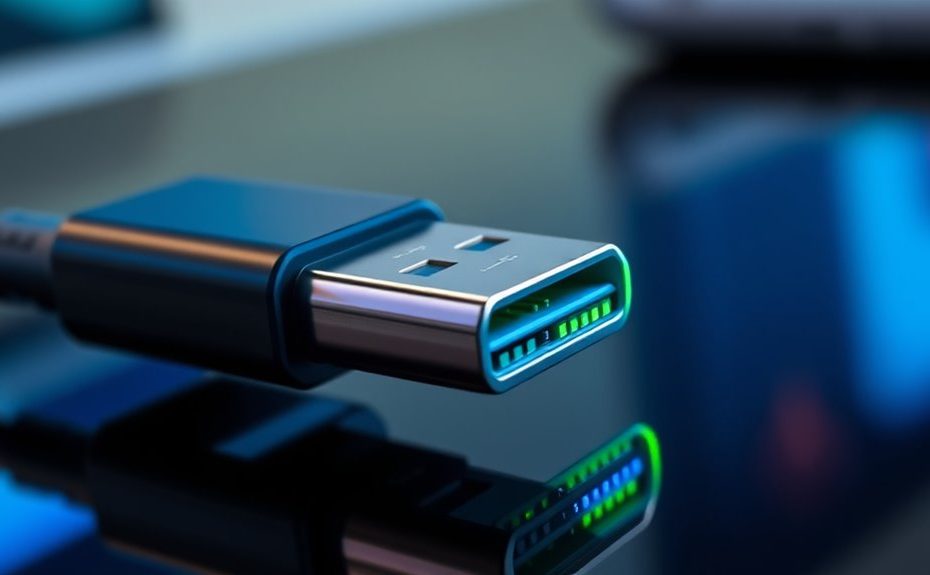
USB Power Delivery EPR boosts power transfer up to 240W, allowing your devices to charge faster and handle high-performance tasks. It supports voltages up to 48V and uses specialized cables with embedded E-Marker chips for safety and compliance. Proper cable design and safety measures are essential to prevent hazards. If you want to understand how this new standard safely powers more demanding devices, continue exploring the details below.
Key Takeaways
USB Power Delivery EPR increases maximum power transfer capability from 100W to 240W, supporting higher voltages up to 48V.
It uses fixed voltages (28V, 36V, 48V) and dynamic negotiation between 15V and 48V for flexible power delivery.
Cables must include embedded E-Marker chips and be designed for 5A current and high safety standards.
EPR enables powering high-performance devices like gaming laptops, monitors, and industrial equipment with reliable, high-wattage USB-C.
Safety measures include continuous safety assessments, real-time monitoring, and compliance with international safety standards.
Understanding the Basics of USB Power Delivery Extended Power Range
To understand the basics of USB Power Delivery Extended Power Range (EPR), it’s important to recognize how it builds on previous USB PD standards by increasing the maximum power transfer from 100W to 240W. This enhancement allows you to power and charge high-demand devices through a single USB-C connection, simplifying your setup. EPR achieves this by supporting higher voltages—up to 48V—and maintaining current at 5A. It also introduces fixed voltage levels like 28V, 36V, and 48V, giving flexibility based on device needs. The system uses dynamic handshaking to negotiate power levels safely, ensuring efficient energy transfer. To handle the increased power, cables and connectors must meet strict specifications, including embedded E-Marker chips, to guarantee safety and reliable performance. Additionally, understanding the nutritional advantages of high-power delivery can help users optimize their device charging and avoid potential safety issues. Recognizing the importance of safe and reliable performance is crucial when dealing with high-power USB connections, especially as power management systems become more sophisticated to support these advancements. Furthermore, advancements in cable technology are essential to accommodate the higher wattages safely and efficiently, which is why proper cable design plays a critical role in high-wattage USB PD systems.
Technical Specifications and Electrical Characteristics of EPR
The technical specifications of USB Power Delivery Extended Power Range (EPR) define its ability to deliver up to 240W by increasing voltage levels up to 48V while maintaining a maximum current of 5A. This setup allows devices to negotiate adjustable voltage levels between 15V and 48V, optimizing power delivery based on their needs. The maximum power transfer occurs at 48V and 5A, resulting in 240W. EPR uses dynamic handshaking protocols similar to previous USB PD versions, ensuring safe and efficient power negotiation. Refrigeration Cycle protocols are integral to managing safe and effective power transfer in high-power applications. Cables supporting EPR must include an E-Marker chip to verify compliance, support high current and voltage, and guarantee safety and performance. These specifications enable high-power applications while maintaining compatibility and safety standards across USB-C devices. Additionally, Remote Hackathons can serve as platforms for testing and demonstrating high-power charging solutions in virtual collaborative environments.
Cable and Connector Requirements for Safe Power Transfer
Ensuring safe power transfer over USB-C with EPR requires cables that can handle higher voltages and currents reliably. These cables must support 5A current and up to 48V, which exceeds standard USB-C limitations. They need reinforced construction with high-quality insulation and conductors to manage increased heat and electrical stress safely. An embedded E-Marker chip is essential for verifying compliance, communicating power capabilities, and ensuring safe operation during power negotiation. Standard cables supporting only 100W (20V, 5A) aren’t suitable for EPR applications. Certification and rigorous testing procedures verify cable resistance, durability, and data integrity. Additionally, high-quality materials reduce risks of overheating, failures, or damage, maintaining safety and performance during high-power transfer. Properly designed cables are fundamental for reliable, safe 240W USB-C power delivery. Security vulnerabilities in new technologies can also pose risks if cables and connections are not properly designed and tested. To enhance safety, cable testing procedures are critical to identify potential issues before deployment. Moreover, adherence to industry standards ensures compatibility and safety across various devices and scenarios. Implementing comprehensive quality control measures during manufacturing further ensures that cables meet all safety and performance benchmarks.
Practical Applications and Market Impact of 240W Power Delivery
High-capacity USB-C cables and connectors enable a wide range of powerful applications across various industries. With 240W power delivery, you can now power high-performance devices like gaming laptops, professional workstations, and large monitors through a single USB-C connection. This reduces the need for bulky power bricks and simplifies setups. Industries such as gaming, creative content creation, and industrial automation benefit from faster, more versatile charging solutions. Portable devices, including e-bikes and drones, also gain extended operational capabilities. The standardization of high-power USB-C charging improves user convenience and reduces electronic waste by replacing multiple chargers with a single, universal solution. As adoption grows, expect more innovative products and streamlined workflows that leverage the increased power capacity. Additionally, the integration of home organization principles can help users keep their tech setups tidy and efficient, supporting overall productivity and device longevity. Incorporating wall organization systems into your workspace can further enhance the efficiency and aesthetic appeal of your electronic setups. Understanding power delivery standards helps ensure compatibility and safety across different devices and chargers. Moreover, the adoption of energy-efficient charging technologies can contribute to a reduction in overall electronic waste, benefiting environmental sustainability. Staying informed about charging safety protocols is essential to prevent potential hazards and maximize device lifespan.
Ensuring Safety, Compliance, and Reliability in EPR Implementations
To safely implement EPR in USB Power Delivery systems, you must adhere to strict standards that prevent overcurrent, overvoltage, and thermal hazards. It’s important to use certified cables with embedded E-Marker chips that verify power ratings and guarantee proper communication between devices. Your devices should incorporate dynamic power negotiation protocols to regulate voltage and current precisely, avoiding overloads. It’s essential to follow international safety standards and obtain USB-IF certification to guarantee interoperability and safety. Proper thermal management, high-quality materials, and insulation in cables and connectors help prevent overheating. Regular testing and compliance checks are crucial to confirm that all components meet the required specifications. Additionally, understanding bedroom design principles can inspire safe and comfortable setups for high-power charging stations in personal spaces. Incorporating dynamic power negotiation ensures optimal power delivery without risking damage or safety issues. Conducting comprehensive safety assessments and embracing a comprehensive safety approach that includes ongoing monitoring and updates can further safeguard against potential vulnerabilities. Emphasizing mindfulness techniques during testing processes can help maintain focus and accuracy in safety evaluations. By prioritizing these measures, you ensure reliable, safe, and compliant EPR implementations for high-power USB-C devices.
Frequently Asked Questions
How Does EPR Handle Thermal Management at High Power Levels?
You should know that EPR manages thermal issues by using high-quality cable materials, reinforced insulation, and embedded E-Marker chips to monitor current and voltage. Devices incorporate advanced thermal management features like heat sinks, efficient circuit design, and adaptive power negotiation to prevent overheating. Manufacturers also optimize power supply topologies, such as GaN technology, to maintain stability and reduce heat generation during high-power charging, ensuring safety and longevity.
What Are the Compatibility Considerations for Existing USB-C Devices?
Did you know that EPR-compatible cables must support 5A currents and 48V voltage? When it comes to existing USB-C devices, you’ll need to check if they’re EPR-enabled or support higher power levels. Many older devices max out at 100W, so they won’t handle the increased power safely. Upgrading to EPR-compliant cables and chargers guarantees compatibility, safety, and peak performance with high-power devices.
How Does EPR Impact Cable Durability and Lifespan?
You’ll notice that EPR increases cable stress due to higher voltages and currents, which can impact durability over time. To guarantee a longer lifespan, you need cables with reinforced insulation, high-quality materials, and an embedded E-Marker chip for safety. Proper handling and avoiding excessive bending or pulling also help maintain cable integrity. Investing in certified EPR-compatible cables designed for 240W use will give you better durability and reliable performance.
Are There Regional Differences in EPR Implementation Standards?
Think of EPR standards like a global tapestry, woven with regional patterns. Yes, there are differences; some regions follow strict USB-IF certifications, ensuring safety and compatibility, while others may have unique electrical standards or regulations. You’ll find variations in voltage, certification processes, and cable requirements. Staying informed about regional standards helps you make safe, compliant choices, ensuring your high-power devices work smoothly wherever you are.
What Are the Long-Term Reliability Concerns With High-Voltage USB Power Delivery?
You should watch out for long-term reliability issues with high-voltage USB Power Delivery because sustained high currents and voltages can cause component wear, overheating, and connector degradation. Over time, thermal stress might weaken cables and ports, leading to failures or reduced performance. Proper design, quality components, and adherence to safety standards are essential to guarantee your devices remain reliable and safe during extended use at these elevated power levels.
Conclusion
As you explore USB Power Delivery’s Extended Power Range, you’ll see how delivering up to 240W transforms device charging and power delivery. For example, imagine powering a high-performance gaming laptop with a single, compact charger—streamlining your setup and reducing clutter. Embracing EPR means embracing safer, more reliable power solutions, ensuring your devices perform at their best. Stay informed and confident as you adopt this advanced standard for your tech needs.