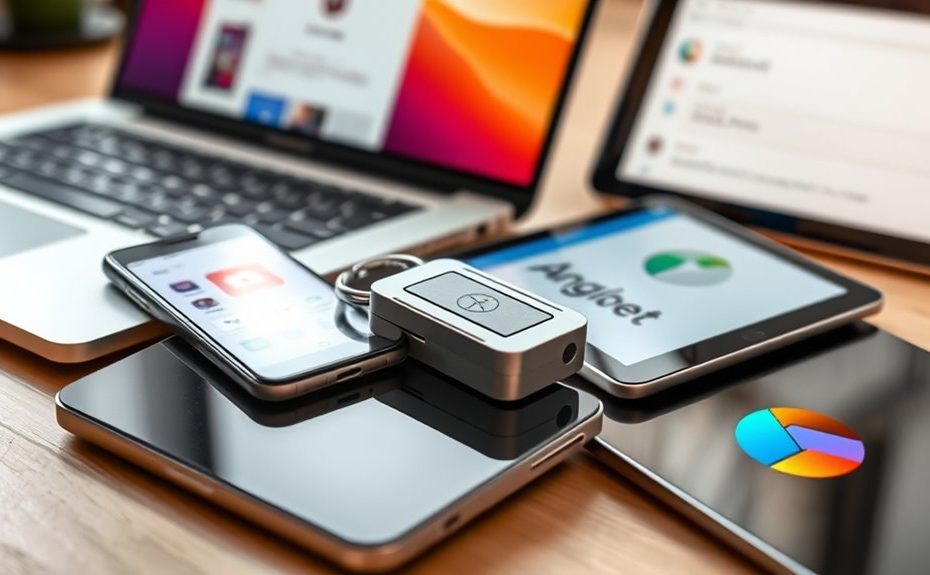
You can easily use hardware security keys with iOS, Android, and desktop devices by connecting them via USB, NFC, or Lightning, depending on your device. Most keys support popular standards, making setup straightforward—just follow the prompts on your device and enable two-factor authentication. Keep multiple keys for backup and verify firmware is up to date. If you explore further, you’ll discover how to optimize security and troubleshoot common issues effectively.
Key Takeaways
Ensure compatibility by selecting security keys with USB, NFC, or Lightning interfaces suitable for iOS, Android, and desktop devices.
Register the security key on each platform through account security settings, following device-specific prompts.
Use compatible apps like YubiKey Manager for setup, PIN configuration, and device management across all devices.
Support multiple keys and backups to maintain access if one device is lost or malfunctions.
Regularly test and update your security keys to ensure ongoing functionality and security across iOS, Android, and desktop.
Understanding Hardware Security Keys and Their Benefits
Hardware security keys are small, physical devices that considerably boost your online security by adding a second layer of protection beyond just passwords. They work as a physical proof of your identity, making it much harder for hackers to access your accounts. Unlike relying solely on passwords, which can be stolen or guessed, these keys generate cryptographic signatures or unique codes during login, ensuring only you can authenticate. They’re compatible with various devices—smartphones, desktops, tablets—and support interfaces like USB, NFC, and Bluetooth. Using hardware security keys also guards against phishing attacks because the device must be physically present to verify your identity. Additionally, contrast ratio can influence the clarity of the visual indicators on some security devices, ensuring they are easily readable in different lighting conditions. Proper device compatibility is crucial for seamless security, so verifying that your hardware key works with your devices is recommended. Plus, registering multiple keys provides backup options, ensuring you don’t lose access if one key gets misplaced or damaged. Vetted
Setting Up Your Security Keys on Different Devices
Setting up your security keys depends on your device’s compatibility and the specific registration steps needed. You’ll need to connect your key via USB, NFC, or Lightning, and follow prompts to register it with your accounts. Ensuring your device supports the correct interface and having the necessary software ready makes the setup process smoother. Additionally, verifying the security key’s Nutritional Value of Juices can ensure it meets your security needs effectively. It’s also helpful to consult device-specific cookie management settings to optimize security and privacy during setup. Being aware of Vetted Mother Baby Kids products related to safety can help you choose compatible accessories or protective covers for your security keys. Moreover, reviewing Yoga practices for mental clarity can enhance your focus during the setup process.
Device Compatibility Requirements
Ensuring your security key works across your devices requires understanding their compatibility requirements. Different platforms support various interfaces like USB, NFC, or Lightning, so check your device’s ports and wireless options. For example, iOS devices often require Lightning-compatible or NFC keys, while Android supports USB-C and NFC. Desktops generally support USB keys via USB ports, with some also supporting NFC or Bluetooth. Compatibility depends on the key’s standards and your device’s hardware. Standardization plays a crucial role in cross-platform functionality, ensuring your security key integrates smoothly across devices. Additionally, it’s important to consider the security protocols supported by your device to ensure seamless integration and protection. Being aware of compatibility standards can help prevent issues during setup and use. IRA tax implications can also influence your overall security and retirement planning strategies while setting up your security keys. Use the table below to match your device with supported features: Device Compatibility Requirements.
Registration and Configuration Steps
To set up your security key, start by accessing the security or account settings on the service you want to secure. Look for options labeled “Security Key,” “Passkey,” or “Two-Factor Authentication.” Select the option to register a new device. When prompted, insert your USB key, tap the NFC, or connect via Bluetooth. Follow on-screen instructions to name your device and create a PIN if required. You might need to install companion software, like YubiKey Manager, to configure additional settings. For mobile devices, ensure your phone supports NFC or Lightning connections. On desktops, connect the key to a USB port or NFC reader. Complete registration by touching or tapping the device when prompted. Once registered, testing the key guarantees successful setup. Implementing hardware security enhances your protection and reduces reliance on passwords alone. AI’s role in security innovations is increasingly significant, enhancing protection against cyber threats.
Compatibility of Security Keys With Ios Devices
Compatibility of security keys with iOS devices has improved markedly, allowing you to benefit from hardware-based two-factor authentication on iPhones and iPads. Most FIDO2-certified keys now support Lightning, USB-C, and NFC interfaces, making them suitable with iOS. You can use these keys for services that support passkeys, like Apple ID, Google, and Microsoft. Additionally, using a security key enhances overall account security by providing a physical authentication method that is resistant to phishing attacks. The compatibility improvements are partly due to increased support for hardware authentication standards across various platforms. Furthermore, ongoing developments in interoperability protocols continue to expand the range of compatible devices and services. These advancements are also supported by the subconscious power during sleep, which can influence how we perceive and utilize new technology features, ensuring a smoother integration experience.
Using Security Keys on Android Smartphones and Tablets
Using security keys on Android smartphones and tablets is straightforward, thanks to widespread support for FIDO2 standards and multiple connection options. You can authenticate by plugging in a USB-C or Lightning key, tapping an NFC-enabled device, or connecting via Bluetooth. When registering a security key, you’ll be prompted to insert or tap the device, then create a nickname for easy identification. Supported keys like YubiKey 5C NFC or Titan Security Keys work seamlessly across Android apps and browsers. Picture yourself:
Easily secure your Android devices with NFC, USB-C, or Bluetooth security keys for seamless authentication.
Tapping your NFC security key to release your device
Plugging in a USB-C key for quick login
Using Bluetooth to connect without wires
Seeing a prompt to confirm your identity
Managing multiple keys through Android settings
This flexibility makes securing your Android experience simple and reliable. Compatibility with various hardware ensures a smooth setup process across different devices and security needs.
Integrating Hardware Keys With Desktop Operating Systems
Integrating hardware security keys with desktop operating systems enhances your account security by enabling seamless, hardware-based authentication. To get started, access your system’s security or account settings and select the option to add a security key. For Windows, verify your device has the latest updates and supported browsers like Chrome or Edge. On macOS, use compatible browsers and enable FIDO2 support if needed. Connect your USB security key or tap your NFC-enabled device when prompted. You might need to install companion software, such as YubiKey Manager, to configure settings or set up PIN protection. Most desktop platforms support multiple keys for backup. Once registered, you can authenticate by simply inserting or tapping your security key during login, providing a fast, secure experience resistant to phishing. Both desktop operating systems and security keys utilize public key cryptography to ensure secure authentication. Additionally, understanding hardware compatibility can help prevent connection issues and improve your overall experience, especially considering the hours today list of various beauty stores which indicates the importance of operating hours for timely support or product acquisition. Ensuring your devices are within supported device specifications can further minimize connectivity problems and optimize security features. Being aware of security protocols can also help you better understand how these keys protect your data and prevent unauthorized access.
Best Practices for Managing Multiple Security Keys
Managing multiple security keys is essential to maintaining reliable access to your accounts, especially if one device is lost or damaged. To do this effectively, follow best practices:
Register at least two keys per account to ensure backup access.
Label each device clearly with descriptive names for easy identification.
Store backup keys in separate, secure locations to prevent simultaneous loss.
Regularly test each key to confirm functionality across devices.
Keep firmware and companion apps up to date to avoid compatibility issues.
Understand that security measures like multiple keys significantly reduce the risk of unauthorized access.
Visualize a key in your hand, labeled “Work” or “Personal,” stored safely in a locked drawer, ready to replace or supplement your primary device. These steps help you stay secure without risking lockout.
Enhancing Security With PINS and Backup Options
Enhancing security with PINs and backup options is vital to guarantee your access remains protected and reliable. Setting a PIN on your security key adds an extra layer of defense, ensuring that even if someone physically steals the device, they can’t use it without the PIN. Make sure your PIN is strong and unique. Register multiple security keys to avoid lockouts if one is lost or damaged; having backups ensures you always retain access. Some platforms allow you to store recovery codes or set alternative authentication methods. Always keep backup options secure and up-to-date. Regularly review your registered keys and PINs to maintain security hygiene. These practices help protect your accounts from unauthorized access while providing peace of mind during device loss or failure.
Troubleshooting Common Issues With Security Keys
If your security key isn’t recognized or authentication keeps failing, don’t panic. These issues often stem from compatibility problems, loose connections, or outdated software. Checking your device’s compatibility, ensuring the key is properly connected, and updating your firmware can usually resolve the problem quickly.
Key Not Recognized
When your security key isn’t recognized during a login attempt, it can be frustrating, but most issues have straightforward solutions. First, check that the key is properly connected or tapped against your device—sometimes a loose connection causes recognition failure. Ensure your device’s ports or NFC reader are clean and functioning. Confirm your browser or app supports the key’s protocol; outdated software can cause compatibility issues. Verify that your key’s firmware and companion apps are up to date. Finally, make sure your key is registered correctly and that any PINs or security settings are entered accurately.
Consider these visuals:
A USB stick securely plugged in
NFC contact made with a smartphone
Firmware updates downloading in the background
Settings menu showing registered devices
A blinking light indicating activity
Authentication Fails
Authentication failures with security keys can be frustrating, but many issues are fixable with some troubleshooting. First, check that your key is properly connected—whether USB, NFC, or Bluetooth—and that it’s compatible with your device. Make certain your security key is registered correctly and that your account recognizes it. Confirm that your PIN is entered correctly; a wrong PIN can block authentication. Update your browser, OS, and security key firmware to the latest versions, as outdated software can cause compatibility problems. If using NFC, make sure the device’s NFC reader is enabled and functioning. For Bluetooth keys, verify Bluetooth is active and paired correctly. Finally, try registering the key again or use a backup device if available. These steps often resolve common authentication issues.
Future Trends in Hardware-Based Authentication
Advancements in hardware-based authentication are poised to transform digital security by making physical security keys more versatile, intuitive, and integrated into everyday devices. Future trends include seamless integration with smartphones, wearables, and IoT devices, simplifying login processes. Expect AI-driven threat detection to enhance key security and adaptive authentication that responds to user behavior. Multi-device synchronization will become more robust, allowing effortless switching between platforms. Enhanced biometric integration will combine fingerprint or facial recognition with hardware keys for layered security. Additionally, hardware keys will adopt more eco-friendly materials and designs for sustainability. Visualize:
NFC-enabled keys embedded in smartwatches
Biometric sensors directly on security keys
Cloud-based backup options for lost keys
Universal compatibility across devices
Real-time threat monitoring and alerts
Frequently Asked Questions
Can I Use the Same Security Key Across Multiple Accounts?
Yes, you can use the same security key across multiple accounts. Just register the key with each account’s security settings, which is usually a quick process involving tapping or inserting the device when prompted. Using a single key for multiple accounts simplifies your setup, but it’s smart to keep backup keys in case one gets lost or damaged. This way, you guarantee continuous access and maintain strong security.
How Do I Recover Access if I Lose My Security Key?
A stitch in time saves nine, so if you lose your security key, don’t panic. First, check if you’ve registered backup keys or alternative authentication methods with your account. Use recovery options like email or phone verification to regain access. Contact customer support if needed, and always keep backup keys in a safe place. Planning ahead guarantees you won’t be locked out when the unexpected happens.
Are Security Keys Compatible With All Browsers and Apps?
Yes, security keys are compatible with most modern browsers and apps that support FIDO2 or WebAuthn standards. You can use them with Chrome, Edge, Firefox, and Safari, along with many popular apps and services like Google, Microsoft, and password managers. Just verify your device and app support the key’s connection type (USB, NFC, Bluetooth). Compatibility may vary with older versions, so keep your software up to date for the best experience.
Do Security Keys Support Biometric Authentication Methods?
Yes, some security keys support biometric authentication methods like fingerprint or facial recognition. You can enable biometrics on compatible devices and configure your security key to use these features for added convenience. However, not all hardware security keys have built-in biometrics. Check your specific device’s capabilities and support for biometric authentication to guarantee seamless, multi-factor protection that combines physical possession with biometric verification.
Is There a Limit to the Number of Security Keys I Can Register?
You can typically register multiple security keys for your accounts, with many services allowing two or more for backup purposes. However, some platforms or organizations may impose limits to enhance security or comply with policies. It’s best to verify the specific service’s guidelines. Registering multiple keys ensures you maintain access if one gets lost or damaged, providing added security and peace of mind.
Conclusion
Just as Daedalus crafted wings to navigate new heights, embracing hardware security keys elevates your digital security beyond mere passwords. By understanding their setup and best practices, you become the architect of your online fortress. Stay vigilant, keep backups, and adapt to future trends—your defenses, like Icarus’s wings, can soar safely when grounded in robust hardware security. Empower yourself today, and step confidently into a more secure digital future.