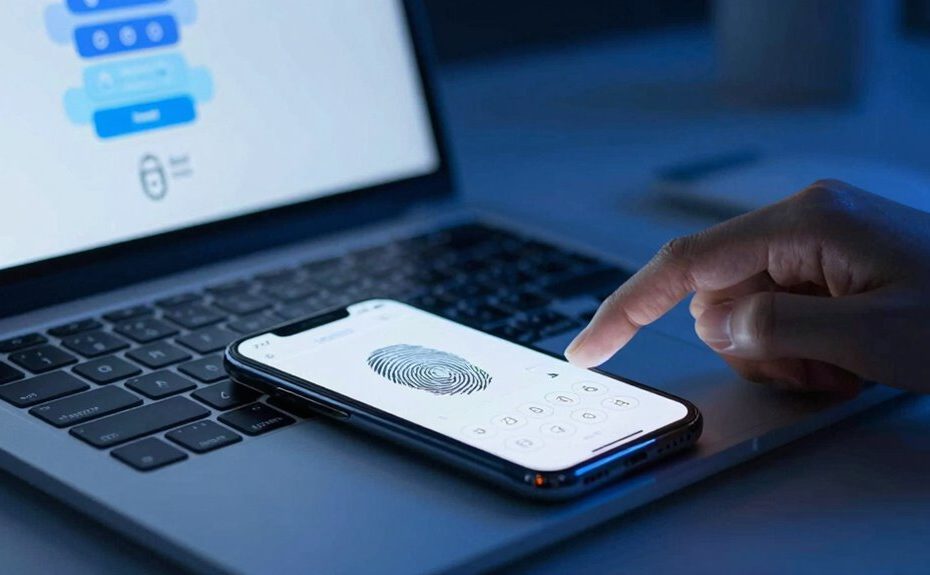
Today, multi-factor authentication often combines a password with biometric methods like fingerprint or facial recognition for quick and secure access. It may also use cloud-based verification, sending push notifications or codes to your devices. This layered approach helps protect you even if one factor is compromised. As technology advances, new methods like behavioral analytics and device fingerprinting are making authentication even smoother. Keep exploring to discover how these innovations enhance your security further.
Key Takeaways
MFA combines multiple verification methods like passwords, biometrics, and push notifications for enhanced security.
Biometric methods such as fingerprint and facial recognition are commonly used for quick, secure access.
Cloud-based authentication allows secure, remote access without physical tokens, increasing flexibility.
Multi-layered security often involves combining passwords, biometrics, and behavioral analytics.
Future trends focus on seamless, continuous verification using device fingerprinting and behavioral data.
Have you ever wondered how secure your online accounts really are? In today’s digital landscape, relying solely on a password isn’t enough. That’s where multi-factor authentication (MFA) comes into play, adding layers of security to protect your sensitive information. Modern MFA combines something you know, like a password, with something you have or are. For instance, biometric security has become a popular method, enabling you to verify your identity through fingerprint scans, facial recognition, or even iris scans. These biometric factors are difficult to forge, making unauthorized access considerably harder. Alongside biometric security, cloud authentication has gained traction, allowing you to authenticate your identity via secure cloud services instead of traditional hardware tokens. This approach offers convenience—since you don’t need to carry extra devices—and flexibility, as cloud authentication works across multiple devices and platforms seamlessly.
Today, MFA often involves a combination of these methods to create a robust security barrier. When you log in to your bank account or work email, you might be prompted to enter a password, then confirm your identity through a biometric scan on your smartphone, or approve a push notification sent via a cloud-based app. This layered approach makes it much more challenging for cybercriminals to gain access, even if they manage to steal one factor. For example, if someone steals your password, without access to your biometric data or the device linked to cloud authentication, they’re stuck. This multi-layered security system is designed to minimize risks, especially in an era where cyberattacks are increasingly sophisticated. Incorporating multiple authentication factors further enhances security by leveraging diverse methods of verification.
The integration of biometric security and cloud authentication also enhances user experience. Instead of remembering complex passwords or carrying security tokens, you can authenticate quickly using your fingerprint or face recognition. Cloud-based solutions enable you to authenticate from anywhere, making remote work more secure without sacrificing convenience. These advancements have also prompted organizations to implement MFA as a standard, recognizing that a single password no longer provides sufficient protection. As technology evolves, expect MFA to incorporate even more innovative methods, like behavioral analytics or device fingerprinting, to verify your identity continually and seamlessly. Additionally, ongoing developments in biometric security aim to improve accuracy and reduce false positives, further strengthening the reliability of these methods.
Frequently Asked Questions
How Does MFA Differ Across Various Industries?
You’ll notice MFA varies across industries based on specific compliance needs and user experiences. For example, finance emphasizes strong authentication for security, often using hardware tokens. Healthcare prioritizes data privacy, opting for seamless, user-friendly methods like biometric verification. Retail balances security with a smooth shopping experience, sometimes using SMS codes. Understanding industry-specific compliance guides your MFA choices, ensuring both protection and user convenience, tailored to your sector’s unique requirements.
What Are the Common Challenges in Implementing MFA?
You’ll find that common challenges in implementing MFA include balancing user convenience with security, as 60% of users find multi-step authentication frustrating. You might struggle with integrating MFA into existing security protocols and ensuring seamless user authentication across platforms. Additionally, organizations often face technical issues and resistance to change, which can slow deployment. Overcoming these hurdles requires clear communication, proper planning, and choosing user-friendly MFA solutions.
Is Biometric MFA More Secure Than Traditional Methods?
Biometric MFA can be more secure than traditional methods like passwords, but it’s not foolproof. You should know about biometric vulnerabilities, such as false positives or spoofing, which can be exploited. Privacy concerns also arise, as your biometric data is sensitive and must be stored securely to prevent misuse. While biometric MFA enhances security, it’s essential to balance it with proper safeguards to protect your personal information.
How Often Should MFA Methods Be Updated or Changed?
You should update or change your MFA methods every 6 to 12 months to balance password longevity and user convenience. Regular updates help protect against emerging threats and potential vulnerabilities, ensuring your security stays strong. While frequent changes enhance protection, avoid overdoing it, as it can frustrate users. Find a routine that maintains security without compromising user convenience, keeping your MFA system effective and user-friendly over time.
What Are Future Trends in Multi-Factor Authentication?
Future MFA trends focus on reducing password fatigue and boosting user convenience. You’ll see more biometric options like facial recognition and fingerprint scans becoming standard, making authentication seamless. Adaptive MFA will personalize security based on your behavior, while device-based methods will become smarter and more unobtrusive. These innovations aim to make security stronger without sacrificing ease of use, ensuring you stay protected without feeling overwhelmed by complex login processes.
Conclusion
Today, multi-factor authentication acts like a vigilant gatekeeper, standing firm at the entrance of your digital world. It’s the unseen shield that transforms a simple password into a fortress, where each step—like a flickering torch—guides you safely through the darkness. As cyber threats loom like shadows, MFA lights the way, ensuring your data remains protected and your peace of mind intact. Embrace it, and turn your digital journey into a secure, glowing pathway.