Read the full analysis: 13 AI Meeting Transcription Tools To Make Meeting Notes Clearer In 2027 on ThorstenMeyerAI.com
TL;DR
A roundup from ThorstenMeyerAI.com compares 13 meeting-capture options, including desk hardware, transcription software, pocket recorders and wearables. It recommends matching the format and recording-to-notes workflow to where meetings happen, while checking accuracy, language support, integrations and subscription terms before buying.
ThorstenMeyerAI.com has published a 13-product roundup of AI meeting transcription options for 2027, spanning desk hardware, standalone software, pocket recorders and wearables. The guide recommends the HiDock H1E for desk-based meeting notes and Philips SpeechExec for buyers seeking a traditional transcription workflow, while stressing that the best fit depends on capture habits and how users handle transcripts afterward.
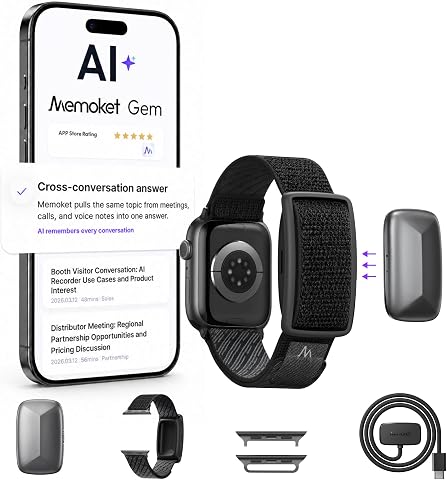
The comparison is organized around how conversations are captured and what happens to the audio afterward, rather than treating every product as the same kind of recorder. Its listed formats include a desk dock, dedicated transcription software, pocket recorders, a wearable device, a wristband recorder, an Apple Watch-band recorder and a pen-shaped recorder. The source identifies the Fieldy 3 as a possible fit for people who need to record away from a desk.
The roundup says its ordering weighs meeting-workflow fit, recording access, transcription and summary features, transfer to usable notes, form factor, app dependence, storage and translation claims. It names the HiDock H1E first, citing its combination of meeting note-taking and a desk dock, and places Philips SpeechExec next for software-focused users. The source does not provide a standardized accuracy test or establish that one product produces better transcripts than the others.
It also cautions readers not to select a recorder by storage capacity or a broad translation claim alone. For example, the guide mentions a NOTEVOX with 128GB and several 64GB recorders, but says storage must be considered alongside transfer and transcription habits. It advises checking supported languages, whether translation happens live or after recording, and how transcripts are exported and stored.
viaim NoteKit AI Meeting Voice
AI Voice Recorder with Automat
DOWAY AI Voice Recorder and No
RECPOINT AI Voice Recorder wit
The 13 picks
Choosing by the Meeting Workflow
The practical difference among these options is not just a list of features: it is where recording happens and how the audio becomes a usable record. A desk dock may suit someone who keeps meetings at one workstation, while a portable recorder or wearable may better match conversations across rooms or off-site. Software-first tools may avoid dedicated hardware, but the source notes that they can require more setup.
That choice affects whether people will use a tool consistently, how easily they can retrieve notes and whether a transcript can be checked against its source audio. Buyers who need records for decisions or compliance should treat accuracy as something to test with representative recordings, not infer from product descriptions. Summaries can help organize information, but the source says they do not replace checking names, decisions and action items.
How the 13 Picks Were Compared
The source describes the list as a comparison of tools for capturing conversations and turning them into usable text. Its criteria include ease of recording, transcription and summary functions, the path from capture to notes, practical form factor and potential dependencies on apps or services. It says the remaining products are ordered by the use cases suggested by their formats and stated features, rather than assuming that higher storage or more bundled functions mean better transcripts.
The supplied source material does not give the names or detailed specifications for all 13 products. It identifies HiDock H1E, Philips SpeechExec, Fieldy 3 and NOTEVOX, along with several recorder formats, but does not support a verified, item-by-item feature table for the full lineup. The guide says listings do not establish transcription accuracy, integrations or subscription terms, and recommends verifying those details directly before committing.
“The strongest fit depends on where meetings happen.”
— ThorstenMeyerAI.com roundup
Accuracy and Product Terms Need Checking
The source provides no independent accuracy results, standardized test conditions, pricing comparison or detailed account of each product’s current software features. It also does not specify the supported language pairs or clarify which named products translate speech live versus after recording. Those details may affect a purchase, particularly for multilingual meetings.
It is also unclear from the supplied material whether every product in the 13-item lineup has AI transcription, what integrations are available, or whether particular functions require subscriptions. The roundup itself advises readers to check app requirements, export options, plans and data-handling arrangements. Its 2027 framing should not be read as confirmation that every feature or product version has been updated for that year.
What Buyers Should Verify Next
The source does not announce a product launch or a future testing milestone. Its practical next step for buyers is to compare the full recording-to-notes workflow: how recording starts and stops, where processing takes place, whether transcripts can be searched and exported, and what account or plan is required. Readers should confirm current product details with vendors because the roundup does not establish current pricing or subscription conditions.
Where transcript quality matters, test a short, representative meeting with realistic background noise, overlapping speech and specialist terms. Check the resulting text against the audio, confirm whether speaker labels are available, and verify the exact translation languages and timing. That trial can show whether a desk dock, wearable, pocket recorder or software workflow fits better than a feature list alone.
Key Questions
Which tool does the roundup recommend for desk-based meetings?
It recommends the HiDock H1E, describing it as a desk dock paired with meeting note-taking. The source does not provide independent transcript-accuracy results for it.
Which option is presented for a traditional transcription workflow?
The guide names Philips SpeechExec for buyers whose priority is transcription software rather than a wearable recorder.
What should buyers check before choosing a tool?
Check recording controls, transcript retrieval and export, accuracy on representative audio, supported languages, integrations, app requirements and any subscription terms. The source says product listings alone do not establish several of these details.
Does the roundup prove that one tool has the most accurate transcripts?
No. The supplied source describes selection criteria but does not report a standardized comparison of transcription accuracy. It advises testing a tool with realistic meeting audio before relying on it.
Source: ThorstenMeyerAI.com