Read the full analysis: A Closer Look At 11 AI Writing Assistants For 2027 Workflows on ThorstenMeyerAI.com
TL;DR
A roundup published by ThorstenMeyerAI.com compares 11 AI writing assistants, guides and workflow systems for different writing needs. It names Writing With AI as its broadest overall guide, while stressing that the picks are different formats and are not interchangeable; the source does not provide independent product testing or evidence of performance.
ThorstenMeyerAI.com has published a roundup of 11 AI writing assistants and related resources, comparing direct-use tools with guides and workflow systems for tasks including dictation, editing, beginner instruction and book production. The article names Writing With AI: A Practical Guide to Tools, Workflows, and Writing in Your Own Voice as its best overall pick, but its recommendations reflect the roundup’s own evaluation rather than documented independent product testing.
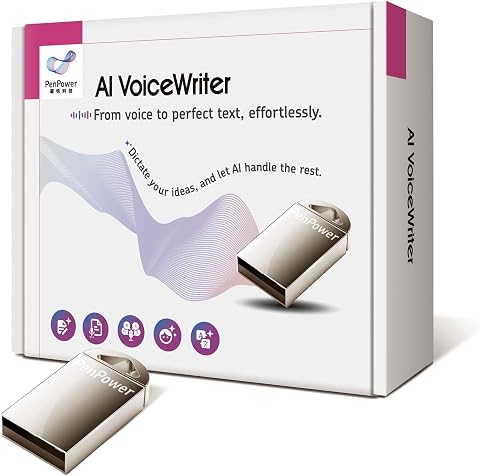
The list is not made up solely of software. The source identifies PenPower AI VoiceWriter and Writing AI Assistant – AI Chat as direct-use options, while most of the other entries are books, guides or systems intended to teach or organize AI-supported writing. That distinction affects what a buyer receives: a guide may explain a method, but does not necessarily include an interactive writing interface.
The roundup’s main recommendation is Writing With AI, whose stated scope combines tool guidance, workflows and preserving a writer’s voice. For authors, it highlights AI Writing Systems for Authors and AI-Smart Nonfiction Book Writing System; it also describes a ChatGPT book guide as a step-by-step prompt resource. The Beginner’s Guide to Using an AI Writing Assistant is framed for newcomers, while a Grammarly guidebook is aimed at editing-focused assistance.
Other entries address narrower needs, including dictation, document setup, writer’s block and training a personal assistant. The source says it compared options by the writing problem each addresses, the clarity of its practical workflow and its fit for a distinct audience. It favors specific use cases and repeatable processes, but gives no scoring table, product prices, version details or cited test results.
AI-Smart Nonfiction Book Writi
Grammarly AI Writing Assistanc
Mastering Book Writing with AI
PenPower AI VoiceWriter Dictat
The A.I. Writer’s Document Too
The 11 picks
Choosing the Right Writing Support
The roundup highlights a practical buying issue: “AI writing assistant” can mean different things. A chat interface can generate or revise text directly; dictation software captures spoken words; and a guide teaches a writer how to plan prompts or manage a larger project. Readers who compare them as if they were equivalent products may choose a format that does not solve their actual problem.
For writers working on books, a specialized system may be more relevant than general-purpose guidance, while people who need editing support or speech-to-text may have narrower requirements. The source also emphasizes voice and editorial judgment: AI-generated prose should be reviewed and reshaped rather than assumed to be finished copy. That advice is especially relevant to work where the author’s perspective or expertise is central.
The list is best treated as a guide to matching formats and tasks, not proof that one product is objectively superior. Its recommendation can help readers identify a starting point, but the available material does not establish comparative accuracy, writing quality, time savings or value for money.
How the Roundup Makes Its Picks
The source describes a comparison across 11 options spanning direct assistance, dictation, introductory instruction, editing guidance, book-writing methods and systems for organizing AI collaboration. It says the ranking reflects usefulness across different writing needs, rather than treating every entry as the same kind of product.
Its selection criteria include the clarity of each option’s use case and its potential to support repeatable work. The article advises readers to identify which stages need support—such as outlining, research organization, drafting or revision—and then check whether a resource covers those stages. It also warns that a narrow guide may not suit someone seeking a complete writing process, and that an app may not provide the instruction a beginner needs.
“The right choice depends on whether you need beginner instruction, help with a specific task, or a system for long-form work.”
— ThorstenMeyerAI.com roundup
What the Comparison Does Not Establish
The source does not give a publication date, product versions, prices or details about availability. It also does not report controlled tests, user surveys, measurable performance results or a full scoring breakdown. Readers therefore cannot tell from the supplied material how the picks compare on accuracy, output quality, privacy, cost or time saved.
The source’s “best overall” label is an editorial judgment tied to its criteria, not a claim that Writing With AI will suit every writer. The supplied excerpt also ends during its discussion of choosing resources that protect a writer’s voice, so further selection advice may be missing. Product capabilities and formats should be checked with the providers before purchase.
Check Formats Before You Buy
The roundup’s practical next step for readers is to define the writing task and decide whether they need software, instruction or a repeatable workflow. They can then confirm which stages a given option supports and whether its format matches their day-to-day work. For a specialized task such as dictation or book planning, a focused option may be a closer fit than a broad guide; for multiple needs, readers may need to combine instruction with a separate tool.
No follow-up testing, product update or further ranking is announced in the supplied source. Readers should verify current features and terms directly with providers, and judge any AI-generated text themselves before using it in finished work.
Key Questions
What is the roundup’s overall pick?
The roundup names Writing With AI: A Practical Guide to Tools, Workflows, and Writing in Your Own Voice as its best overall pick, citing its broad guidance and attention to personal style. That is the source’s editorial assessment, not a result supported by published benchmark data in the supplied material.
Are all 11 picks writing software?
No. The list combines direct-use options, books, guides and workflow systems. The source identifies PenPower AI VoiceWriter and Writing AI Assistant – AI Chat as direct-use options; many of the other picks teach or structure an approach rather than provide an interactive writing tool.
Which options does the article suggest for book authors?
It points to AI Writing Systems for Authors and AI-Smart Nonfiction Book Writing System for author-focused workflows, and describes a ChatGPT book guide as a step-by-step prompt resource. The best fit depends on the project and the stages where the writer needs help.
Does the source show which product performs best in testing?
No. The supplied material describes selection criteria and recommendations but includes no test results, comparative scores or measured outcomes. Its rankings should be read as editorial guidance rather than a verified performance comparison.
Source: ThorstenMeyerAI.com