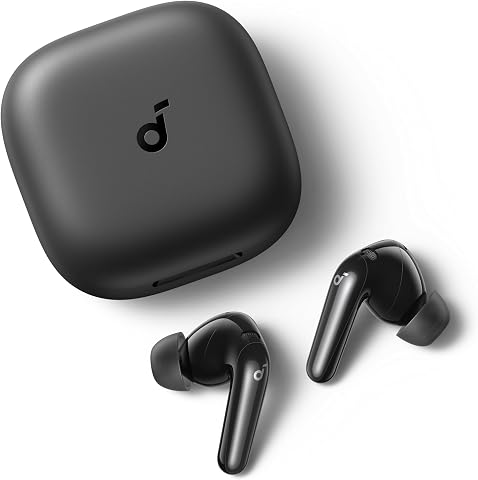
People comparing the Sony WF-1000XM5 with Apple AirPods Pro 2 are usually deciding whether to prioritize adaptable sound and broad phone compatibility or a tightly integrated Apple experience. Both are premium true wireless earbuds with active noise cancellation, transparency modes and compact charging cases. Their headline features overlap, but the day-to-day differences show up in how you adjust sound, switch devices, manage calls and get the most from your phone.
Soundcore P31i Translation Ear
TOZO NC9 Hybrid Active Noise C
Soundcore P30i by Anker Noise-
Soundcore P31i Translation Earbuds with Adaptive ANC
ANC: Adaptive; stated reduction up to 52 dB Audio: Hi-Res Audio with LDAC; spatial audio listed Driver: 11 mm
TOZO NC9 Hybrid Active Noise Cancelling Wireless Earbuds with LED Display
ANC: Hybrid; stated reduction up to 45 dB Driver: 10 mm Microphones: 6 with ENC
Soundcore P30i by Anker Noise-Cancelling Earbuds with Phone-Stand Charging Case
ANC: Adaptive; stated reduction up to 42 dB Driver: 10 mm with BassUp Microphones: 4 with AI-enhanced call processing
Sony is the more flexible choice for Android and mixed-device households, and its app offers a deeper set of listening controls. AirPods Pro 2 are the easier recommendation for iPhone owners: pairing, device switching, Find My and Apple-specific audio features work together with little setup. Noise cancellation is strong on both, so the bigger question is how much you value customization or ecosystem convenience. The price gap changes with sales, but paying a premium for either makes sense only when its particular advantages match your routine.
At a Glance
CriteriaSony WF-1000XM5Apple AirPods Pro 2WinnerNoise cancellation and transparencyStrong ANC with adjustable settings and ambient sound controls in the appVery strong ANC, adaptive audio features and natural transparencyDependsSound and customizationRich sound with an equalizer and more listening adjustmentsBalanced sound with spatial audio features; fewer manual sound controlsAComfort and fitSmall earbuds with foam-like tips; fit can feel secure but varies by earCompact design with multiple silicone tip sizes and a fit test on Apple devicesDependsBattery lifeAbout 8 hours per charge with ANC; case adds further chargesAbout 6 hours per charge with ANC; case adds further chargesACalls and controlsTouch controls and a feature-rich companion appStem presses, swipe volume control and clear integration with Apple devicesBDevice compatibilityWorks with iOS and Android; app tools are available on bothBest with Apple devices; basic Bluetooth audio works with other platformsAPrice and valuePremium-priced; often discounted, with flexibility that benefits non-Apple usersPremium-priced; best value for people who use Apple’s connected featuresDepends
Soundcore P31i Translation Earbuds with Adaptive ANC
The Soundcore P31i is our best overall choice because it brings together adaptive ANC, audio features, and a broad set of extras without relying on one convenience feature to define the whole package. Its adaptive cancellation is specified as reducing noise by up to 52 dB, and it also supports Hi-Res Audio with LDAC and spatial audio. Those details make it the most ambitious option here for buyers who want their noise-cancelling earbuds to do more than mute a commute.Compared with the P30i, the P31i offers LDAC, spatial audio, and real-time translation; the P30i answers with its phone-stand case and a shorter listed full charging time. Against the TOZO NC9, the P31i emphasizes adaptive ANC and audio features, while the TOZO offers six tip sizes and a longer stated runtime with ANC off. The P31i’s translation support across more than 100 languages is an unusual bonus, but it should be treated as a feature to check for device and app compatibility rather than the main reason to buy.Battery figures are solid but depend on how we listen: the listing gives up to 10 hours per charge, or up to eight with ANC, and up to 50 hours with the case, or 40 with ANC. A quick 10-minute charge is stated to provide up to 3.5 hours, helpful when we have little time to top up. The tradeoff is a listed three-hour charging time for a full charge, and the battery figures remain manufacturer claims that can vary with volume, codec, and use. Choose it for the strongest feature mix here; skip it if we mainly want the largest selection of ear tips or a faster full charge.
Pros:
Adaptive ANC with a stated reduction of up to 52 dBLDAC and spatial audio are listedTranslation support is listed for over 100 languagesFast charge is stated to provide up to 3.5 hours from 10 minutes
Cons:
Full charging time is listed as three hoursANC-on playback is stated as up to eight hours per charge and 40 hours with the caseTranslation and LDAC usefulness may depend on compatible devices and services
Best for: Listeners who want adaptive ANC plus LDAC audio, spatial audio, and optional translation features.
Not ideal for: Buyers prioritizing the broadest stated ear tip selection, a phone-stand case, or a shorter full charging time.
Bottom line: We rank the P31i first for combining adaptive ANC with the broadest audio and added-feature set, while accepting its longer listed full charge time.
“We rank the P31i first for combining adaptive ANC with the broadest audio and added-feature set, while accepting its longer listed full charge time.”
TOZO NC9 Hybrid Active Noise Cancelling Wireless Earbuds with LED Display
The TOZO NC9 suits buyers who want a flexible fit and long stated playback alongside hybrid ANC. Its listing gives up to 60 hours total with ANC off and up to 40 hours with ANC on. That is a useful distinction for planning: the largest figure applies with cancellation disabled, but the ANC-on total still makes this the endurance-focused option in the group. The case’s battery display also makes it easier to see when we should recharge.Fit is a particular strength on paper: six ear tip sizes give us more chances to find a secure seal than the P30i’s three listed sizes or the P31i’s four. Since a comfortable, well-sealed fit can affect both listening comfort and how much outside sound reaches us, that range may matter more than a headline cancellation number. The NC9 also lists hybrid ANC, transparency mode, six microphones with ENC for calls, app-based EQ options, and IPX8 water resistance. Those features make it a versatile choice for buyers who want settings to adjust across listening and activity contexts.Where it differs from the P31i is emphasis: TOZO gives us more tip sizes and a higher ANC-off battery claim, while Soundcore adds LDAC, spatial audio, and adaptive cancellation. Compared with the P30i, the NC9 has the longer stated playback figure and a battery display, while the P30i’s case can prop up a phone. Its limits are a two-hour listed charging time and a runtime that falls from up to 60 to up to 40 hours when ANC is on. Pick it for fit flexibility and endurance; consider the P31i if audio formats and adaptive ANC carry more weight.
Pros:
Six ear tip sizes support more fit adjustmentsHybrid ANC and transparency mode are listedCase displays battery statusIPX8 water resistance is specified
Cons:
Total playback is stated to fall from up to 60 hours with ANC off to up to 40 with ANC onFull charging time is listed as two hoursDoes not list LDAC or spatial audio features found on the P31i
Best for: Buyers who want multiple ear tip sizes, an at-a-glance case battery display, and long stated playback.
Not ideal for: Listeners seeking LDAC or spatial audio, or those who want a phone-stand case.
Bottom line: We recommend the NC9 for fit flexibility and long stated battery life, especially for buyers who expect to switch ANC off at times.
“We recommend the NC9 for fit flexibility and long stated battery life, especially for buyers who expect to switch ANC off at times.”
Soundcore P30i by Anker Noise-Cancelling Earbuds with Phone-Stand Charging Case
The Soundcore P30i earns its place with a case that does double duty as a phone stand. That small design choice is useful for hands-free viewing at a desk or during a break, and it gives this model a clear role beside the more audio-focused P31i and the endurance-oriented TOZO NC9. The earbuds themselves offer adaptive ANC, transparency mode, 10 mm drivers with BassUp technology, and app-based settings.For cancellation, the P30i is specified to reduce noise by up to 42 dB. We should not read that as a direct ranking against the NC9’s stated 45 dB or the P31i’s 52 dB, because manufacturer figures do not establish a shared test. Instead, compare the listed feature sets: the P30i includes adaptive ANC and transparency, while the P31i adds LDAC and spatial audio, and the NC9 brings six ear tip sizes. The P30i’s four microphones and AI-enhanced call processing also give it a call-oriented angle.The main compromise appears when ANC stays on. The listing states up to 10 hours per charge without ANC, but up to six hours with it; total case playback falls from up to 45 hours to up to 25. That is below both competitors’ stated ANC-on case totals. A 10-minute quick charge is stated to add up to two hours, though the case itself takes 2.5 hours to charge. Choose the P30i when the stand case is genuinely useful and we want adaptive cancellation with app controls; skip it if long listening between charges with ANC active is the priority.
Pros:
Charging case doubles as a phone standAdaptive ANC and transparency mode are includedFour microphones with AI-enhanced call processing10-minute charge is stated to provide up to two hours of use
Cons:
ANC-on battery life is stated as up to six hours per chargeTotal playback with ANC is stated as up to 25 hoursCase charging time is listed as 2.5 hours
Best for: Listeners who value a case that props up a phone and want adaptive ANC with app settings.
Not ideal for: People who keep ANC on for long sessions and want the highest stated case playback in this group.
Bottom line: We’d choose the P30i for its phone-stand case and adaptive ANC, but its ANC-on endurance trails the other two options.
“We’d choose the P30i for its phone-stand case and adaptive ANC, but its ANC-on endurance trails the other two options.”
As an Amazon Associate we earn from qualifying purchases.
Key Differences
The central tradeoff is flexibility versus integration. Sony gives listeners more control over sound and listening settings through its app, and the earbuds work well across Android, iPhone and computers. AirPods Pro 2 rely less on manual setup: an iPhone can configure them quickly, and Apple devices share features such as automatic switching and Find My support. For someone who carries an Android phone, Sony’s broader feature access is a clear practical advantage. For someone already using an iPhone, iPad and Mac, AirPods make routine use simpler.
Neither pair is a poor choice for blocking noise, but the experience differs. AirPods combine effective cancellation with adaptive features and a transparency mode many users will find natural for conversation and movement through busy places. Sony also cancels noise effectively and provides more ways to tune the listening experience. Sony’s longer quoted earbud battery life is useful on long trips, though actual runtime changes with volume, settings and call use. Fit is personal: Sony’s included tips and AirPods’ silicone sizes suit different ears, so neither has a universal comfort win.
Price should follow those differences. If the two are close in price, buy for the phone ecosystem and controls you will use every day. If Sony is substantially cheaper, its compatibility and customization make it a strong value for mixed-device users. AirPods justify their premium most readily for Apple households that will use automatic switching, spatial audio, Find My and convenient controls. Paying more for features you cannot access or will rarely use is hard to defend.
Detailed Comparison
Noise cancellation and transparency (moderate difference)
Both earbuds reduce common low-frequency noise such as engine rumble and provide modes that let outside sound in. AirPods Pro 2 have the edge in the overall convenience of their adaptive listening features and natural-sounding transparency. Sony offers strong cancellation and more app adjustments. This is a close, preference-led comparison rather than a reason to dismiss either pair: frequent commuters should try both if possible, while Apple users may prefer how AirPods move between listening modes.
Sound and customization (Sony WF-1000XM5 wins — moderate)
Sony wins for listeners who like to shape their sound. Its app provides an equalizer and more adjustments, so it is easier to tailor the presentation to different genres or personal taste. AirPods Pro 2 offer balanced, enjoyable sound and Apple spatial audio features, but less direct manual control. The gap is moderate: casual listeners may be happy with either, while people who regularly tune an equalizer will get more from Sony.
Comfort and fit (moderate difference)
There is no reliable universal winner because ear shape determines whether an earbud stays comfortable over several hours. Sony’s compact buds use included foam-like tips that some users find secure, though the feel is not for everyone. AirPods offer silicone tip sizes and a fit test on Apple devices. The difference is minor on paper but can be decisive for an individual buyer. Choose the pair that seals securely without pressure, and check the return policy if you cannot try them first.
Battery life (Sony WF-1000XM5 wins — moderate)
Sony has the advantage on quoted earbud runtime with noise cancellation enabled: around eight hours, compared with around six for AirPods Pro 2. Real results vary with volume, calls and settings, but the extra margin can matter on long journeys or workdays when charging is inconvenient. Both cases provide additional charges, so this is a moderate advantage for Sony rather than a guarantee that AirPods will run out too soon.
Calls and controls (Apple AirPods Pro 2 wins — moderate)
AirPods Pro 2 make common actions especially straightforward for Apple users. The stems support presses for playback and noise modes, plus swipes for volume; their device integration keeps controls consistent across Apple products. Sony’s touch controls and app offer plenty of options, but can require more setup and are less tied to a specific phone ecosystem. AirPods win for ease within an Apple household, a moderate day-to-day benefit rather than a decisive reason for everyone.
Device compatibility (Sony WF-1000XM5 wins — major)
Sony is the clear choice for people who use Android, iPhone and computers, or change phones regularly. Its companion app gives users access to adjustment tools across iOS and Android. AirPods can play audio over Bluetooth on non-Apple devices, but several of their most convenient features are designed for Apple products. This is a major difference if you are outside Apple’s ecosystem; an iPhone owner may see little cost to choosing AirPods.
Price and value (moderate difference)
Both sit in the premium category, and discounts can change which costs less at the time of purchase. Sony is better value when its price is lower and you want cross-platform support, longer quoted battery life or sound controls. AirPods earn their price for Apple users who will make use of integration and adaptive features. The winner depends on the actual sale price and your devices, so compare current listings rather than paying a premium based on brand alone.
Sony WF-1000XM5: Pros and Cons
Pros:
Works across iOS and Android with useful app controls on bothMore sound customization, including an equalizerLonger quoted battery life per charge with ANC
Cons:
Fit and tip feel may not suit every earSome users may prefer AirPods’ simpler Apple device switchingPremium pricing can be hard to justify without using its extra controls
Apple AirPods Pro 2: Pros and Cons
Pros:
Smooth pairing and connected features across Apple devicesStrong ANC, adaptive listening and natural transparencyStraightforward stem controls, including swipe volume
Cons:
The best features are tied to Apple devicesShorter quoted battery life per charge with ANC than SonyLess direct sound customization
Who Should Choose What
Choose Sony WF-1000XM5 if:
You use Android or switch among devices from different brands.You want to adjust equalizer settings and tailor the listening experience.Longer quoted battery runtime matters for your commute or travel.
Choose Apple AirPods Pro 2 if:
Your phone is an iPhone and you also use an iPad or Mac.You value quick device switching, Find My support and adaptive listening.You prefer simple controls and do not need extensive manual sound adjustments.
Skip both if: Skip both if you need a budget pair, dislike in-ear tips, or can get a better fit and essential features from a less expensive model.
Value for Money
Paying more for AirPods Pro 2 is worth it mainly for people who use Apple devices throughout the day. Their connected features reduce small daily hassles, and those conveniences can justify a premium when they are part of your routine. If you mainly want noise cancellation and good everyday audio, buy whichever pair is cheaper when you shop, assuming both fit well.
Sony is the stronger value for Android users and households with a mix of phones and computers. Its app access, sound controls and longer quoted battery runtime provide benefits beyond the brand name. A large discount makes Sony especially compelling; paying more for AirPods while using Android would leave much of their appeal unused. Check current prices and return terms, since fit has more impact on satisfaction than a small difference in list price.
Final Verdict
Choose Sony WF-1000XM5 if you use Android, move between platforms, want sound customization or need more quoted battery life per charge. It is the more adaptable buy for most mixed-device users. Choose AirPods Pro 2 if you are an iPhone user who values effortless switching, adaptive audio and integration with other Apple products. Their advantage is less about a universal sound win and more about a smoother daily routine.
The deciding factor is your device ecosystem. If you own several Apple devices and will use the connected features, AirPods are worth paying more for when the price gap is reasonable. Otherwise, buy Sony at a lower price, or favor whichever pair fits your ears better. Skip both if you need a low-cost option or consistently find premium in-ear buds uncomfortable.
Frequently Asked Questions
Which earbuds cancel noise better?
Both offer strong active noise cancellation for daily commuting and travel. AirPods Pro 2 stand out for adaptive listening and transparency, while Sony gives more adjustment options. Fit and seal affect results, so the better choice can vary by listener.
Are AirPods Pro 2 worth it with an Android phone?
They can play audio over Bluetooth, but many convenient Apple features are limited or unavailable on Android. Sony WF-1000XM5 is usually the better value for Android because its companion app and sound adjustments work across platforms.
Which pair lasts longer on a charge?
Sony quotes about eight hours with noise cancellation enabled, compared with about six hours for AirPods Pro 2. Actual runtime varies with volume, calls and settings, but Sony offers more quoted listening time before returning the buds to the case.
Which should an iPhone owner buy?
Most iPhone owners should start with AirPods Pro 2 for their device integration, controls and adaptive audio. Choose Sony instead if you also use Android or want more manual sound customization, especially when Sony costs less.