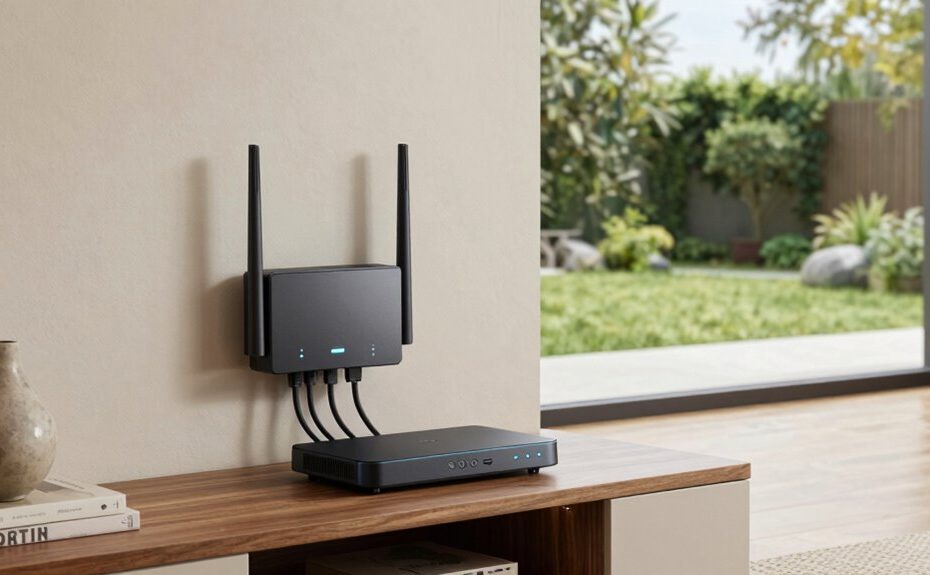
Building a future-proof home network is about careful planning, not hype. You should focus on choosing scalable hardware, modern security measures like WPA3, and proper infrastructure to support new devices and technologies. Ensuring compatibility, expanding coverage with mesh systems, and anticipating future bandwidth needs are essential. By taking these steps, you create a reliable, secure network that adapts as your smart devices and entertainment systems grow. Keep exploring to learn how to craft this resilient setup.
Key Takeaways
Effective planning ensures scalability and compatibility, preventing costly upgrades driven by hype or short-term trends.
Prioritizing hardware quality and infrastructure design promotes long-term stability and adaptability.
Incorporating security measures like WPA3 and firmware updates safeguards the network beyond initial setup.
Anticipating future device needs and bandwidth demands guides strategic equipment selection.
Thoughtful planning focuses on practical, future-proof solutions rather than marketing hype or fleeting technology trends.
As technology continues to evolve rapidly, ensuring your home network is future-proof becomes increasingly important. It’s not just about chasing the latest gadgets or flashy features; it’s about planning thoughtfully to meet your needs now and down the line. A future-proof network provides stability, security, and flexibility so that as new devices and standards emerge, you’re ready to adapt without costly overhauls. One of the main aspects to focus on is wireless security. With more devices connecting wirelessly, safeguarding your network from potential threats is essential. Investing in a robust, modern router that supports WPA3 encryption, regular firmware updates, and strong password protocols is a smart first step. These measures help protect your data and prevent unauthorized access. Additionally, setting up a separate guest network allows visitors to connect without risking your primary devices, further strengthening your wireless security stance.
Beyond security, smart device integration plays a crucial role. As your home becomes smarter, your network needs to handle a variety of interconnected devices seamlessly. Think about how your smart lights, thermostats, security cameras, and voice assistants communicate. To future-proof your setup, select a network that can manage multiple devices simultaneously without lag or interruption. Mesh Wi-Fi systems are often a good choice, as they expand coverage and improve stability across larger or multi-story homes. Also, look for compatibility with common smart home protocols like Zigbee or Z-Wave, which enable diverse devices to work together efficiently. Planning for this integration means considering the bandwidth demands and ensuring your network infrastructure can handle increased traffic as your smart home ecosystem grows. Incorporating network scalability** into your planning ensures your system can adapt to future device additions and increased data flow. Moreover, paying attention to projector technology and how it impacts home entertainment can help you design a more comprehensive and future-ready setup. Planning for scalable hardware and high-quality components ensures your entertainment system remains relevant as technology advances. Staying informed about the latest regulatory and environmental considerations in network hardware can also help you make sustainable choices that align with future standards and policies. Additionally, understanding the importance of interoperability among devices can prevent compatibility issues down the line. A well-designed network should also consider physical infrastructure, such as wiring and placement, to optimize performance and ease of future upgrades. Ultimately, future-proofing your home network is about strategic planning rather than hype. By prioritizing wireless security, smart device integration, and scalable hardware, you create a foundation that supports your connected lifestyle** today and well into the future. This approach saves you money, reduces frustration, and ensures your home remains secure, efficient, and ready for whatever technological innovations come next.
Frequently Asked Questions
How Often Should I Upgrade My Home Network Equipment?
You should upgrade your home network equipment every 3 to 5 years to guarantee device compatibility and peak bandwidth management. Technology evolves quickly, so newer devices support faster speeds and better security. Regular updates prevent lag, disconnects, and compatibility issues, especially as you add smart home gadgets or new streaming devices. Keep an eye on your network’s performance, and upgrade when you notice slowdowns or when new standards become widely adopted.
What Are the Hidden Costs of Future-Proofing My Network?
The hidden costs of future-proofing your network include investing in network redundancy and increased bandwidth allocation. You might need to purchase advanced equipment, like dual routers or switches, to guarantee seamless redundancy, which can be pricey. Additionally, upgrading your internet plan for higher bandwidth can lead to ongoing monthly expenses. These investments help prevent disruptions, but they require careful budgeting and planning to avoid unexpected financial strain.
How Can I Ensure My Network Remains Secure Over Time?
To keep your network secure over time, you should regularly update encryption protocols and enforce robust user authentication. Use WPA3 encryption for your Wi-Fi and change passwords frequently. Enable multi-factor authentication where possible, and stay informed about emerging security threats. By proactively managing these security measures, you guarantee your network remains resilient against evolving cyber threats, giving you peace of mind and protecting your connected devices and personal data.
What Are the Best Practices for Network Scalability?
Think of your network as a growing garden—you need to plan for its expansion. To guarantee scalability, prioritize bandwidth management so your network can handle increased traffic without slowdowns. Also, choose routers and devices that are compatible with future technologies. Regularly update firmware and add hardware as needed. This proactive approach keeps your network flexible, preventing bottlenecks and ensuring seamless connectivity as your home’s digital landscape expands.
How Does Smart Home Integration Impact Network Planning?
Smart home integration influences your network planning by requiring device compatibility and signal stability. You need to guarantee your network can support multiple smart devices without lag or disconnection issues. Planning for strong signal coverage and choosing a robust router helps maintain reliability. By prioritizing these factors, you create a seamless smart home experience, reducing frustrations and future-proofing your network as your smart device ecosystem expands.
Conclusion
Building a future-proof home network isn’t about chasing shiny gadgets or falling for hype; it’s about sowing seeds today that will blossom tomorrow. With careful planning and solid groundwork, you’re crafting a sturdy bridge to connect every device, stream, and smart home feature seamlessly. Think of it as planting a resilient tree—today’s effort guarantees shade and fruit for years to come. Invest wisely now, and your home’s digital landscape will flourish well into the future.