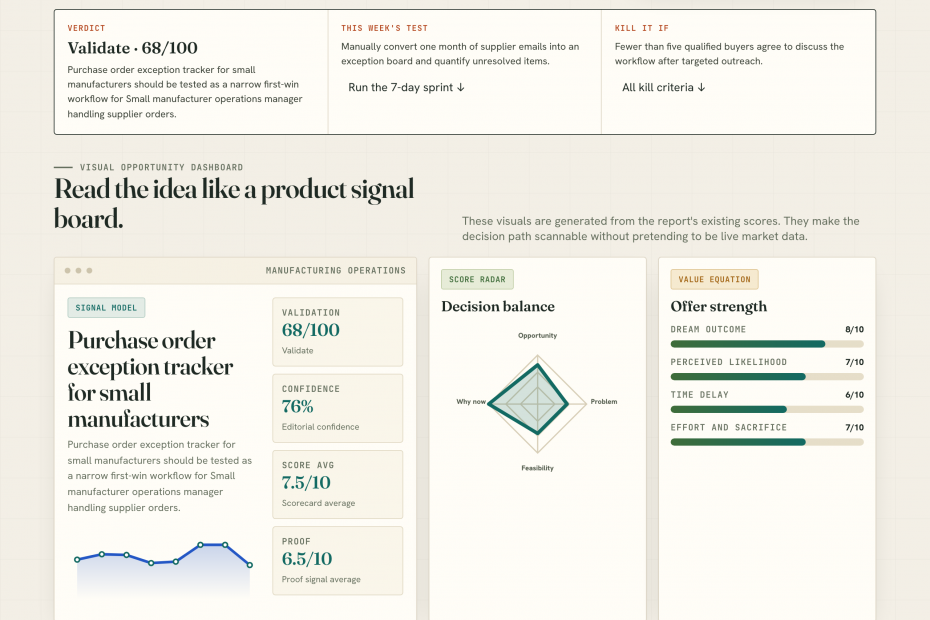
Full opportunity report: Purchase order exception tracker for small manufacturers on IdeaNavigator AI — validation score, market gap, and execution plan.
TL;DR
A prototype purchase order exception tracker is being tested for small manufacturers to improve handling of supplier issues. The tool aims to replace email tracking with a shared workflow, addressing supply chain challenges.
IdeaNavigator AI is preparing to pilot a purchase order exception tracker tailored for small manufacturers, aiming to improve how they manage supplier issues amid rising supply chain disruptions.
The proposed exception tracker is intended for operations managers at small manufacturing firms who handle supplier orders. It will serve as a shared digital board where issues such as PO changes, late shipments, substitutions, and receiving exceptions can be recorded and tracked, replacing the current reliance on email correspondence.
The initial test involves manually converting one month of supplier emails into the exception board to measure unresolved issues and validate the tool’s effectiveness. The MVP will include fields for supplier, PO number, issue type, owner, next action, and notes on customer impact.
This development responds to increased supply volatility, which has made exception handling more costly for small manufacturers with limited operational teams. The subscription-based tool is aimed at small manufacturers and job shops, with potential for broader market adoption if successful.
Impact of a Shared Exception Management System
This initiative could significantly reduce the time and cost small manufacturers spend managing supply chain disruptions. By centralizing exception tracking, firms can respond faster, reduce errors, and improve supplier relationships. If successful, this tool could set a new standard for operational efficiency in small-scale manufacturing.
Supply Chain Challenges Amplify Need for Better Tracking
Small manufacturers have traditionally relied on email for tracking PO issues, which can lead to lost information and delayed responses. The recent increase in supply chain disruptions has heightened the need for more efficient, transparent exception management tools. Previous efforts to digitize supply chain workflows have often targeted larger firms; this project aims to address the specific needs of small operations.
The concept builds on prior industry recognition that manual tracking is inefficient, especially during volatile periods, but has not yet been widely implemented in small manufacturing contexts.
“Replacing email-based tracking with a shared exception board could streamline operations significantly for small manufacturers.”
— an anonymous researcher
Uncertainties About the Pilot and Broader Adoption
It is not yet clear how small manufacturers will respond to the prototype, or how effectively it will integrate into existing workflows. The success of the trial depends on user adoption and the accuracy of issue recording during the initial phase. Further, it remains unknown whether the tool can scale beyond the pilot or adapt to different manufacturing sectors.
Next Steps in Validation and Potential Rollout
The next phase involves completing the manual conversion of supplier emails into the exception board for one month, then analyzing unresolved issues to gauge effectiveness. If the results are positive, IdeaNavigator AI plans to refine the tool and consider broader testing with additional small manufacturers. A full launch could follow if pilot outcomes demonstrate clear benefits.
Key Questions
How will the exception tracker improve small manufacturer operations?
The tracker centralizes issue management, reducing reliance on email and enabling faster response times, which can lower costs and improve supplier relationships.
What issues will the tracker address specifically?
It will focus on tracking purchase order changes, late shipments, substitutions, and receiving exceptions.
Is this tool available for all small manufacturers now?
No, it is currently in the testing phase with plans for further validation before wider release.
Will this tool integrate with existing supply chain software?
It is designed as a lightweight MVP for manual testing; future integration capabilities are under consideration based on user feedback.
What are the potential challenges in adopting this system?
Challenges may include user resistance to change, data accuracy during manual entry, and ensuring the tool fits diverse manufacturing workflows.
Source: IdeaNavigator AI