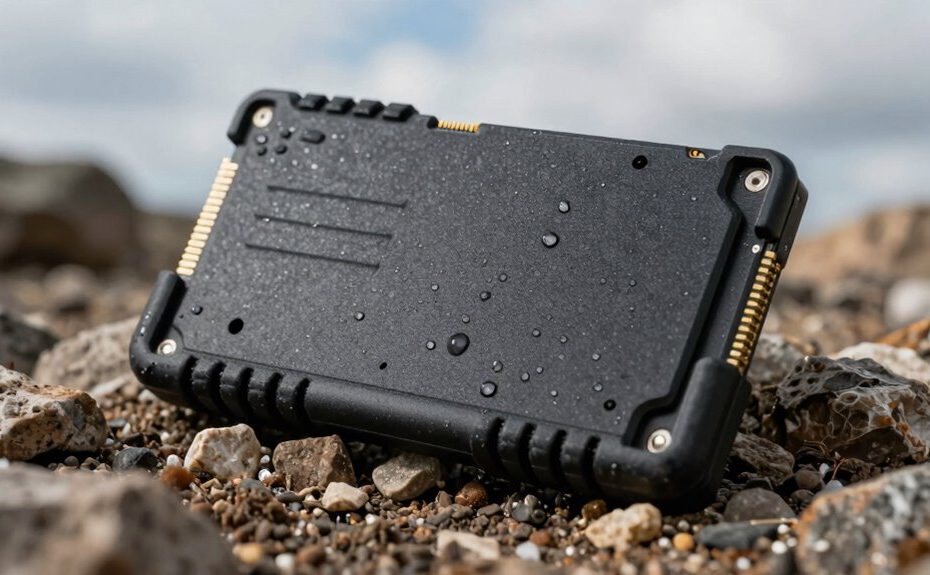
When your data faces harsh conditions like dust, water, shocks, or vibrations, investing in rugged SSDs is worth it. They are built with tough casings and advanced sealing to protect your data from environmental hazards, ensuring reliability in outdoor, construction, or mobile settings. Plus, they deliver high-speed transfers even in demanding environments. If you want to learn about the latest durability features and applications, keep exploring to find out more.
Key Takeaways
Rugged SSDs are essential in extreme environments to protect data from dust, water, shock, and vibrations.
They ensure reliable performance and data integrity during demanding outdoor, construction, or mobile tasks.
Investing in durability features reduces risk of data loss and hardware failure in harsh conditions.
Compliance with industry standards guarantees rugged SSDs meet safety and environmental requirements.
They are ideal when high-speed data transfer and long-term resilience are critical for your workflows.
When durability matters most, rugged SSDs deliver reliable performance even in the harshest environments. You rely on these drives to withstand extreme conditions like dust, water, shock, and vibrations, ensuring your data remains safe regardless of external factors. Unlike standard SSDs, rugged models are built with toughened casings and advanced sealing technologies that protect against physical damage and environmental hazards. This makes them ideal for outdoor use and demanding work settings. This means that whether you’re working outdoors, on a construction site, or in a mobile setting, your data stays accessible and secure.
One key advantage of rugged SSDs is their impressive data transfer speeds. You need fast, consistent performance to meet tight deadlines and keep workflows seamless. These drives are optimized for high-speed data transfer, making file transfers, backups, and real-time data processing swift and efficient. When you’re dealing with large multimedia files, critical project data, or scientific information, the ability to quickly access and store data becomes crucial. Rugged SSDs are designed to handle intensive data transfer tasks without lag or slowdown, ensuring your productivity isn’t compromised even in demanding conditions. Incorporating environmental stress considerations into your decision can help justify the investment in rugged SSDs that are built to withstand such conditions. Additionally, the technological advancements in durability features continue to improve their resilience and performance. Staying informed about durability standards can help you choose drives that meet industry-specific requirements. Moreover, understanding compliance standards relevant to your sector can further ensure your drives are suitable for critical applications.
Frequently Asked Questions
Are Rugged SSDS Compatible With All Device Types?
Rugged SSDs are not compatible with all device types, but they work well with most modern computers, laptops, and some gaming consoles. You need to check device compatibility first, especially connection types like USB or Thunderbolt. Keep in mind, rugged SSDs often offer faster data transfer speeds, so make certain your device supports those speeds for maximum performance. Always verify compatibility before purchasing to avoid any connection issues.
How Do Rugged SSDS Perform in Extreme Temperatures?
Did you know rugged SSDs can operate in temperatures from -40°C to 85°C? They excel in extreme conditions thanks to superior temperature resilience and material durability. You’ll find that their sturdy construction allows consistent performance despite harsh environments, making them perfect for outdoor or industrial use. So, if you need data storage that withstands extreme temperatures without faltering, rugged SSDs are a reliable choice.
What Is the Typical Lifespan of a Rugged SSD?
You can expect a rugged SSD to last around 5 to 10 years, depending on usage. Its lifespan benefits from features like wear leveling, which evenly distributes data writes, and data encryption, which protects your data over time. Heavy-duty use or extreme conditions might shorten this, but overall, rugged SSDs are designed for durability. Proper maintenance and careful handling can help maximize their longevity.
Can Rugged SSDS Be Repaired if Damaged?
Think of a rugged SSD as a fortress—damage is like a breach, but not always a lost cause. You can often pursue data recovery or repair options if it gets damaged, though it depends on the severity. Minor issues might be fixable through professional repair services or data recovery tools, but severe physical damage could mean replacing the device altogether. Always check with experts to see if your data can be salvaged.
Are Rugged SSDS More Expensive Than Standard SSDS?
Yes, rugged SSDs are typically more expensive than standard SSDs due to their enhanced durability benefits and build quality. The cost comparison reflects their ability to withstand harsh conditions like shocks, drops, and extreme temperatures, which standard SSDs might not handle well. If you need a reliable storage option for tough environments, paying the higher price for a rugged SSD can be a worthwhile investment, offering long-term durability and peace of mind.
Conclusion
When durability matters most, rugged SSDs prove their worth, standing up to the toughest conditions without compromise. You might wonder if investing in extra protection is really necessary—after all, data loss can be devastating. But isn’t peace of mind priceless? If your work or adventures push your equipment to the limit, choosing a rugged SSD isn’t just smart; it’s essential. After all, shouldn’t your data be as resilient as your spirit?