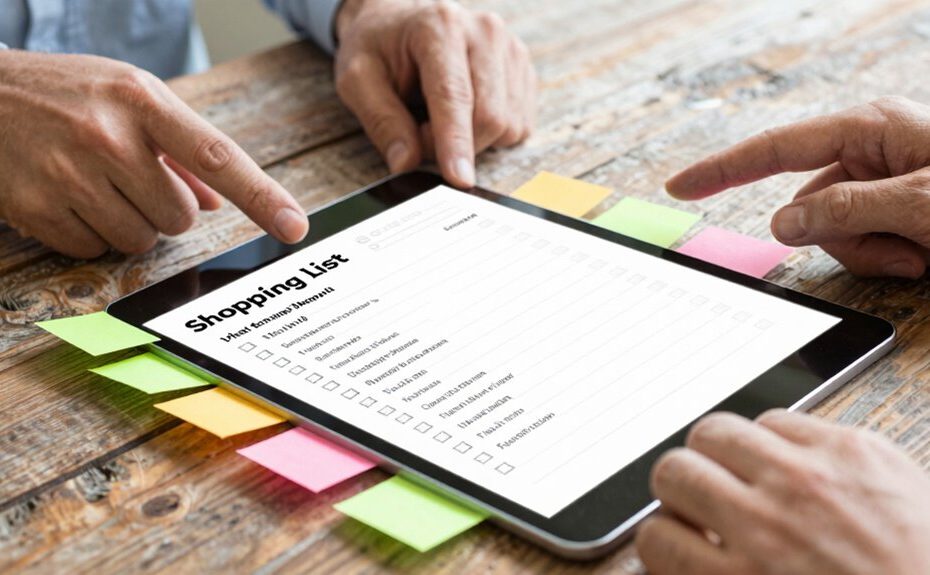
Shared shopping lists work so well because they make your household’s shopping more organized and efficient. You can easily see what’s needed, prevent duplicate purchases, and stay within your budget. They help everyone coordinate meal plans and adapt quickly to unexpected changes. Sharing responsibilities reduces stress and keeps your home stocked with essentials. If you want to learn how to make your shopping smarter and smoother, keep going to discover more tips and strategies.
Key Takeaways
They enhance coordination, ensuring all household members are aware of needed items, reducing forgetfulness and miscommunication.
Shared lists promote budget efficiency by tracking purchases and preventing duplicate buying.
They simplify meal planning by accommodating individual preferences and coordinating ingredients seamlessly.
Real-time updates allow quick adjustments for unexpected needs, reducing last-minute shopping stress.
Collaboration fosters better household communication, sharing responsibilities and making grocery shopping more efficient and enjoyable.
Sharing a shopping list with family or roommates can make grocery trips smoother and more efficient. When everyone contributes, it becomes easier to plan your purchases, avoid duplicate buys, and stay within your budget. This approach encourages better budget planning because each person can see what’s already been bought or needs to be purchased, preventing unnecessary spending. Instead of one person bearing the entire responsibility of grocery shopping and budgeting, everyone participates, which often results in more thoughtful, cost-effective decisions. With a shared list, you can prioritize essential items and cut back on impulse buys that might inflate the grocery bill. It’s all about working together to make every dollar stretch further.
Sharing a shopping list helps everyone stay organized, budget wisely, and make grocery trips more efficient and stress-free.
Another major advantage of shared shopping lists is meal customization. When everyone adds items to the list, it reflects each person’s dietary preferences and meal plans. You can coordinate ingredients for specific recipes, ensuring that everyone’s favorite meals are included and that no one feels left out. This collaborative approach helps prevent last-minute trips to the store because you’ve already planned your ingredients in advance. Plus, it allows for flexibility—if one person wants to try a new recipe or needs a special ingredient, they can easily add it without disrupting the entire shopping plan. This way, mealtime becomes more personalized and enjoyable for everyone involved. Additionally, supply chain disruptions can be mitigated by better coordination, making sure your household remains stocked even during unpredictable circumstances. Recognizing the importance of market trends and insights, such as supply chain issues, can help you adapt your shopping habits accordingly. Paying attention to supply chain data can also help you plan your shopping trips more effectively and avoid shortages. Furthermore, integrating AI-driven insights into your shopping routines can provide anticipatory guidance to help you navigate potential shortages more proactively.
Shared shopping lists also foster better communication among household members. Instead of relying on verbal reminders or vague cues, you have a clear, organized record of what needs to be bought. This reduces misunderstandings and forgotten items, making your shopping trips more productive. When everyone can see the list in real-time, it encourages accountability. If someone notices an item is running low or needs restocking, they can add it immediately, keeping the list up to date. This seamless coordination ensures that your household stays stocked with essentials without the stress or chaos that often accompanies solo shopping.
In addition, shared lists make it easier to adapt to changing circumstances. If an unexpected guest is coming over, or if a recipe calls for an ingredient you don’t typically buy, you can quickly update the list so everyone is aware of the new needs. This adaptability helps keep everyone on the same page, avoiding miscommunication and last-minute shopping emergencies. Additionally, understanding the importance of color accuracy and contrast ratio in projectors can help you choose the right equipment for your home cinema setup, ensuring the visual experience matches your collaborative planning efforts. Overall, sharing a shopping list isn’t just about saving time—it’s about creating a collaborative, transparent, and efficient way to manage household needs, making grocery shopping a smoother, more enjoyable experience for all.
Frequently Asked Questions
How Secure Are Shared Shopping List Apps With Personal Data?
Shared shopping list apps are generally secure if they use strong data encryption and have clear privacy policies. Data encryption protects your personal information from unauthorized access, while privacy policies outline how your data is handled and shared. You should review these policies to guarantee your data remains private. Choosing reputable apps with robust security features helps keep your personal details safe while enjoying the convenience of shared shopping lists.
Can Shared Lists Be Used Offline Effectively?
You can definitely use shared lists offline, which means you enjoy offline synchronization without relying solely on internet. This setup lets you update your shopping list on your device, and once you’re back online, it syncs seamlessly with others. Plus, it preserves your data privacy, ensuring personal details stay protected. This way, you keep your shared list accessible anytime, anywhere, without sacrificing security or convenience.
What Features Differentiate Top Shared Shopping List Apps?
Top shared shopping list apps stand out because they offer seamless list synchronization, ensuring everyone sees updates instantly. They also excel in user collaboration, allowing multiple people to add or check off items effortlessly. These features make shopping more efficient and less stressful. By focusing on real-time updates and easy sharing, these apps help you manage your lists smoothly, no matter where your team members are located.
How Do Shared Lists Handle Conflicting Item Updates?
Imagine a busy kitchen where family members add ingredients simultaneously; conflicting updates are inevitable. Shared lists handle this through conflict resolution algorithms that prioritize the most recent changes, ensuring everyone stays on the same page. Update synchronization works seamlessly behind the scenes, instantly reflecting edits across all devices. This way, your shopping list stays accurate, and your grocery trip is smooth, even amidst a flurry of updates.
Are There Any Costs Associated With Premium Shared List Features?
Yes, there are costs associated with premium shared list features, often through subscription fees. These features usually come with advanced functionality like real-time updates and enhanced collaboration. Pricing models vary across apps, with some offering monthly or yearly plans. You should review the specific app’s subscription fees to understand the costs involved. Investing in premium features can improve your shopping experience and streamline shared list management.
Conclusion
Shared shopping lists turn your grocery trips into a well-orchestrated symphony, each note played in harmony. They keep everyone on the same page, avoiding chaos and forgotten items, like a conductor guiding a seamless performance. When you collaborate, shopping becomes less of a chore and more of a team effort—where each contribution is a brushstroke shaping a masterpiece. Embrace shared lists, and watch your errands transform into a smooth, synchronized dance.